Handleless Kitchens Explained: True Handleless, J-Pull & Style Ideas
Handleless kitchens remain one of the most searched-for modern kitchen styles in the UK because they offer a clean, streamlined look that works especially well in open-plan living spaces, extensions and contemporary homes. But in 2026, searchers are no longer just looking for inspiration. Homeowners want clearer guidance on what “handleless” actually means, how true handleless differs from J-pull, whether it is practical for everyday family life, and which finish will still look good in five or ten years.
At Kitchen Experts, we are not kitchen designers or installers. We are a specialist network of independent kitchen retailers, which means our role is to help homeowners compare styles, explore trusted kitchen ranges through experienced showrooms, and understand the practical differences between products before committing. That matters with handleless kitchens, because the term can describe several different opening systems, and the right choice depends on your layout, budget, finish preferences and how you use your kitchen day to day.
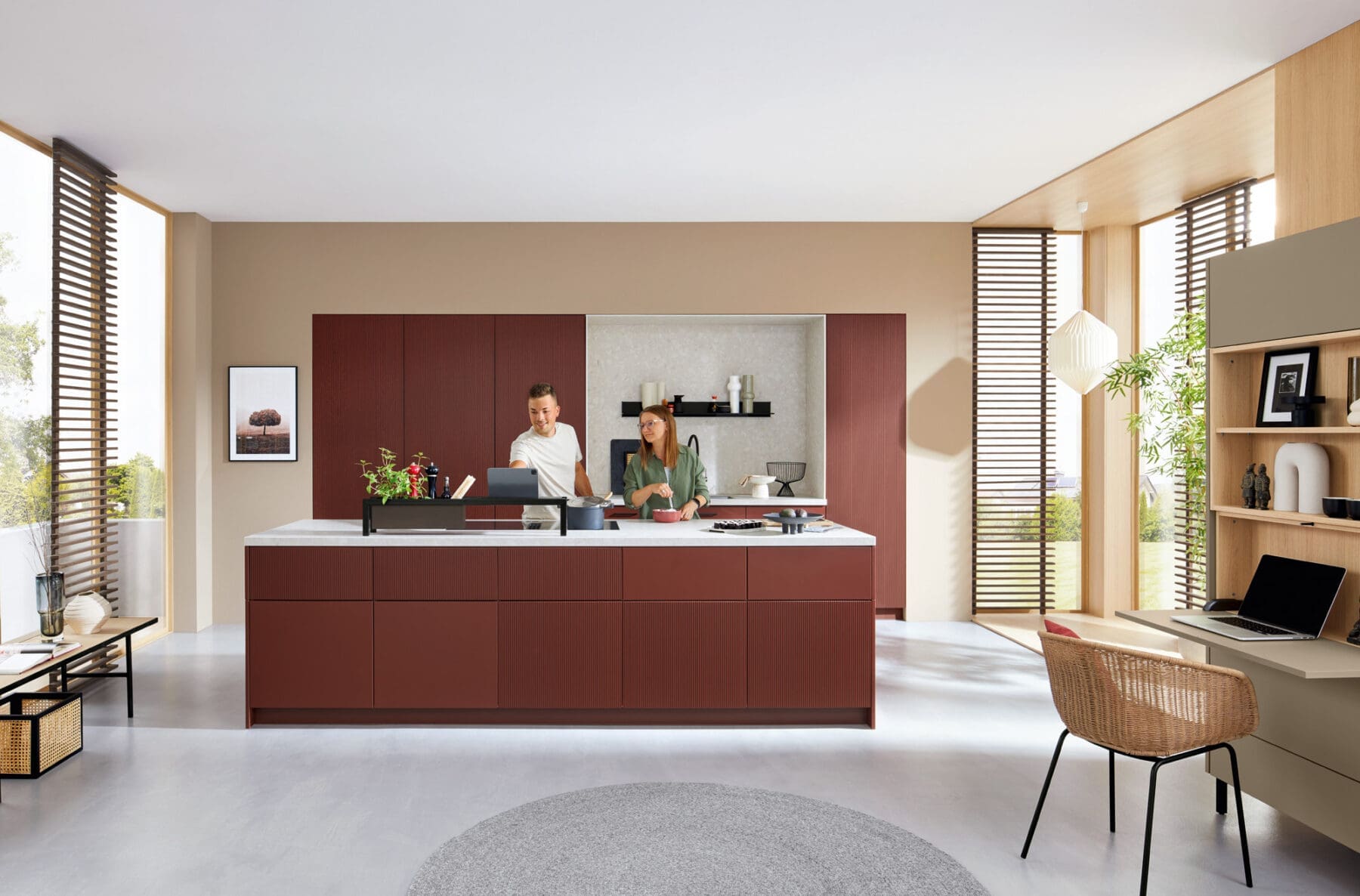
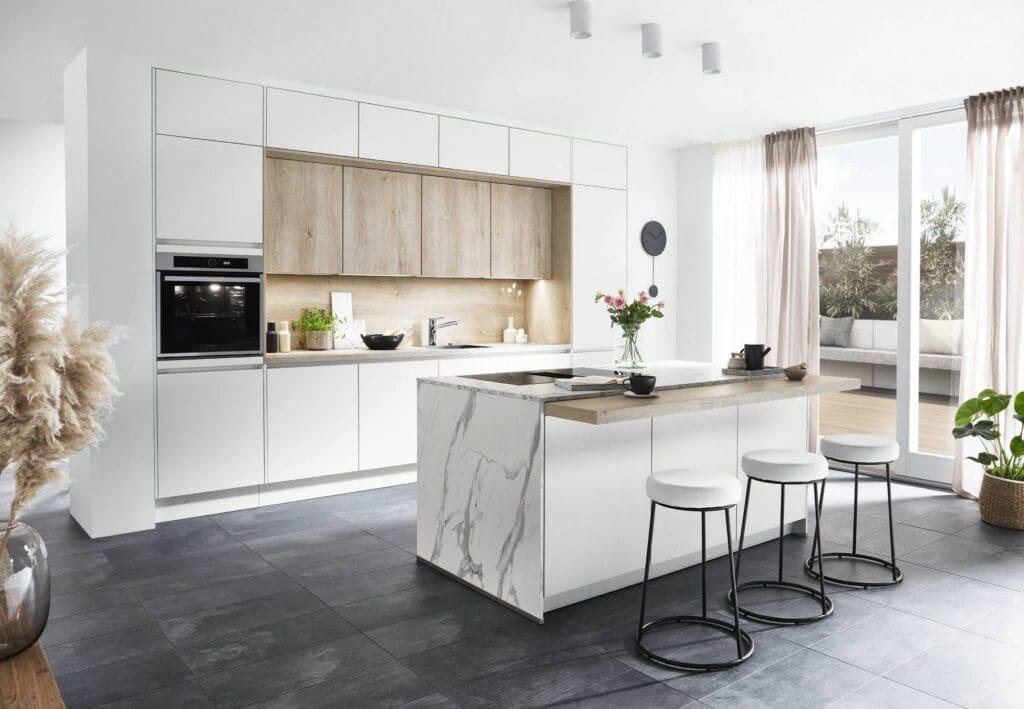
Today’s handleless kitchens also look a little different from the stark, ultra-gloss versions people often picture from a few years ago. The fresher direction is warmer and more tactile: matt finishes, textured woods, mineral tones, integrated storage, concealed appliances and softer detailing are all shaping current kitchen demand. In other words, handleless is still highly relevant in 2026, but the best examples now balance sleek lines with warmth, practicality and longevity.
What is a handleless kitchen?
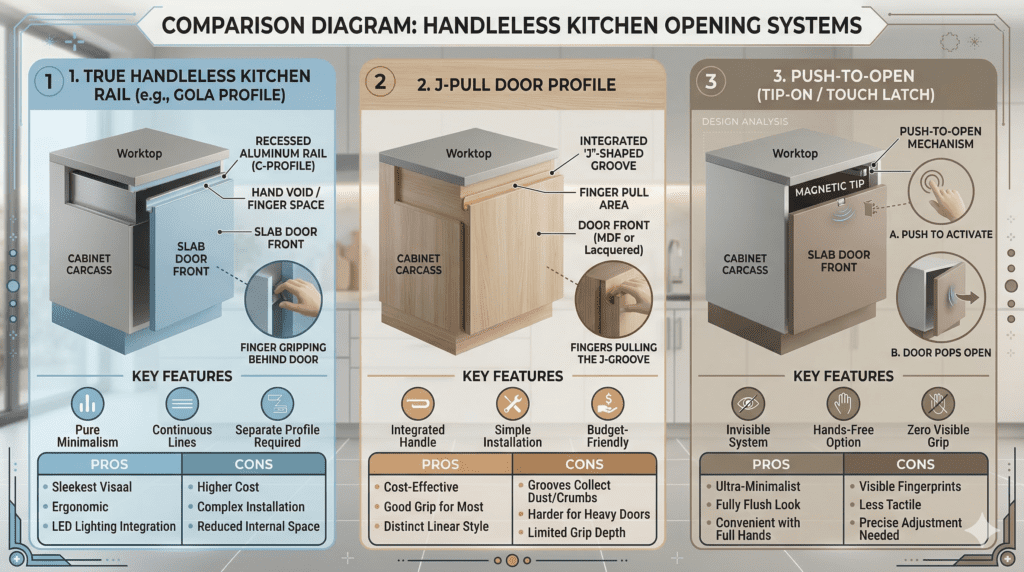
A handleless kitchen is a kitchen where doors and drawers open without traditional external handles. In the UK, this usually means one of three systems: true handleless with a recessed rail channel fixed to the cabinet, J-pull with a grip groove built into the door, or push-to-open using touch-latch hardware. Although these styles are often grouped together online, they differ in appearance, cost, comfort and long-term feel in use.
Why handleless kitchens are still popular
The appeal is easy to understand. Handleless kitchens reduce visual clutter, create long uninterrupted cabinet lines and suit the way many homeowners now want a kitchen to feel: calm, architectural and better connected to dining and living areas. They can also make smaller kitchens feel less busy, because there are no protruding handles interrupting the cabinetry. That visual simplicity is one reason handleless remains one of the most enduring contemporary kitchen looks.
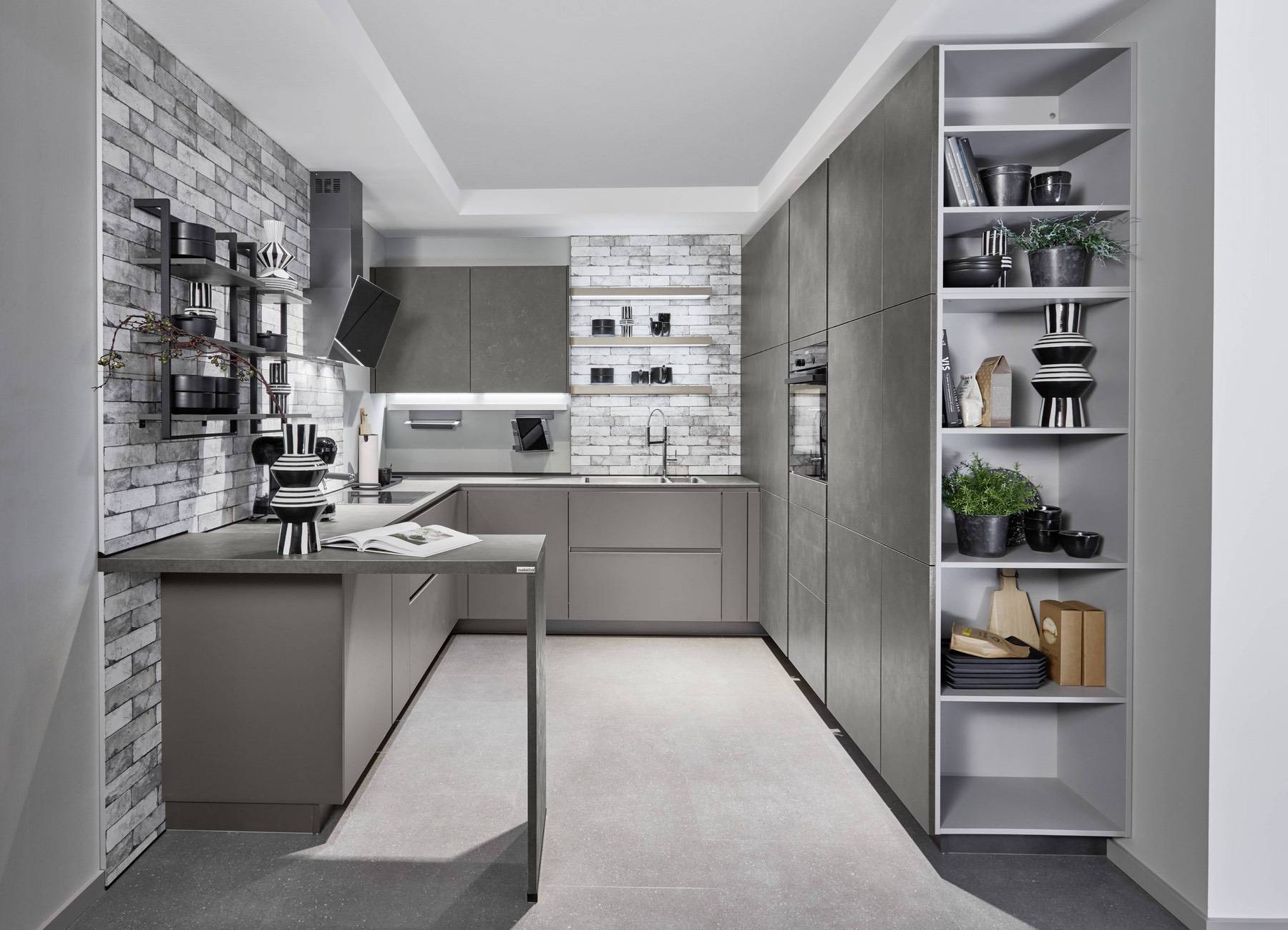
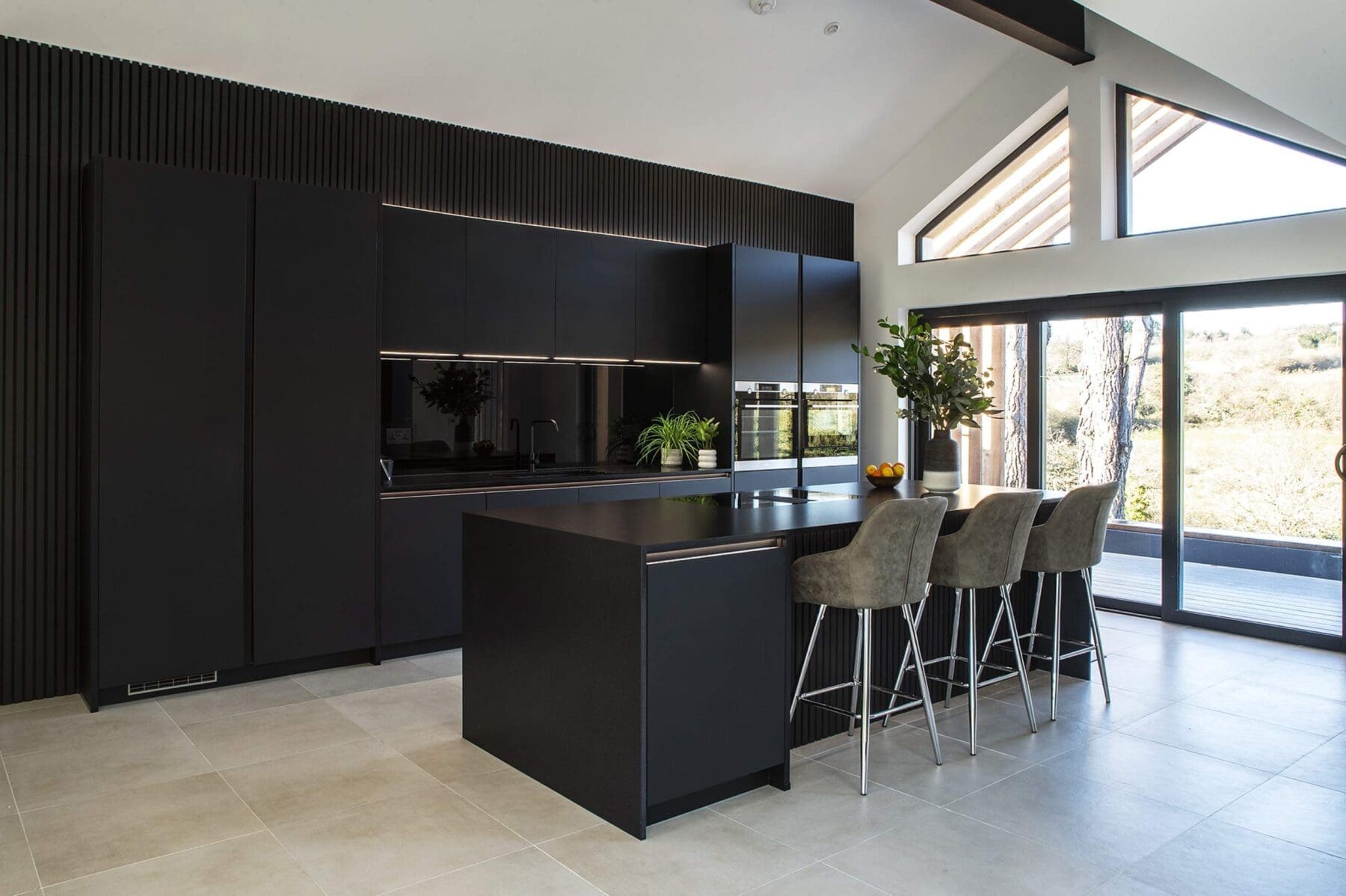
Another reason the style has lasted is its flexibility. A handleless kitchen is not limited to one finish or one look. You can find handleless doors in matt lacquer, gloss, wood-effect, textured timber, stone-inspired finishes and increasingly softer, warmer colour palettes. Current kitchen trends show a shift away from icy whites and cool greys towards mushroom, putty, flint, deeper timber tones and more tactile surfaces, which suits handleless kitchens particularly well because the uncluttered front lets the material and colour do more of the visual work.
True handleless vs J-pull vs push-to-open
True handleless kitchens
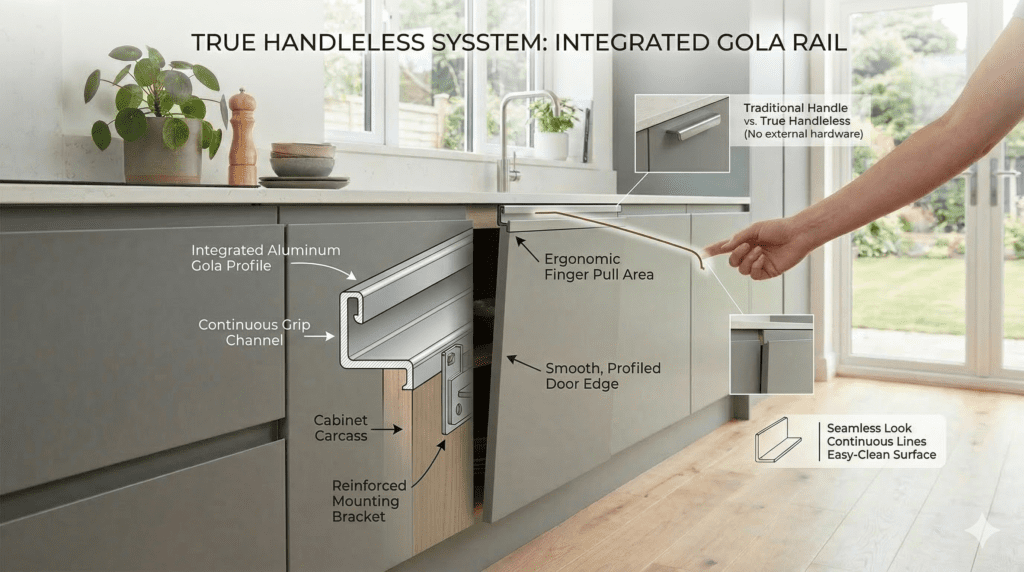
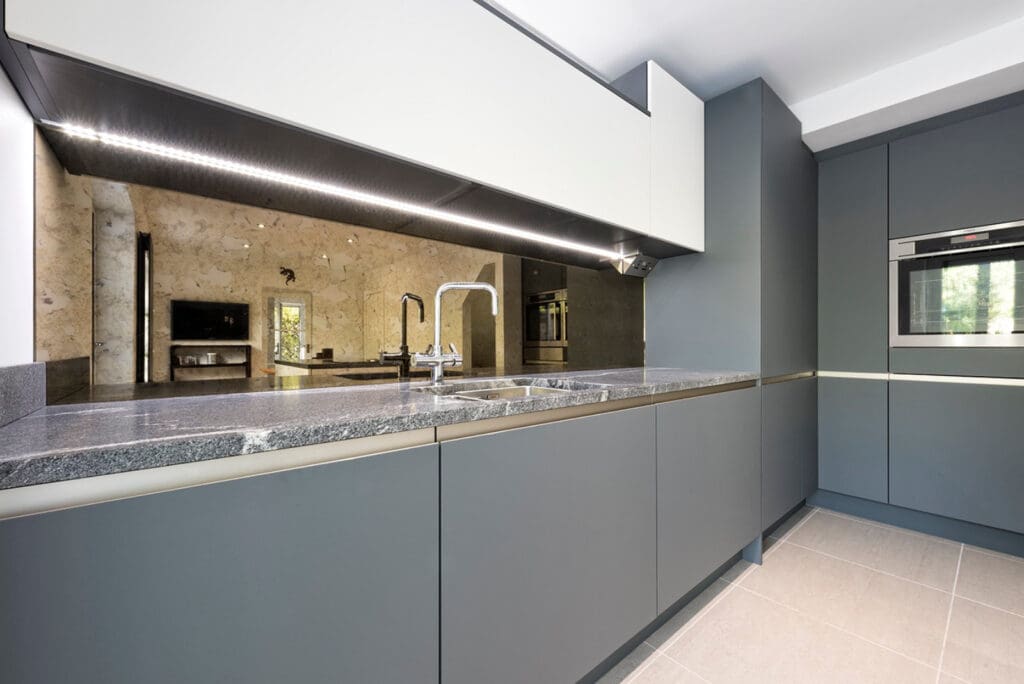
A true handleless kitchen uses a separate recessed rail system, often aluminium, fitted to the cabinet carcass. The rail creates a continuous channel that runs behind the door and drawer fronts, so you pull from the rail rather than from the door itself. This is what many premium German kitchens are known for, and it is the format most people mean when they talk about a very sleek, architectural handleless look. Vertical rails are also used on tall housing units so ovens, fridge freezers and larders remain practical to open.
J-Pull kitchens
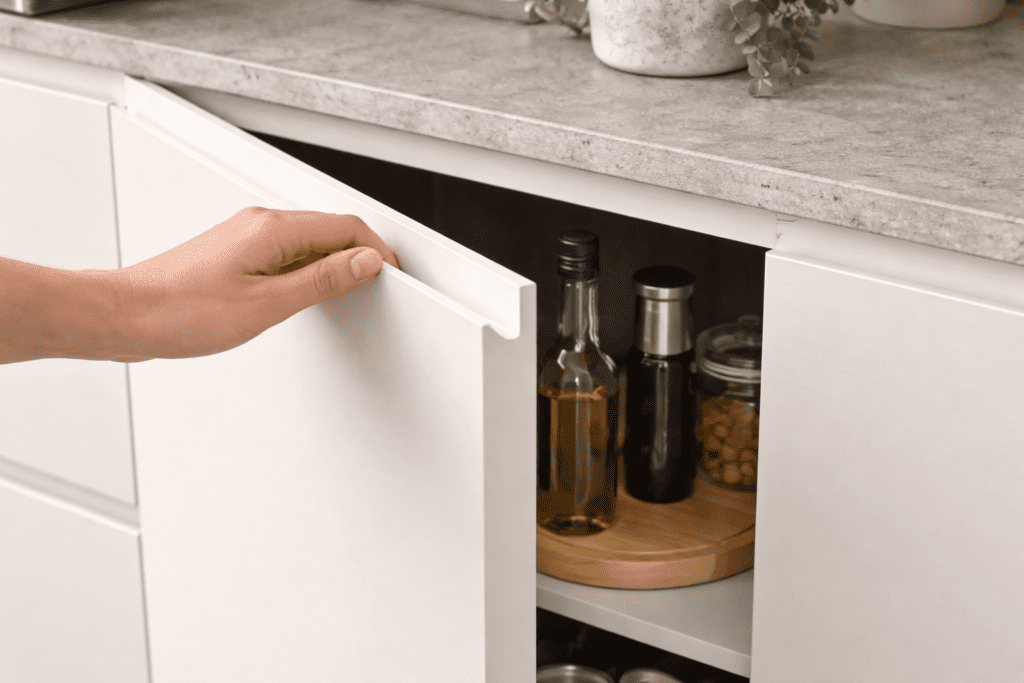
A J-pull kitchen looks similar from a distance, but the grip is routed into the top edge of the door itself rather than formed by a separate rail. That usually makes it a more accessible price point than true handleless, while still delivering a modern, handle-free appearance. For many homes, J-pull is the route that gives the desired look without moving as far up the budget ladder.
Push-to-open kitchens
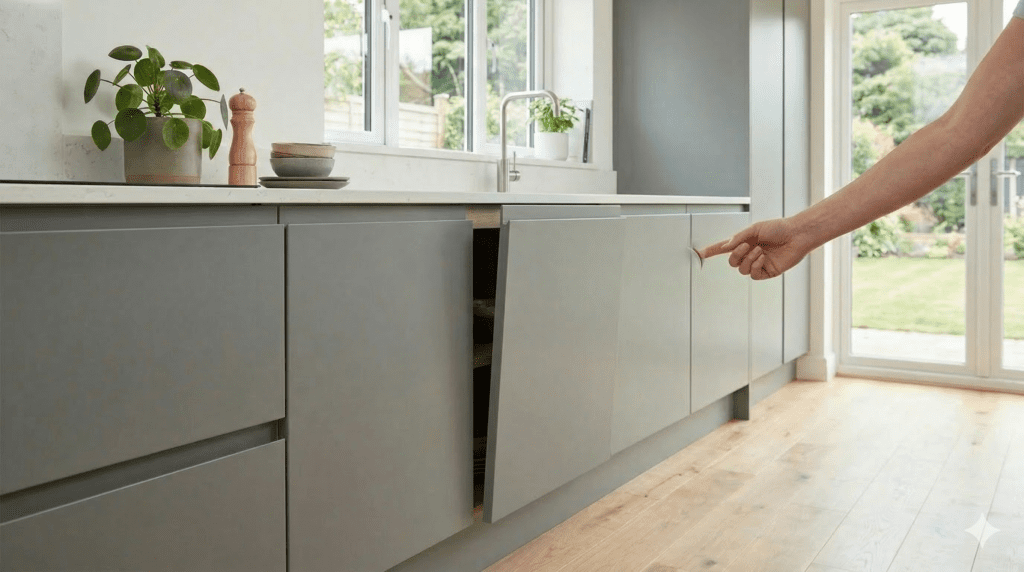
Push-to-open kitchens use touch-latch mechanisms, so the door opens when pressed rather than pulled. This can create a very clean effect, but it is a different system again and not always the most practical option for heavy-use family kitchens, especially if you want a more consistent opening feel across large drawers and integrated appliances.
Which type of handleless kitchen is best?
There is no single best option for every home.
Choose true handleless if you want the most refined linear look, value the continuous rail detail, and are happy to budget for a more engineered system. It is especially strong in open-plan rooms, premium contemporary schemes and layouts with long uninterrupted runs of cabinetry.
Choose J-pull if you want a handleless aesthetic at a more accessible price point, or you prefer a simpler route that still feels modern and tidy. It often works well in family homes, renovation projects and kitchens where overall value matters as much as the final visual finish. Choose push-to-open only if you specifically like the mechanism and understand the trade-offs. It can work well in selected zones, but it is less often the best all-round answer for the main run of a hardworking kitchen.
Are handleless kitchens practical?
Yes, but practicality depends on the system you choose and the way your kitchen is planned.
One of the main everyday advantages is the absence of protruding handles. That helps movement in tighter layouts and can make a small kitchen feel more open. A handleless front also gives a very clean, simple look that many homeowners find easier to integrate with modern flooring, islands, statement lighting and open-plan living spaces.
That said, “easy to live with” does not automatically mean “zero maintenance”. Rail channels and grip grooves still need wiping, especially near sinks, hobs and heavily used prep areas. Gloss finishes can still show marks, and even matt finishes benefit from the latest anti-fingerprint surfaces where available. If low-visibility day-to-day wear matters to you, matt handleless doors and modern anti-fingerprint finishes are usually a more forgiving route than high gloss.
Are handleless kitchens more expensive?
Usually, yes, at least when comparing true handleless against a more standard handled kitchen on a like-for-like quality basis. That is because true handleless systems add rail hardware, more specialised cabinet construction and more planning detail. J-pull can narrow that gap, but price still depends on door finish, cabinet quality, storage specification, appliance choices and the overall size of the project.
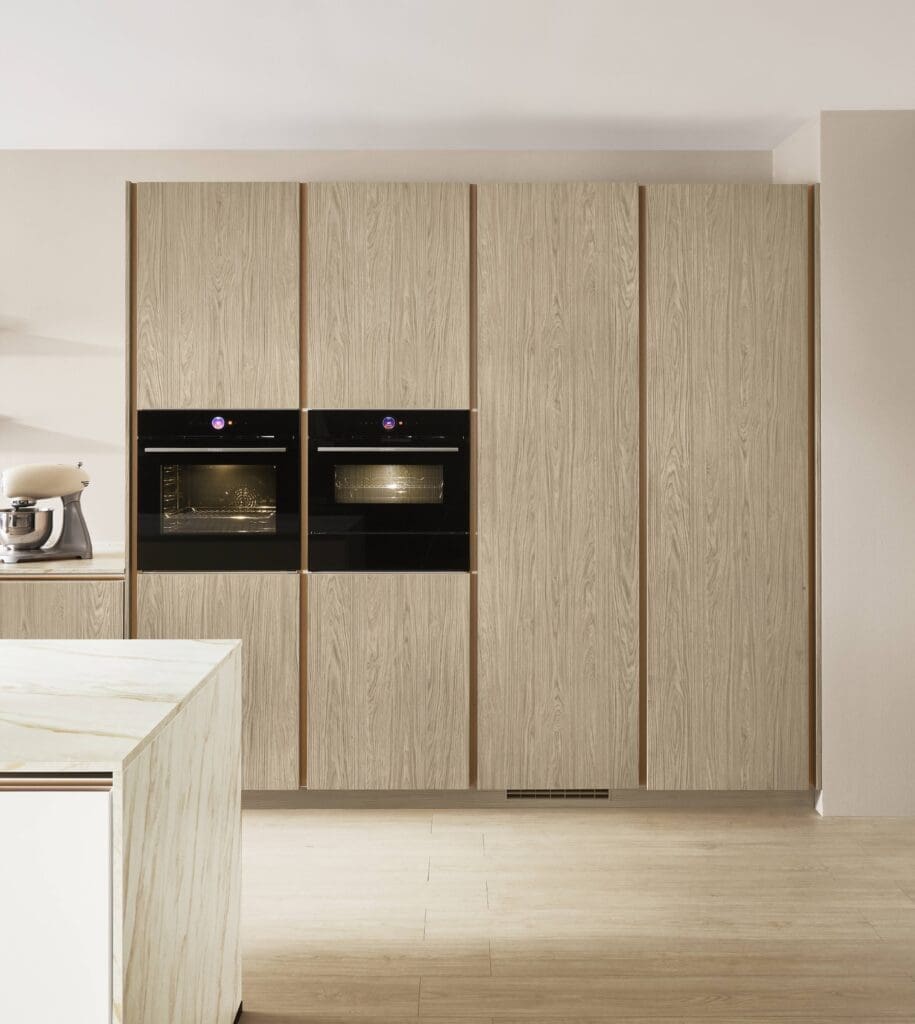
Best finishes for handleless kitchens in 2026
The strongest handleless kitchens in 2026 feel warmer, softer and more tactile than the very stark minimalist versions that dominated years ago. Popular handleless styles include:
- Matt handleless kitchens remain one of the safest options because they feel contemporary without looking cold, and they generally hide day-to-day marks better than gloss.
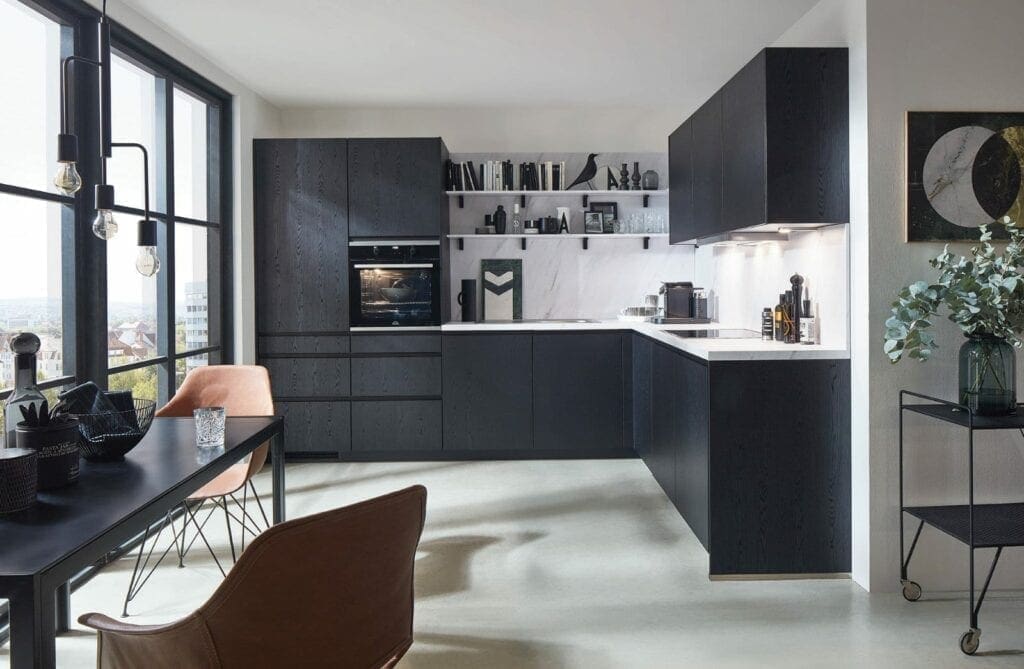
- Wood and wood-effect handleless kitchens are also gaining momentum, especially darker timber tones and textured finishes that make a sleek door style feel more natural and grounded.
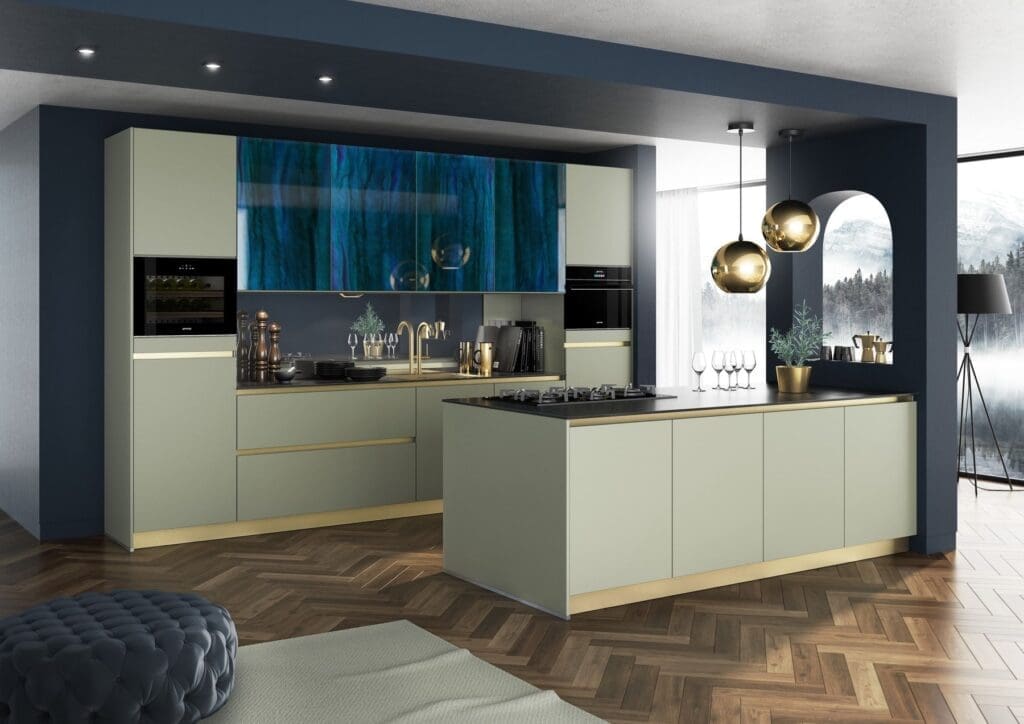
- Warm neutrals and mineral tones are especially current. Instead of bright, cool white and flat grey, the more future-proof direction is stone, mushroom, putty, soft taupe, clay and warmer off-whites.
- Mixed-material handleless kitchens are another strong direction, combining plain slab doors with timber accents, textured islands or stone-inspired worktops so the space still feels minimal but not one-dimensional.
Who should consider a handleless kitchen?
A handleless kitchen can be a strong fit if you:
- prefer a modern, uncluttered look
- are planning an open-plan kitchen-living space
- want cabinetry that lets materials and colour take centre stage
- are comparing contemporary German kitchens or similar premium retail ranges
- want a style that can work with integrated appliances and concealed storage.
It may be less suitable if you:
- strongly prefer the tactile feel of visible handles
- want the easiest possible grip for every household member
- need to prioritise achieving the lowest possible price
- love traditional cabinet detailing and decorative hardware.
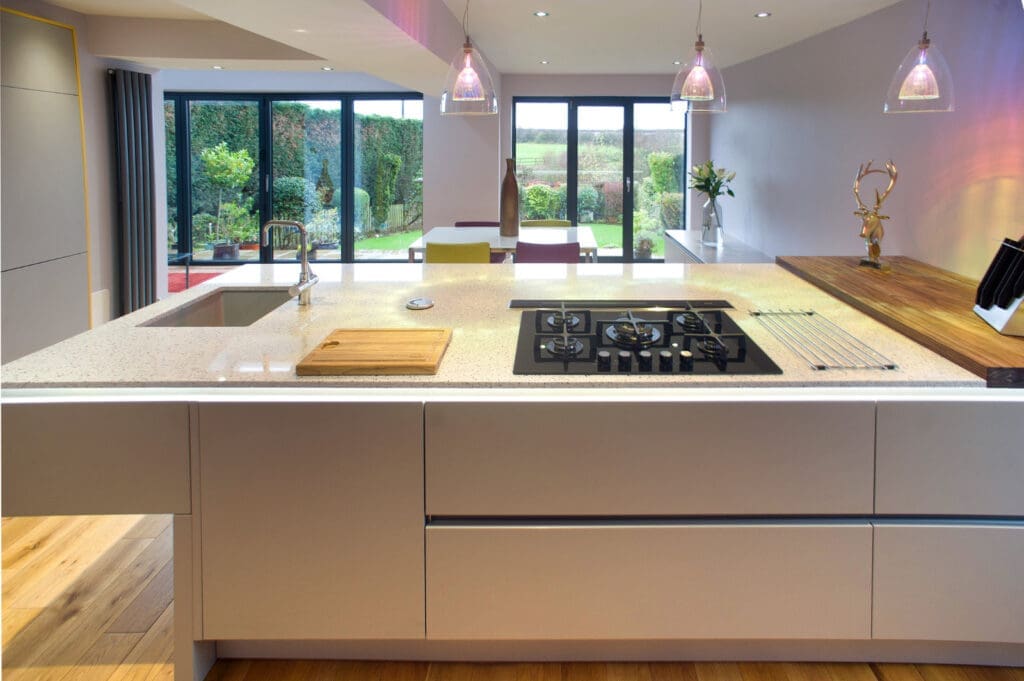
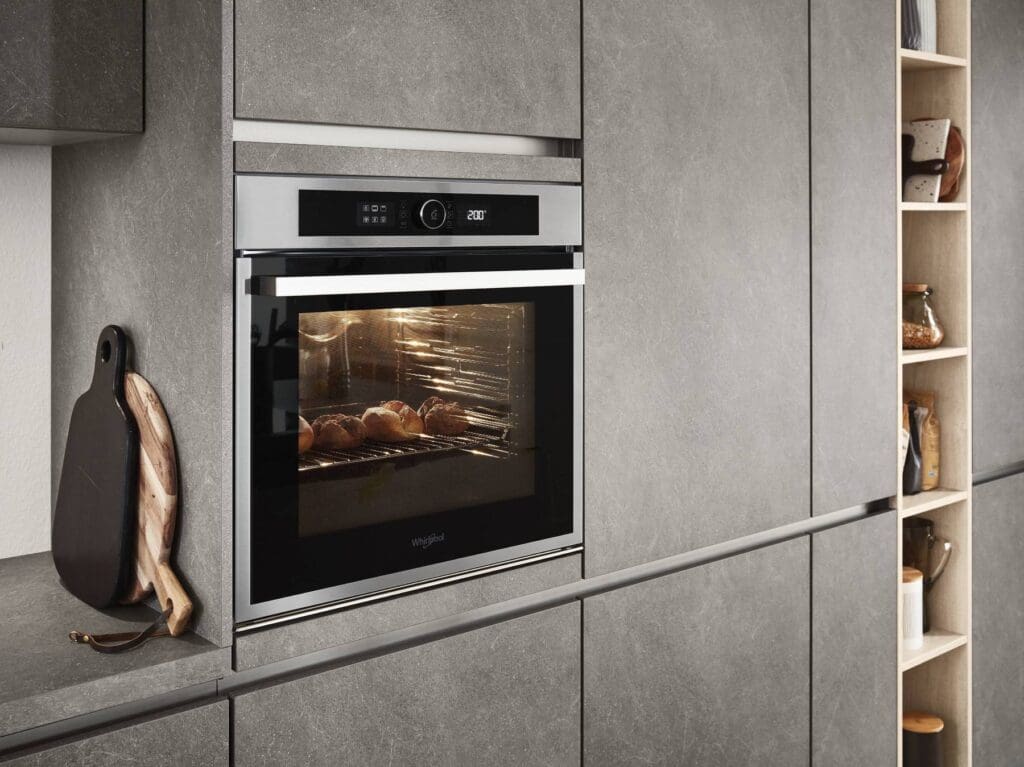
What to look for in a kitchen showroom
When you visit a kitchen showroom to compare handleless kitchens, do not just look at the finish from a distance. Open a tall fridge housing, test a pan drawer, run your hand along a true handleless rail and compare that feel against a J-pull door. Ask whether the display is true handleless or J-pull. Ask which finishes are most forgiving in everyday use. Ask how appliance housing is handled. And ask to see examples of both matt and timber-led versions, because current demand has moved well beyond the all-white gloss look many people still associate with handleless kitchens.
For many homeowners, the biggest value of visiting an experienced retailer is not simply seeing colours. It is understanding which opening system feels right in real life.
Final thoughts
Handleless kitchens are still one of the UK’s most relevant modern kitchen choices, but the search landscape around them has matured. People now want clearer explanations, honest trade-offs and more practical guidance before they enquire. The best handleless kitchens in 2026 combine sleek lines with warmth, texture, integrated storage and realistic day-to-day usability. For some homes, true handleless will be the right fit. For others, J-pull will deliver the look in a more balanced way. The most useful next step is to compare both in person through a specialist kitchen retailer and judge the opening system, finish and layout against how you actually live.
Author’s Attribution
Written for Kitchen Experts editorial content.Reviewed by the Kitchen Experts team with input from specialist independent kitchen retailers in the network.
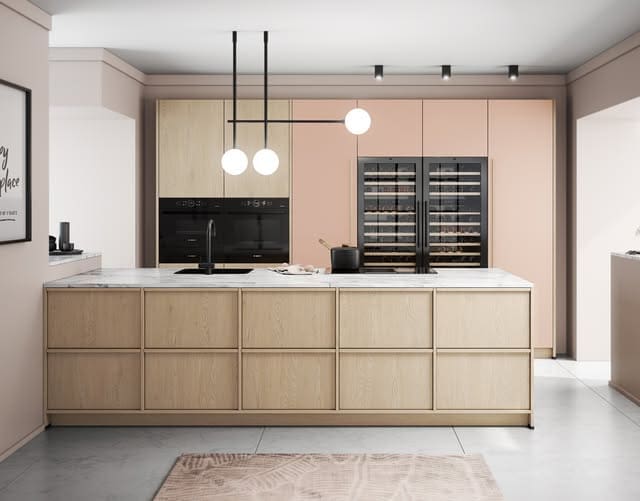
Handleless Kitchens Gallery
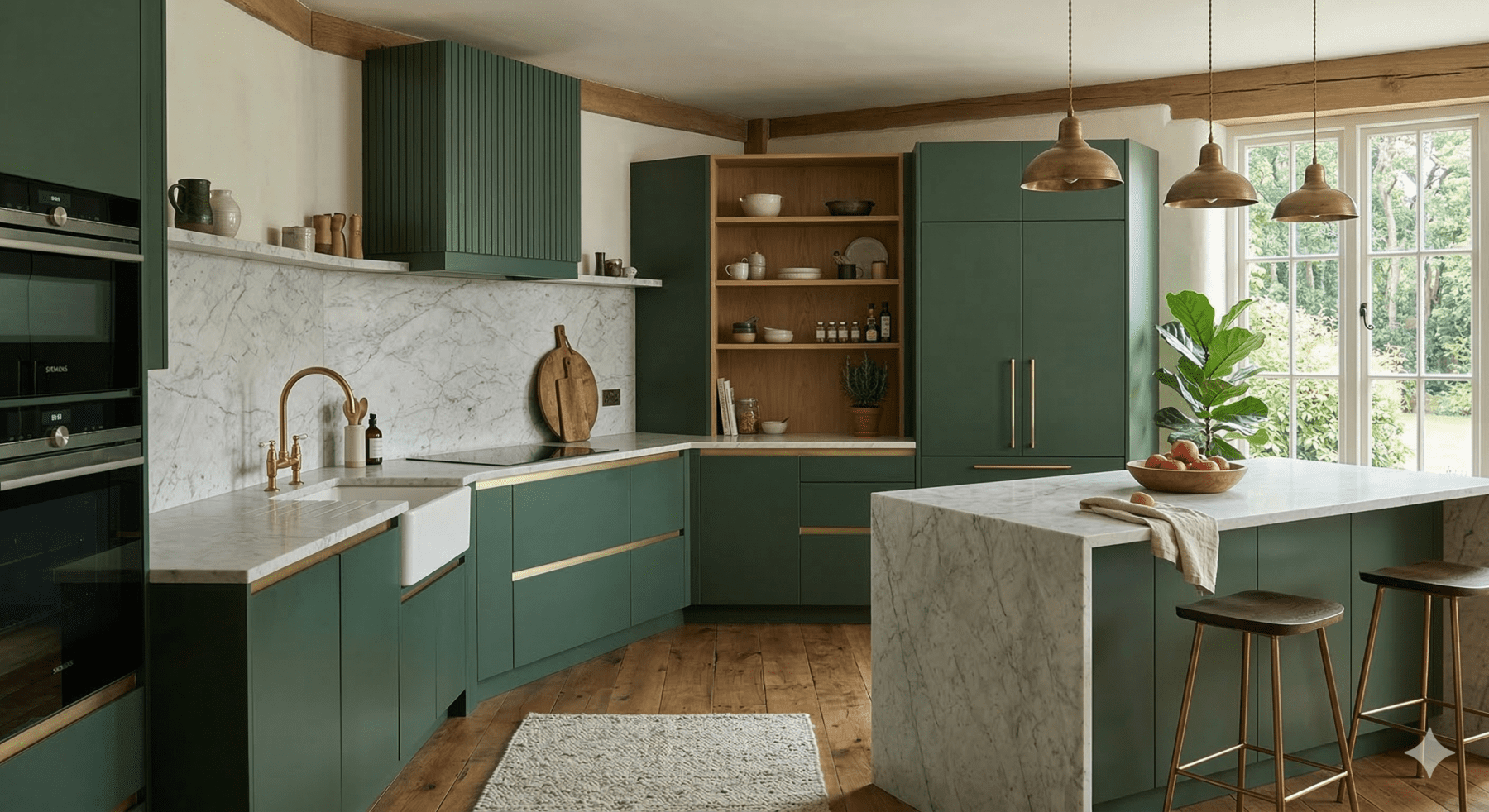

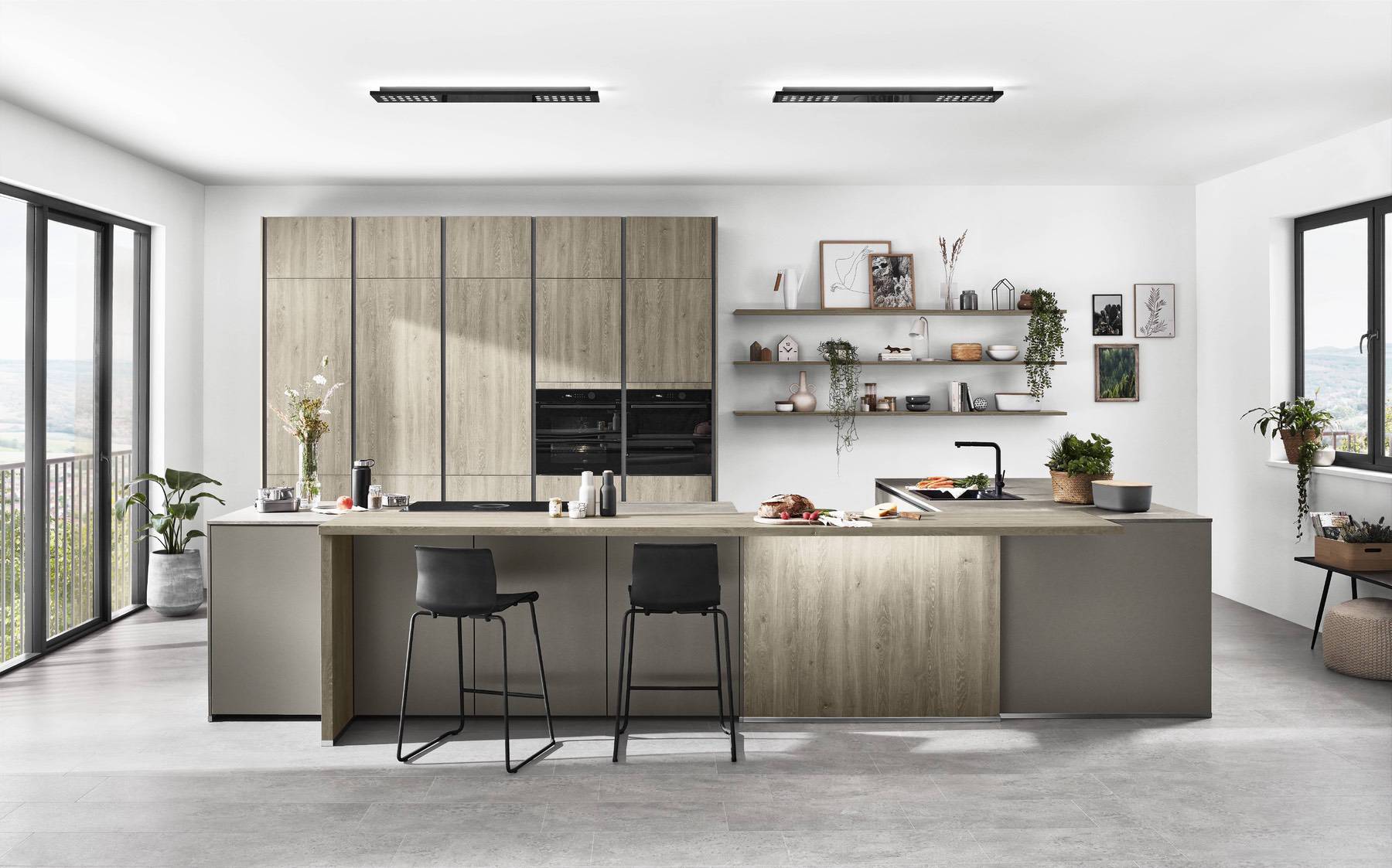
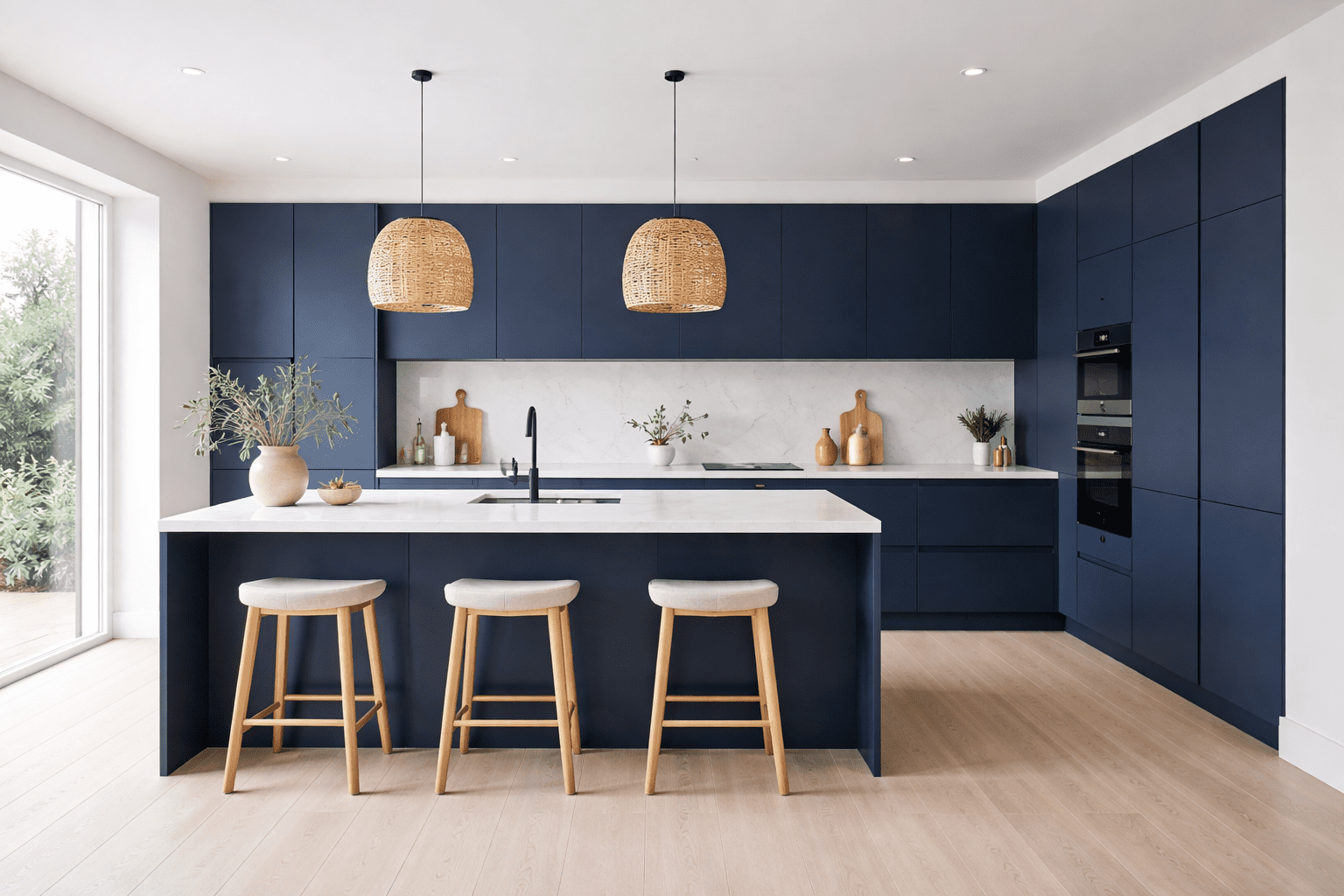
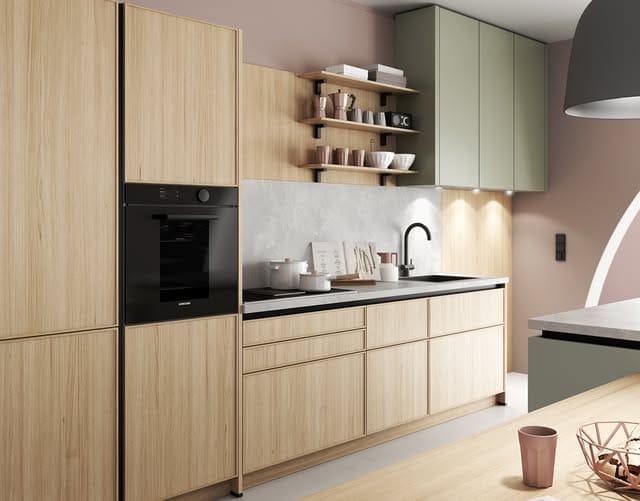

Handleless Kitchens FAQs
What is the difference between true handleless and J-pull kitchens?
A true handleless kitchen uses a separate recessed rail fitted to the cabinet, while a J-pull kitchen has the grip shape routed into the door itself. Both create a handle-free look, but true handleless usually has a more continuous, engineered appearance and often sits at a higher price point.
Are handleless kitchens still in style in 2026?
Yes. Handleless kitchens remain highly relevant, but the look has evolved. Current demand leans towards warmer neutrals, textured woods, matt finishes and integrated storage rather than very stark, cold minimalism.
Are handleless kitchens practical for family homes?
They can be, especially when well planned. The best option depends on the opening system, the finish and how heavily the kitchen is used. Many homeowners find matt handleless finishes and thoughtfully planned appliance housing especially practical.
Do handleless kitchens cost more?
True handleless kitchens often cost more than comparable handled kitchens because of the rail system and cabinet engineering. J-pull can be a more affordable route into the same broad look.
Are handleless kitchens hard to clean?
Not necessarily, but they are not maintenance-free. Rails and grooves need wiping, especially near sinks and cooking areas. Matt anti-fingerprint finishes can help reduce visible marks.
Do handleless kitchens work in small kitchens?
Yes. Because there are no protruding handles, handleless kitchens can make compact layouts feel less cluttered and easier to move around in.
Can I have a wood-effect or warm-toned handleless kitchen?
Absolutely. In fact, warmer woods, deeper timber finishes and softer neutrals are among the strongest handleless directions in 2026.
Should I choose true handleless or J-pull?
Choose true handleless if you want the most streamlined rail-based look and are comfortable with the extra engineering and cost. Choose J-pull if you want a similar style at a more accessible budget. The best test is to compare both in a showroom.