Small Kitchens: Smart Design Ideas For Everyday Living
A small kitchen can be one of the best rooms in the house when it has been planned properly. That may sound optimistic if you are dealing with awkward corners, limited worktop space or too many appliances fighting for room, but size on its own is not usually the real problem. More often, the issue is that the kitchen has not been designed around the way the household actually lives. A compact room can still feel calm, generous and genuinely enjoyable to use if every choice has a purpose.
That is why the best small kitchen design starts with honesty rather than wishful thinking. Do you cook every day or mostly reheat and assemble meals? Do you need proper dining space or just somewhere for coffee and breakfast? Are you short of food storage, prep space, or both? In a larger kitchen, you might get away with weak planning, but in a small kitchen space, every decision shows. A door opening the wrong way, a shallow drawer where you need a deep one, or an oversized appliance can affect the whole room.
At Kitchen Experts, we are a specialist network of kitchen retailers, helping homeowners compare layouts, finishes and practical design ideas through experienced showrooms. That matters with small kitchens because clever design is rarely about squeezing in more units for the sake of it. Instead, it is about getting the balance right between storage, movement, light and daily comfort. Current kitchen thinking also supports a softer, more organised approach, with decluttered cabinetry, integrated appliances and hardworking layouts becoming even more important in smaller spaces.
What Makes A Small Kitchen Work Well?
A successful small kitchen is easy to move around in, easy to keep tidy and easy to use without constantly feeling compromised. But this doesn’t mean it has to be minimal or plain- it simply means the layout has to earn its keep.
In practice, this usually comes down to three things. First, the room needs sensible storage in the places you actually need and use it. Secondly, it needs enough uninterrupted worktop space to make everyday tasks feel straightforward. Third, the space needs a layout that allows people to move naturally rather than bumping into doors, corners or each other. These priorities matter far more than trying to follow a fashionable formula.
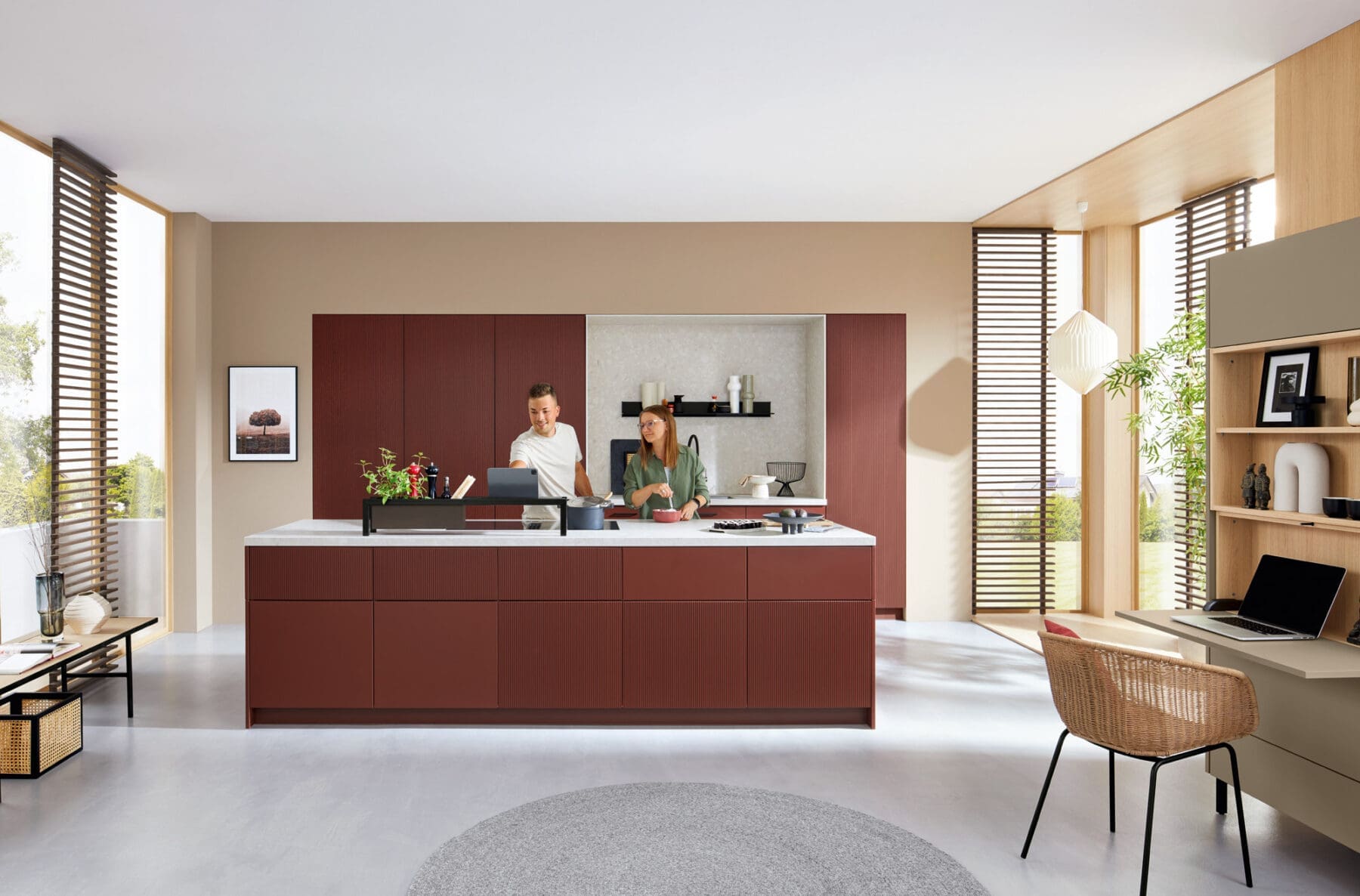
One of the freshest shifts in small kitchen design is that compact spaces are no longer treated as rooms that must stay pale, flat and apologetic. Instead, the best kitchen designers are making them feel more considered and more personal, while still ensuring their practicality. Warm neutrals, carefully planned darker kitchen cabinetry, mirrored splashbacks, integrated storage and softer lighting are all being used to help small kitchens feel more complete rather than merely “made to fit”.
The Real Secret To A Better Small Kitchen Design
The real secret is not buying the smallest kitchen appliance or choosing the palest cabinet colour, but it is understanding what deserves space and what doesn’t.
For one household, that could mean prioritising a full-sized oven and generous pan drawers over a breakfast bar. But for another, it may mean giving up a large hob in favour of more prep area. This is why good small kitchen design feels tailored; It reflects the way the room is used, rather than copying a showroom display that happened to look smart.
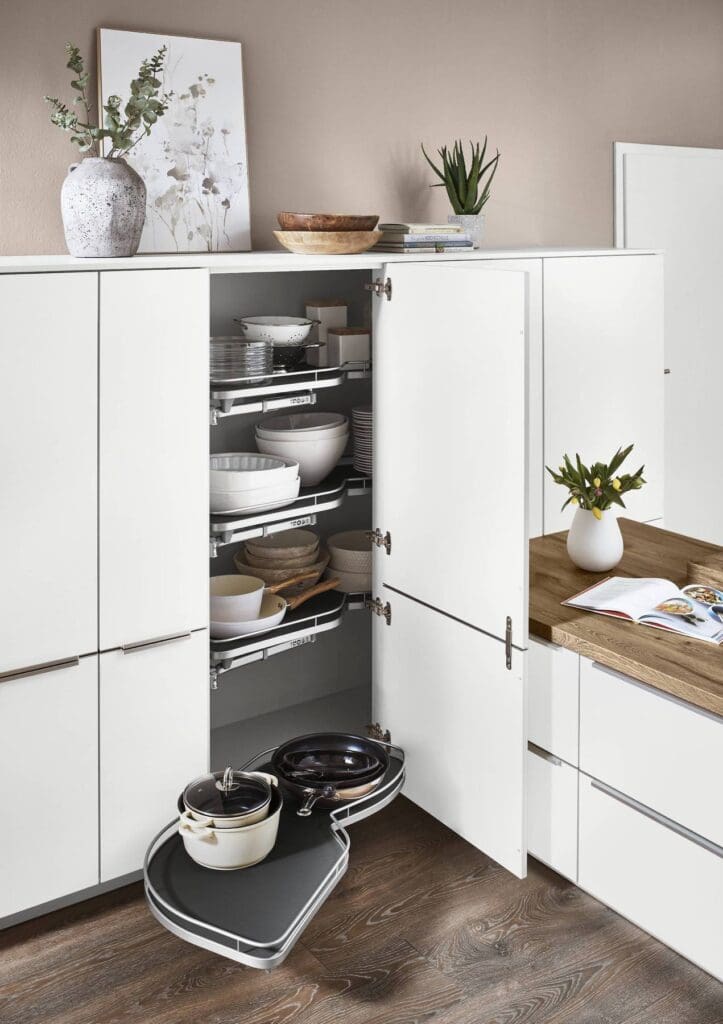
A compact kitchen design also benefits from stronger discipline. For example, if every cupboard has to work harder, then internal organisation becomes more important. A well-planned drawer insert, pull-out larder or corner solution can save far more frustration than adding another wall unit. Likewise, a careful run of full-height kitchen cabinetry can sometimes work better than lots of smaller cupboards, because it creates cleaner lines and makes use of vertical space.
Smart Layout Ideas For Small Kitchens
Small kitchens rarely improve through decoration alone – it is a smart layout that does the heavy lifting.
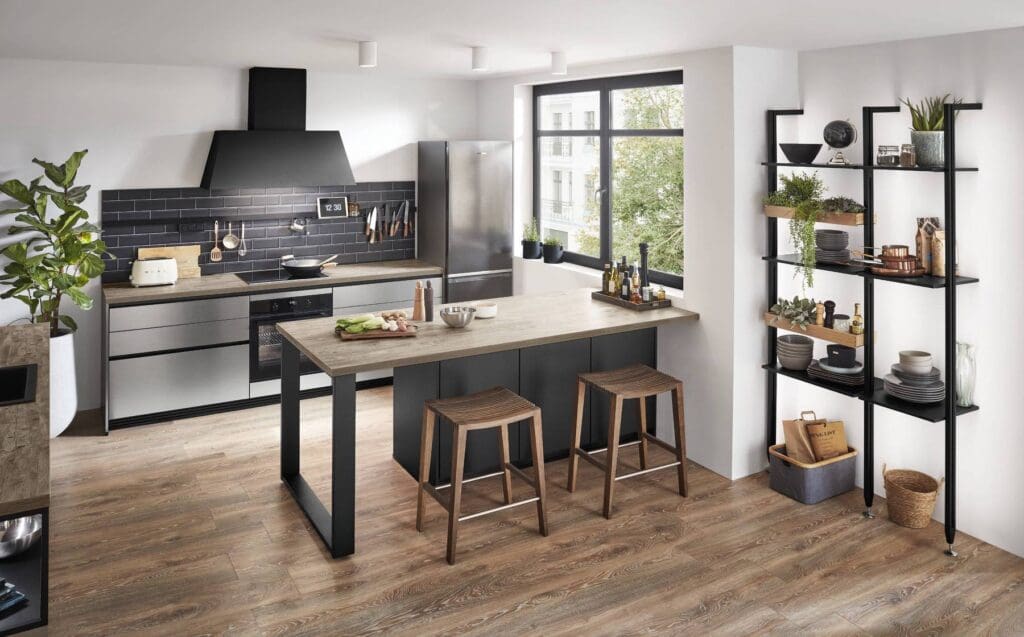
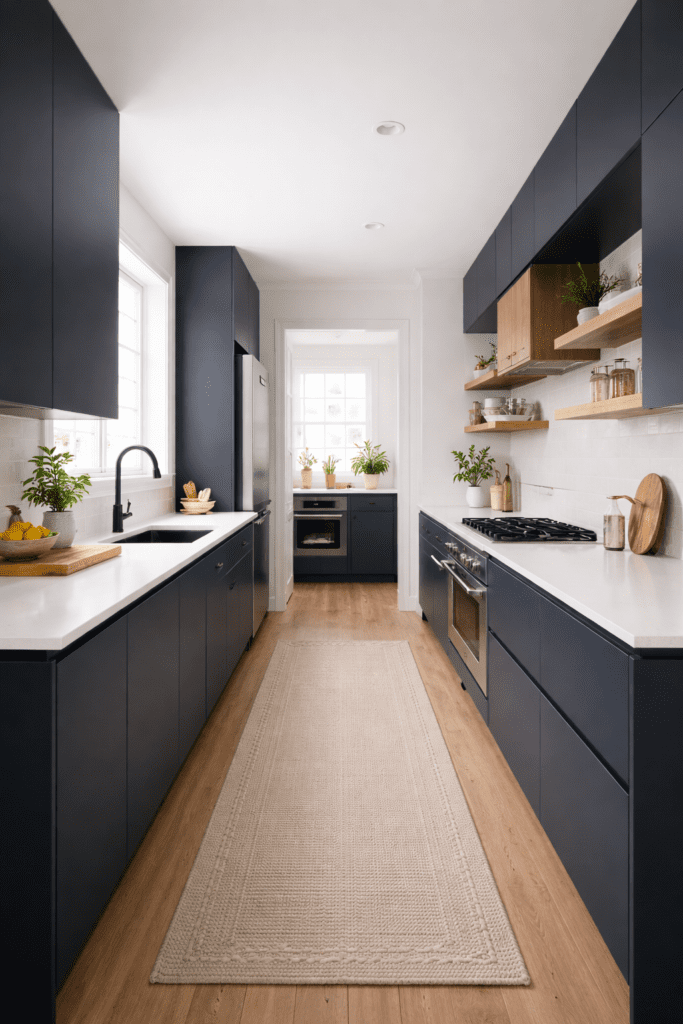
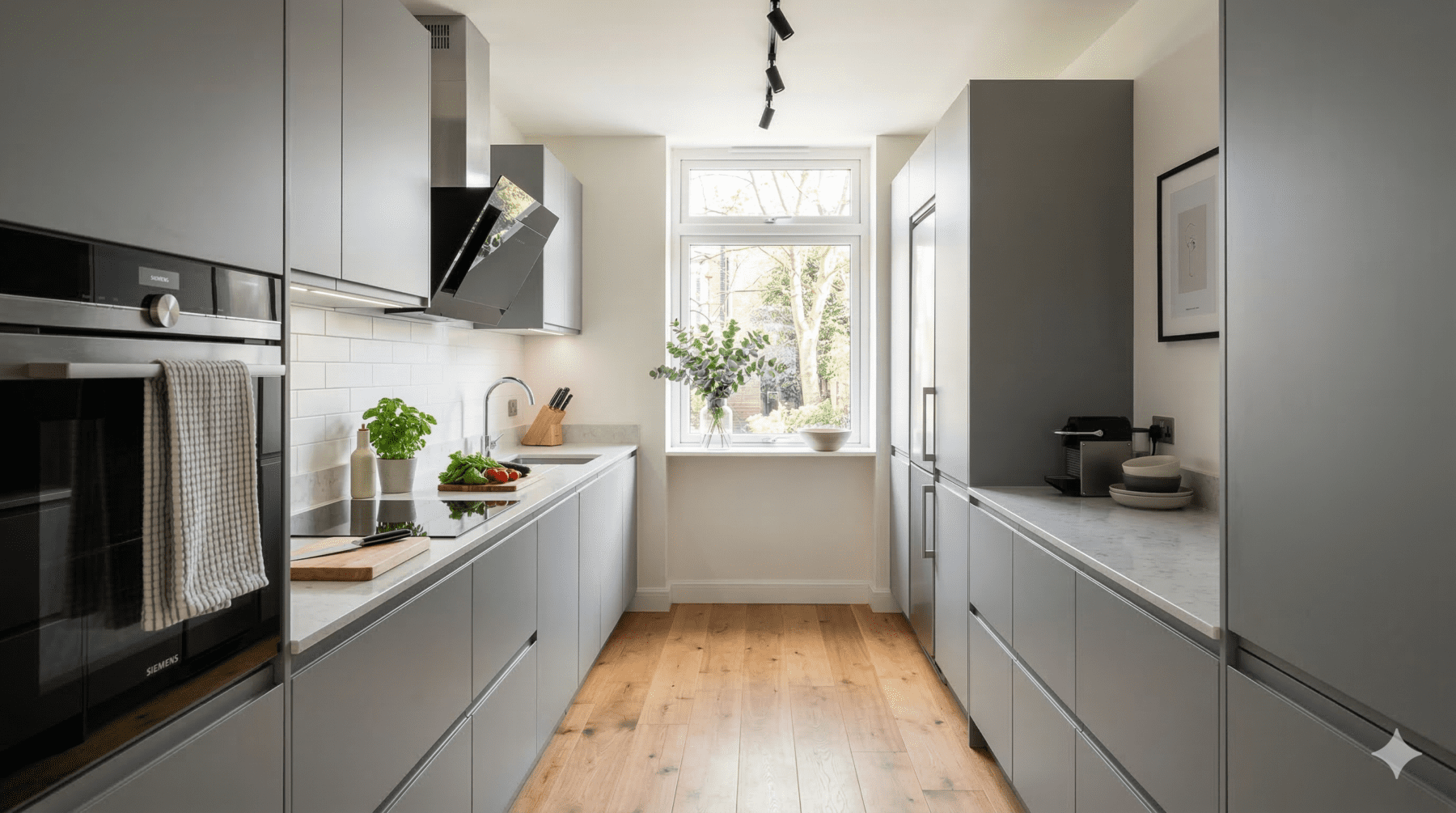
- Galley kitchens can work brilliantly because they keep everything close to hand. When planned well, they are efficient, focused and surprisingly elegant. The key is to avoid overcrowding them with competing features. Instead, maintaining clean lines, integrated appliances and consistent cabinetry will help a galley layout feel calmer.
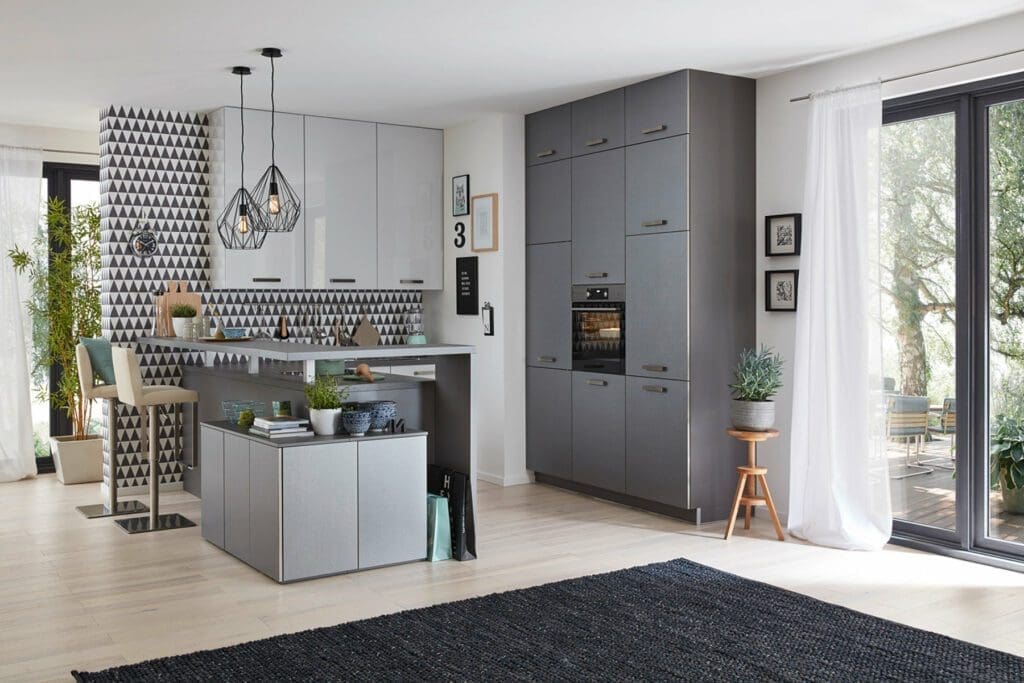
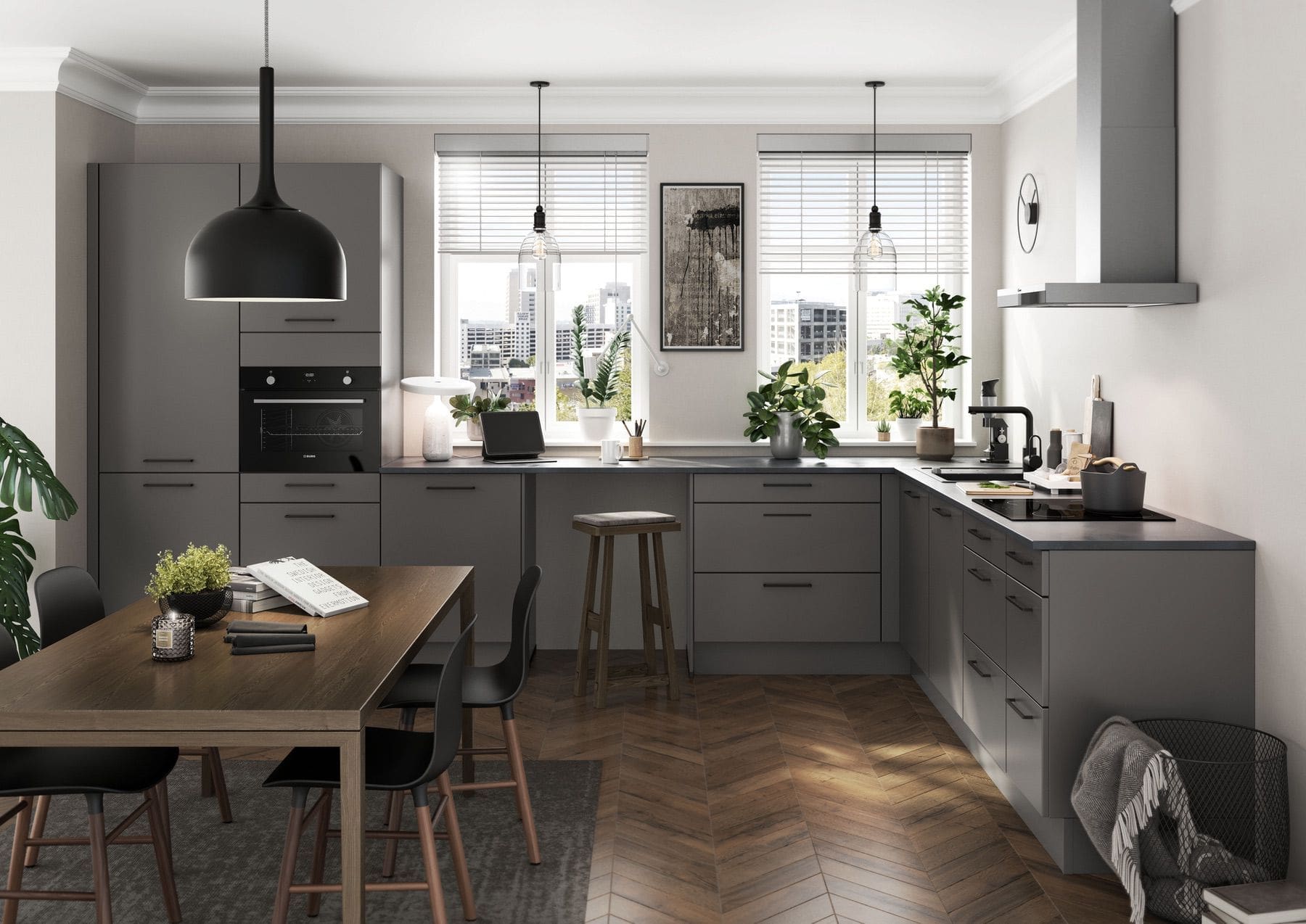
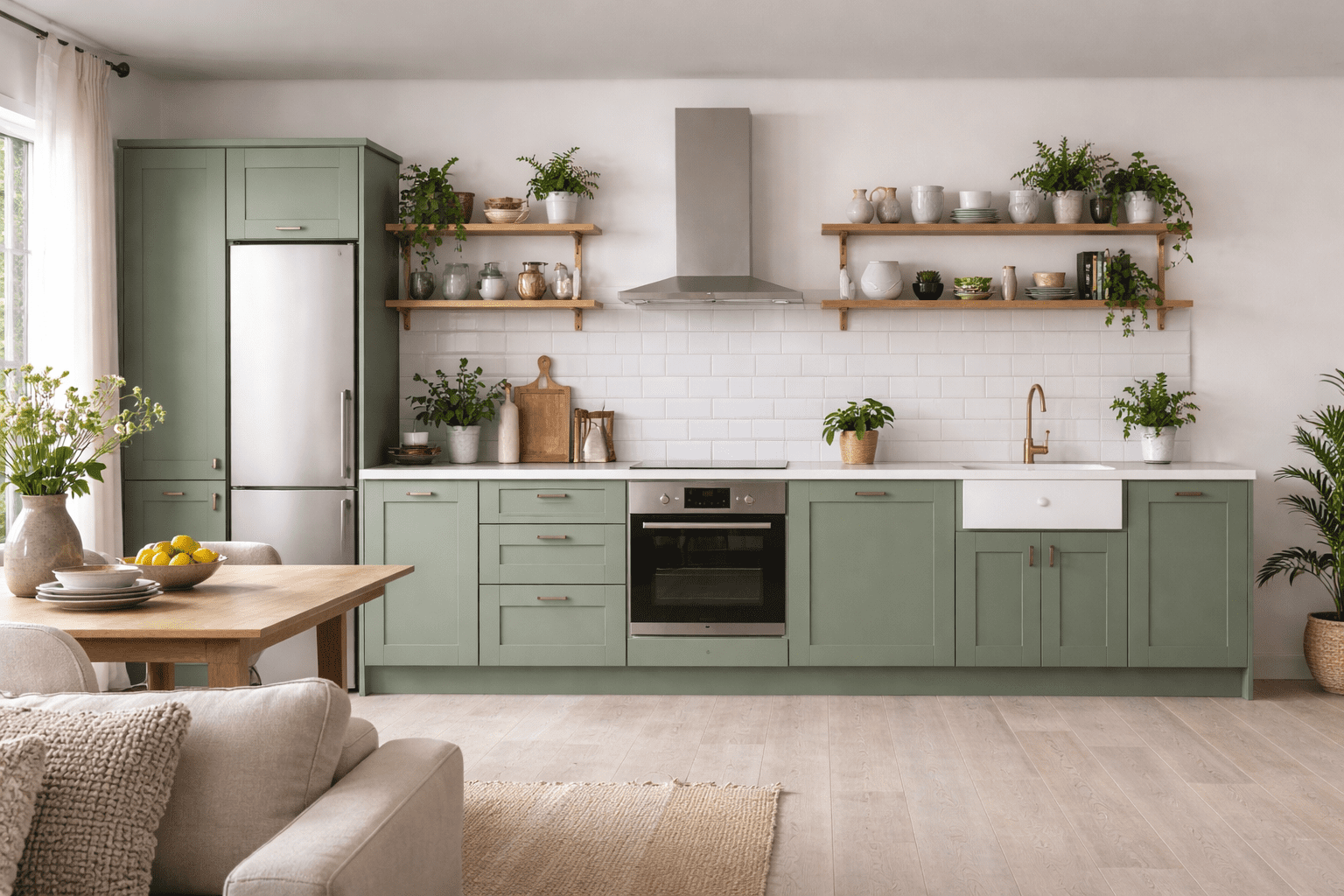
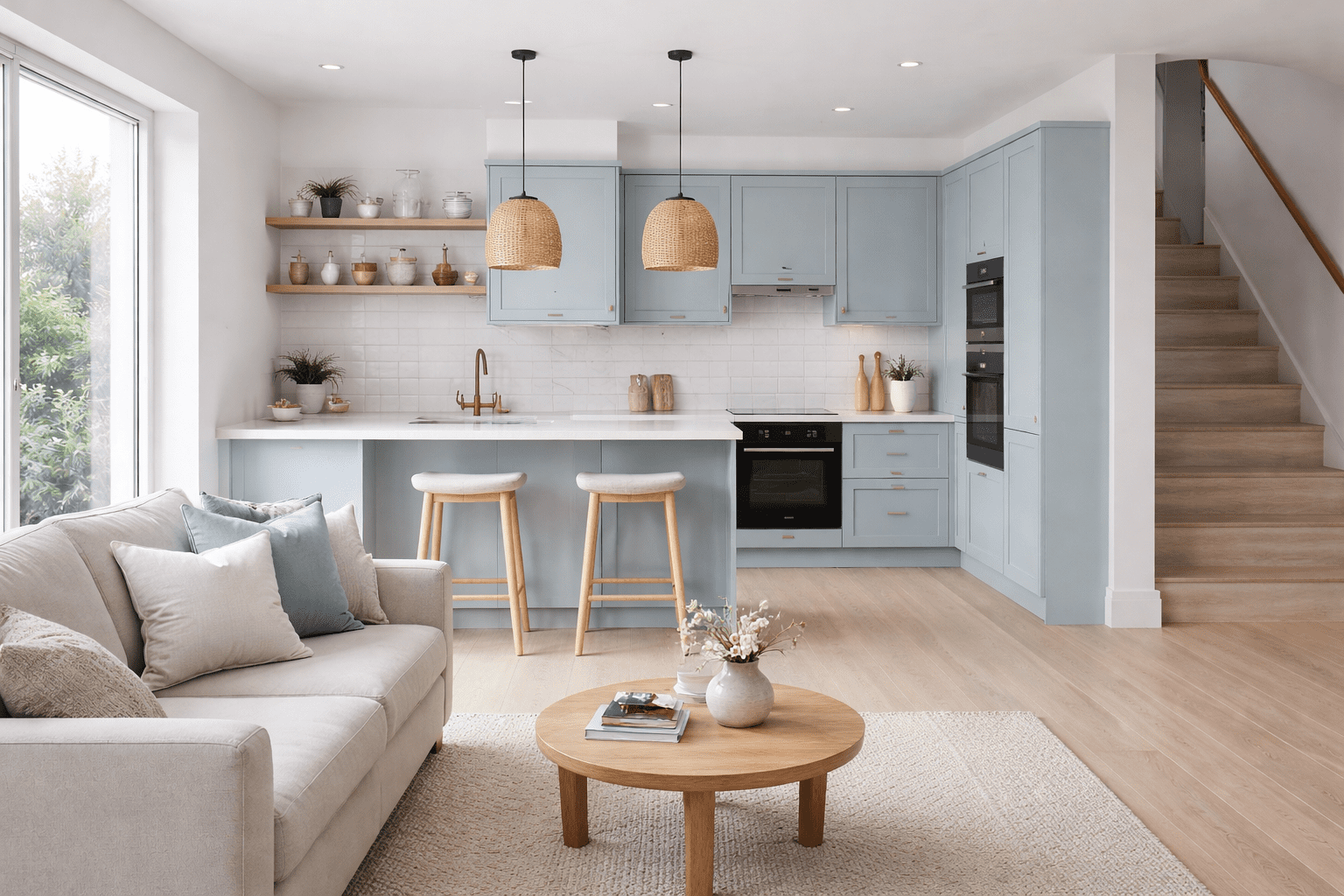
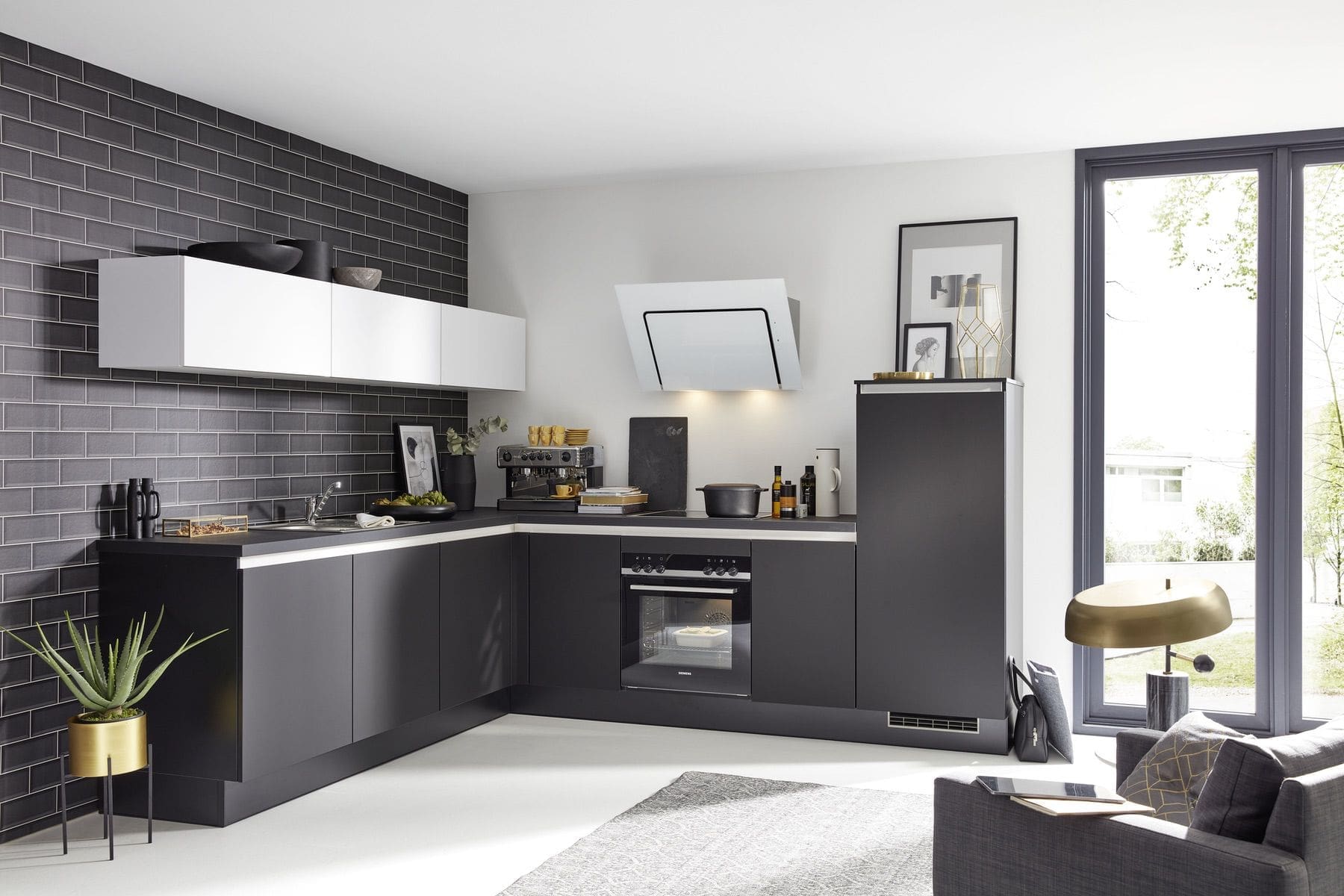
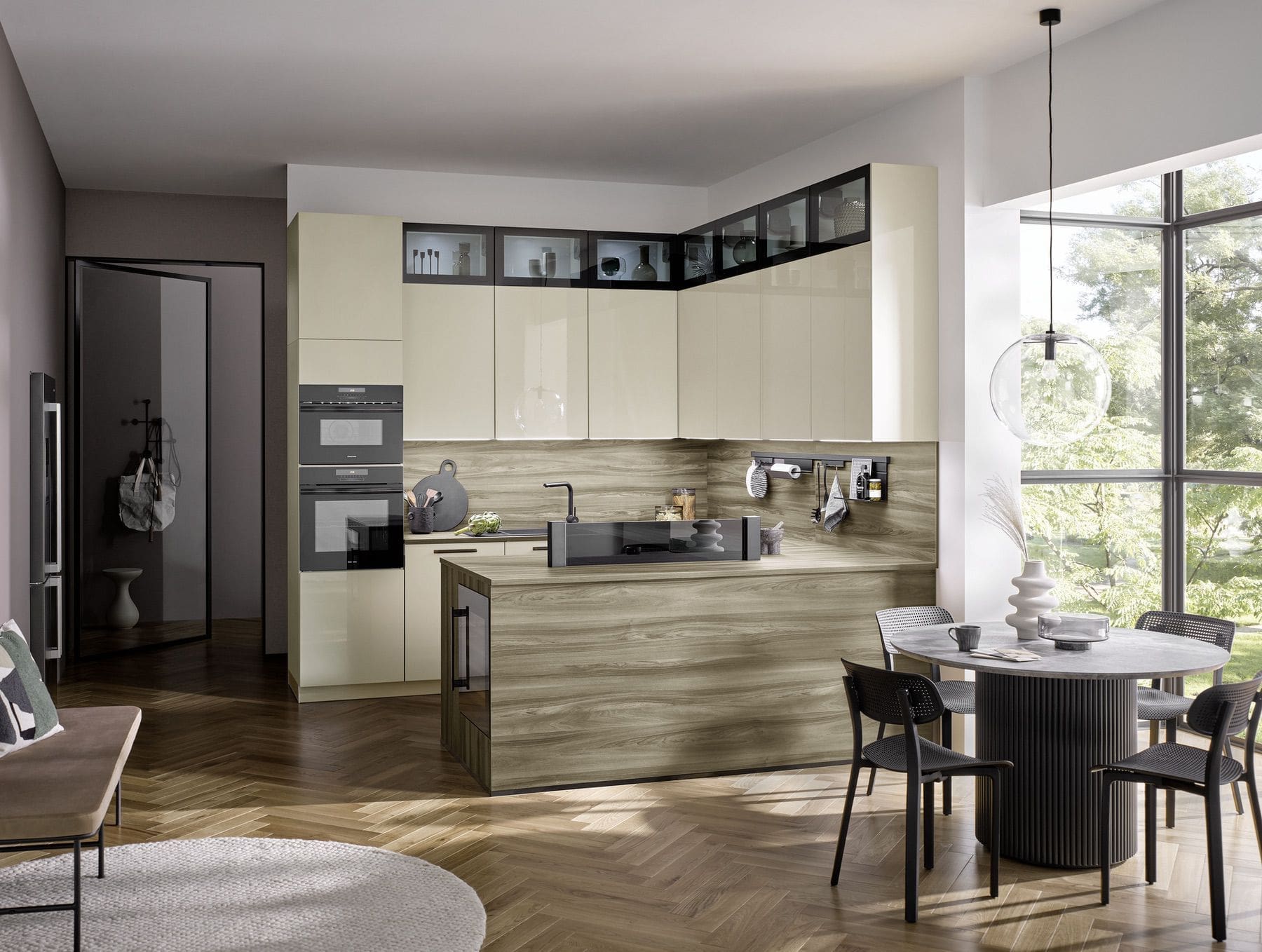
- L-shaped kitchens often suit smaller open-plan rooms because they free up more floor area and can create a better sense of flow. They also leave more flexibility for a small dining table or kitchen island if space allows.
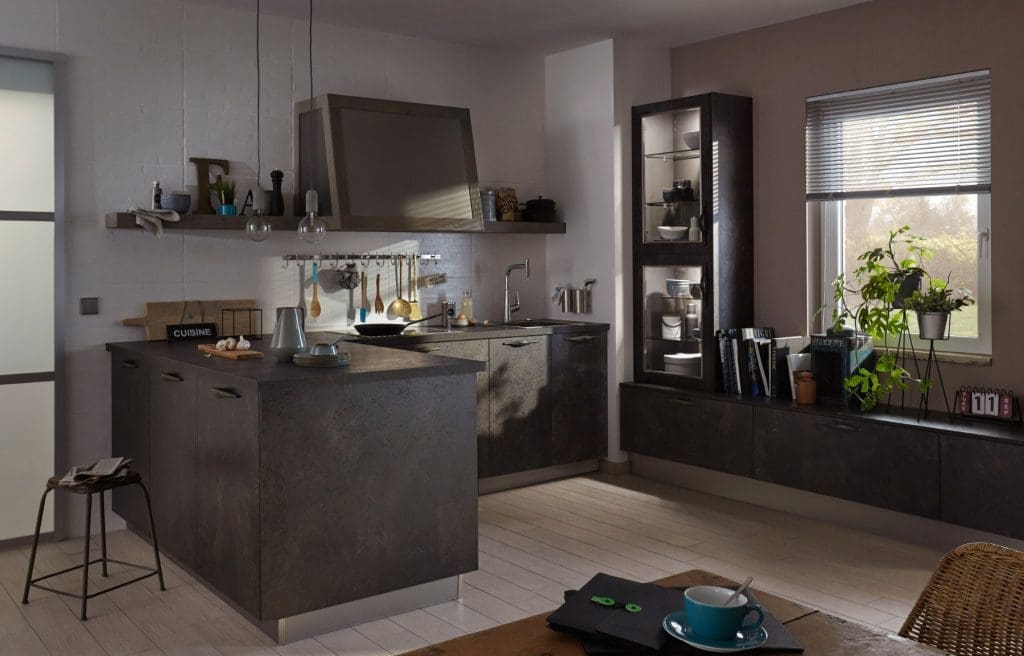
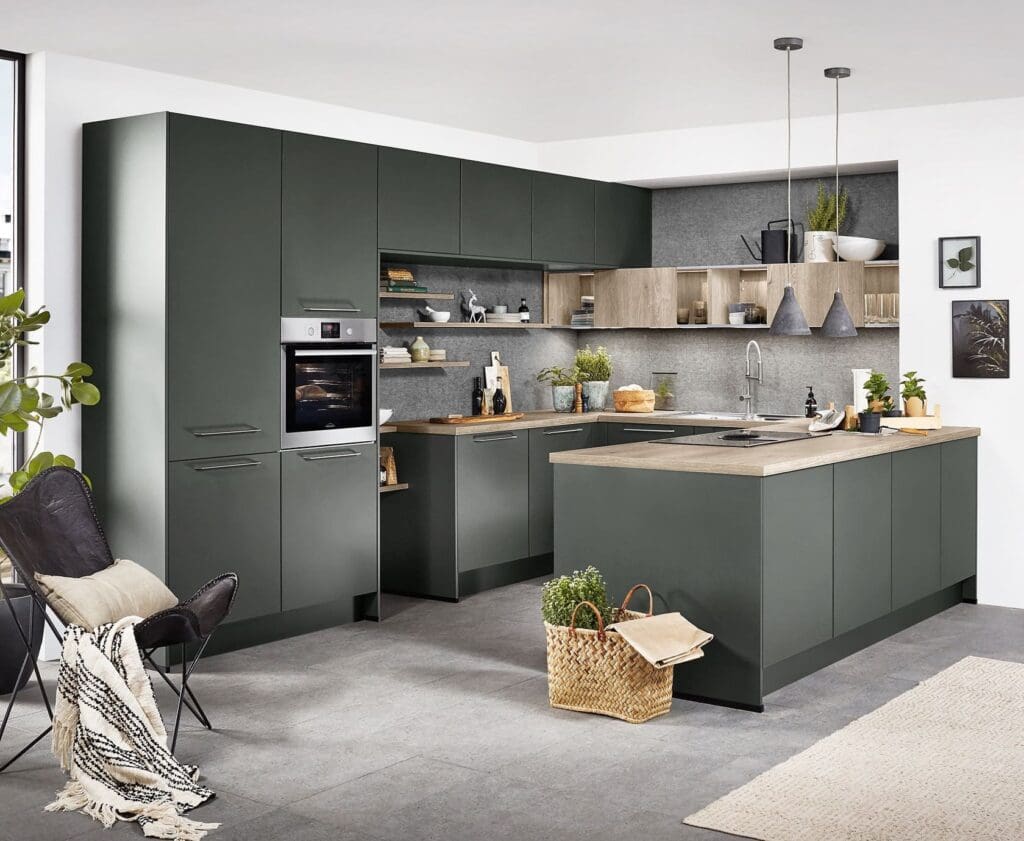
- U-shaped kitchens can be excellent in compact rooms where storage is the priority, but they do need careful handling. Too much kitchen cabinetry can make the space feel boxed in, so instead, lighter finishes, open sightlines, or selective open shelving can help stop the room feeling closed.
The strongest kitchen layout trend for 2026 is not about a single shape but about zoning and workflow. Even in a truly compact kitchen, designers are increasingly thinking in terms of preparation, cooking, washing and storage zones so that the space feels easier to use and less chaotic.
Small Kitchen Storage That Genuinely Helps
Storage advice for small kitchens often sounds impressive on paper but in a poorly planned kitchen, it can easily disappoint in real life. The most useful storage is not the most complicated but ultimately it’s the storage options that makes everyday habits easier.
Deep drawers are often better than traditional cupboards because you can see what you have without crouching or straining to reach to the back. Full-height cupboards can be excellent if they are planned with sensible internal shelves or pull-outs. Corner units still have their place, but only if they improve access rather than adding cost without much benefit.
Vertical thinking is also especially important in a compact kitchen. Space above eye level can be useful for less frequently used items, while a run of wall cabinets taken neatly to the ceiling can reduce visual clutter and avoid the dusty dead space that open tops often create. Recent advice for smaller kitchens also points to freestanding pantry cupboards, shallow storage in adjoining areas, and mobile pieces such as compact work tables as useful ways to support kitchens that simply do not have enough built-in storage.
Compact Appliances: Where They Help And Where They Do Not
Compact appliances can make a real difference to a small kitchen space, but they are not for everyone and need considered with care. For example, a 45cm dishwasher or compact oven can be a smart move but only usually when the household is small or the kitchen is particularly tight. Slimline dishwashers are still widely available in the UK and are specifically sold for narrower gaps under the worktop. Compact ovens are also a recognised option when space is at a premium.
Small kitchen appliances are very useful if they suit the way you live but if you cook often, entertain regularly or have a family, sacrificing too much capacity can quickly become annoying. In some kitchens, it is better to keep one full-sized appliance and reduce something else instead. The right question is not “What is the smallest version available?” but “What can this household realistically live with every day?”
Best Colour Ideas For Small Kitchens
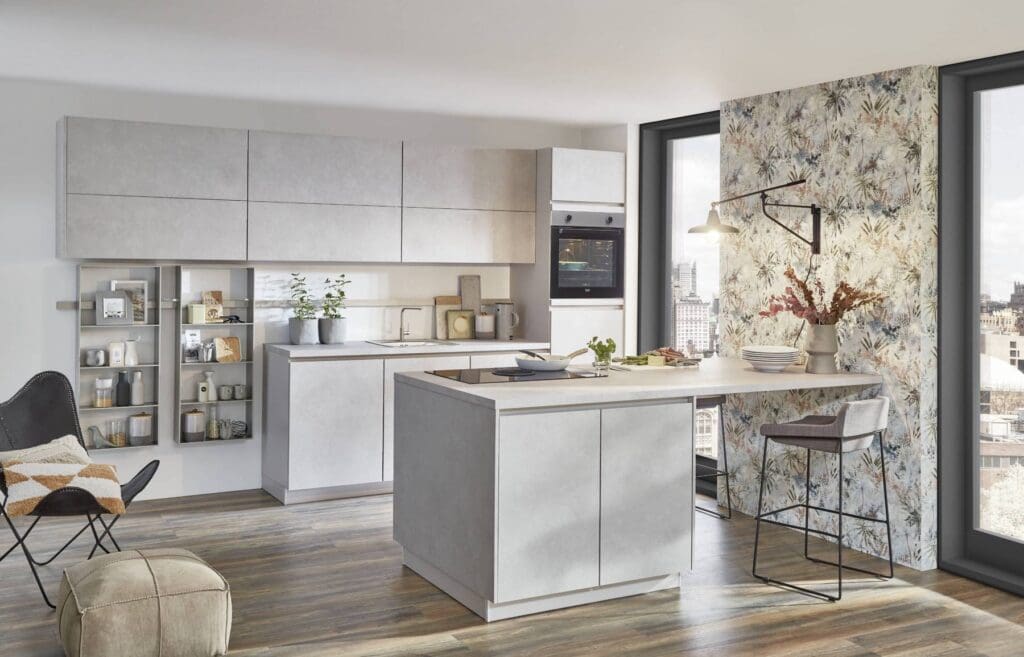
Light kitchen cabinetry work beautifully in small kitchens, and there is a reason they remain popular for small spaces. Soft whites, warm neutrals, pale wood and gentle greys can help the room feel brighter and more open, especially when natural light is limited.
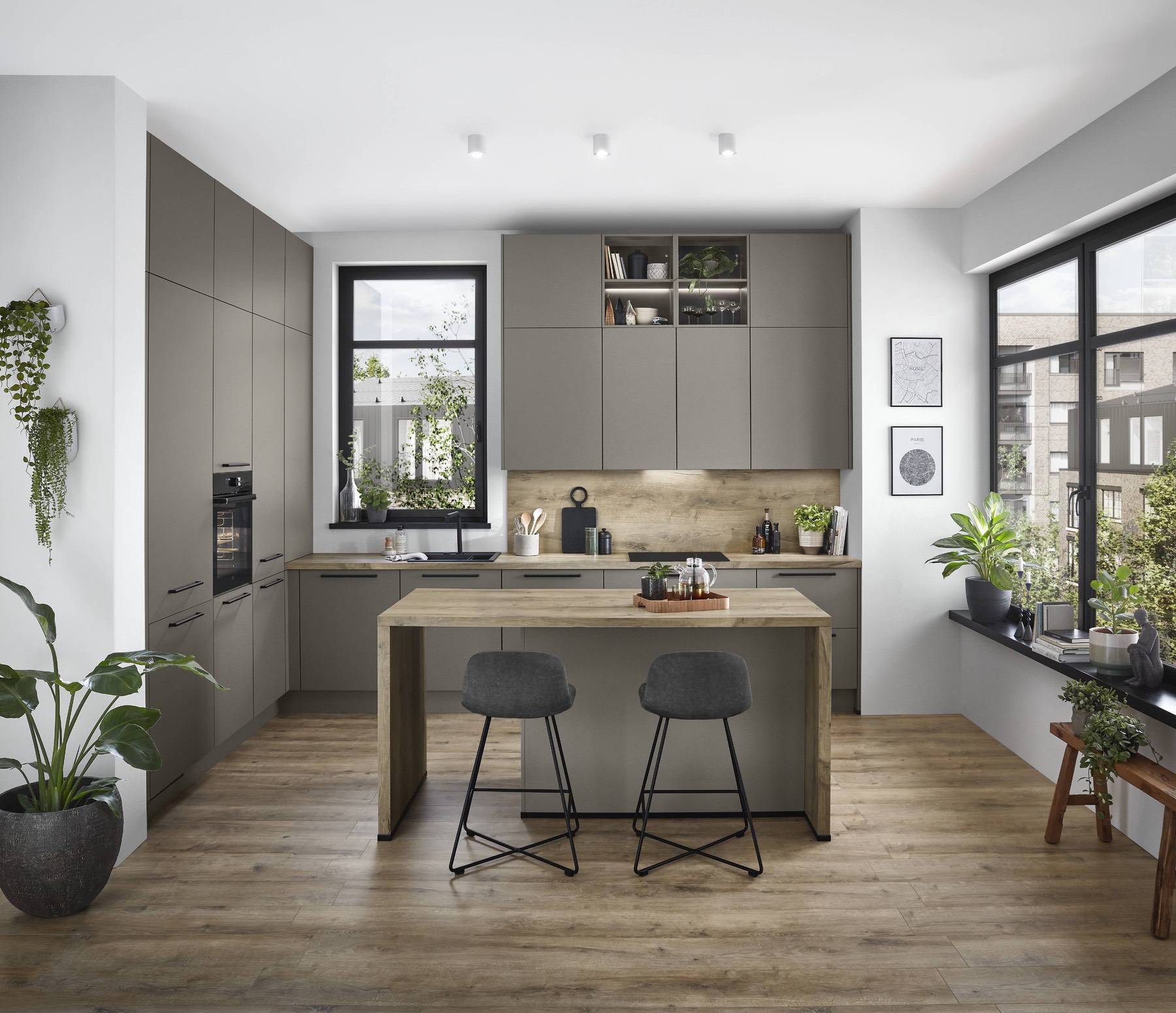
But the old rule that small kitchens must always be pale is too simplistic now. Darker kitchen colours can work extremely well in compact rooms when the design is balanced properly. A deeper base unit colour paired with lighter wall cabinets can ground the room without making it feel heavy. Equally, a full run of dark kitchen cabinetry can be striking in a well-lit kitchen, particularly if the finishes are simple and the room is not visually overworked.
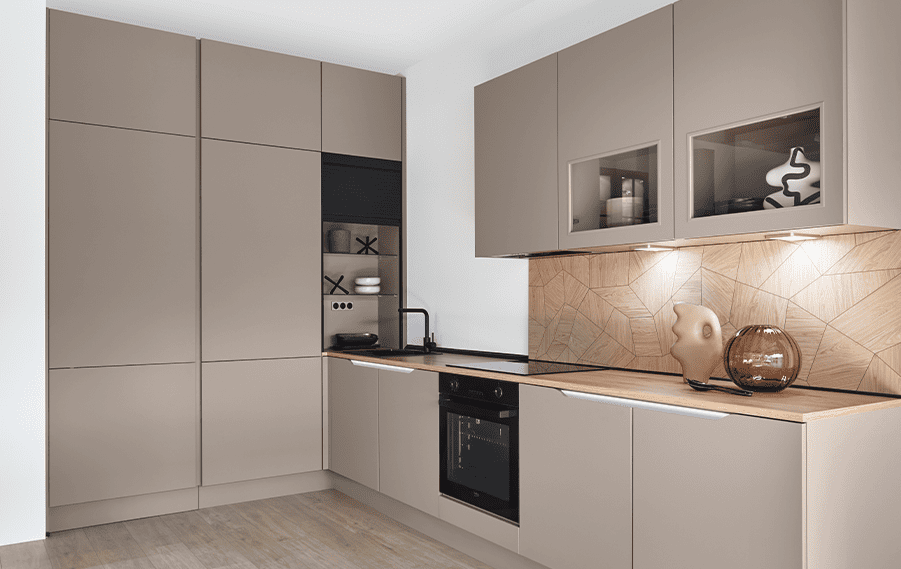
The broader 2026 colour direction in kitchens is warmer and softer than it has been in recent years. This suits small kitchens particularly well. Shades such as cashmere, mushroom, taupe and warmer off-whites can make a compact room feel more welcoming than stark white, while still keeping it light.
Gloss, Matt And Texture In A Small Kitchen
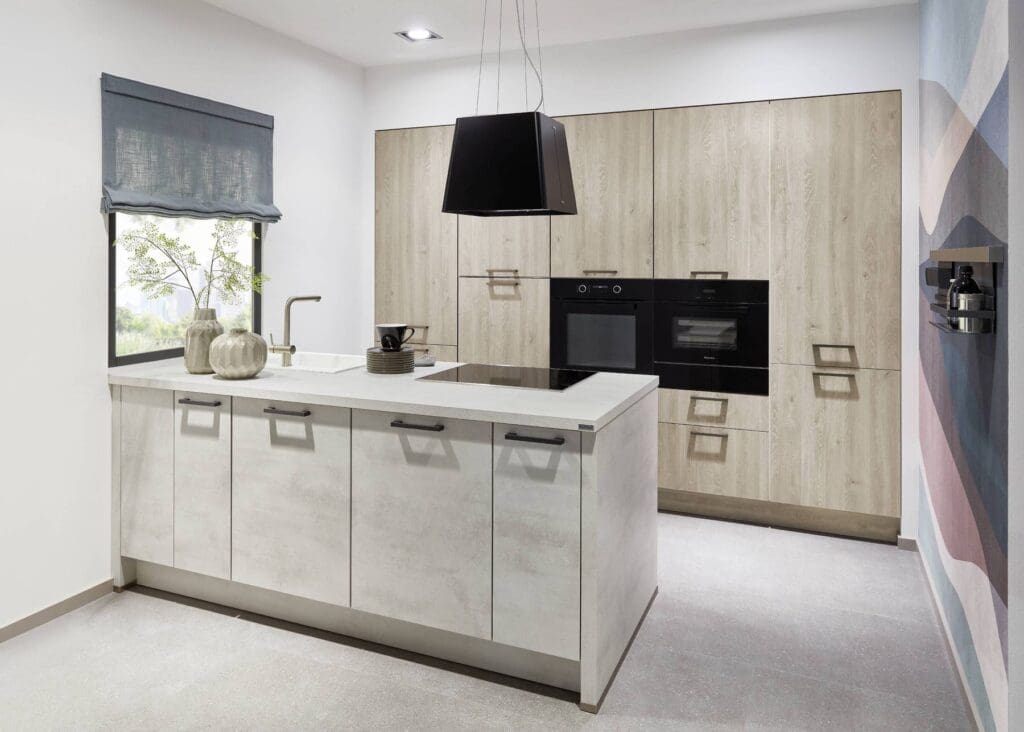
Gloss kitchen finishes still have a role in compact kitchens because it reflects light and can help the room feel brighter. In a kitchen with limited daylight, that can be helpful. However, matt kitchen finishes have become much more relevant for small kitchens than they once were as they create a calmer, more understated look and work particularly well in warmer neutral shades. If the room already has good light, matt kitchen doors can make a compact kitchen feel more settled and more expensive in appearance.
Texture is another useful tool. A small kitchen does not need a lot of it, but the right amount can stop the room feeling flat. A softly veined worktop, a lightly textured door finish or a splashback with some depth can add character without cluttering the scheme.
Fresh Insight: Why Small Kitchens Need Fewer Ideas, Not More
One of the biggest mistakes in small kitchen design is trying to include every clever idea at once. Too many contrasting finishes, too many storage gadgets, too many decorative details or too many changes in depth can make a compact room feel busy before you have even filled a cupboard.
Small kitchens usually improve when the design becomes more decisive. One strong colour story. One clear layout. One or two standout features. Good lighting. Proper storage. This approach tends to feel more confident and more luxurious than trying to prove how much the room can contain.
This is also why some of the latest smaller-kitchen trends need a measured hand. Mirrored splashbacks, patterned floors or darker kitchen cabinetry can all work, but they need room to breathe. In a compact kitchen, restraint is often what makes a bold idea succeed.
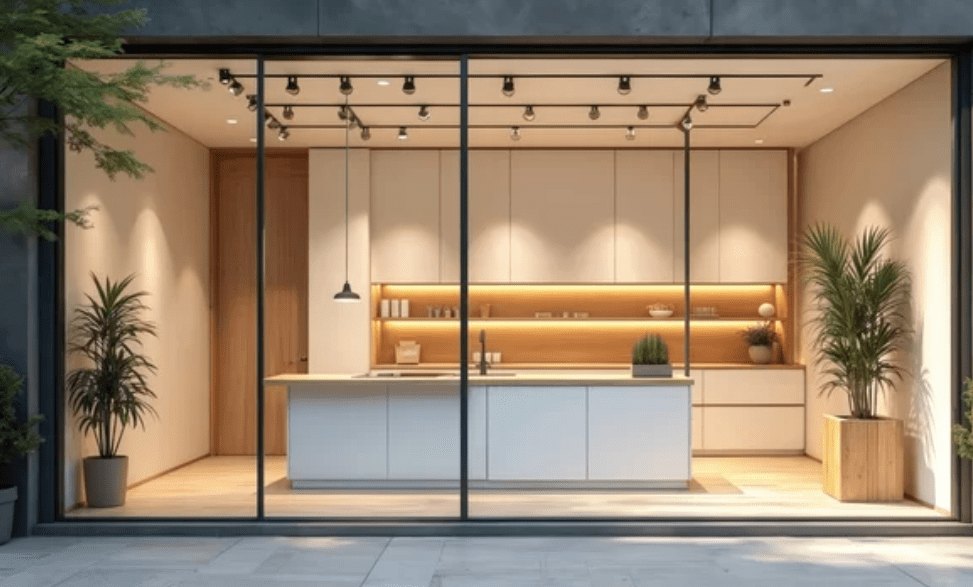
What To Look For In Small Kitchen Showroom Displays
If you are planning a small kitchen, don’t just look at how a showroom display appears from across the room. Open the drawers. Stand at the hob and see where the prep space is. Check whether tall units feel too imposing. Look at how far doors project when open. Ask whether a slimline appliance would genuinely suit your household, or whether it would be a compromise too far.
It is also worth paying attention to the feeling of the display. Does it seem calm or crowded? Is there enough landing space around the main working areas? Can you imagine unloading shopping, making tea and cooking supper there without getting irritated? These kind of questions often tell you more than the style label ever will.
Final Thoughts
It is worth remembering that a small kitchen does not need sympathy but sharp planning and good judgement. The most successful compact kitchens are not the ones that copy big-room ideas on a reduced scale, but the ones that understand what matters most to the household, and build from there.
When layout, storage, light and finish choices are handled properly, a small kitchen can feel every bit as considered as a larger one, and in some cases, it can feel better. It can be quicker to use, easier to keep tidy and more naturally efficient. The aim is not to pretend the room is bigger than it is; It is to make the space feel well resolved, comfortable and intelligently designed.
Small Kitchen FAQs
What Is The Best Layout For A Small Kitchen?
There is no single best layout. Galley, L-shaped and U-shaped kitchens can all work well in compact rooms if the layout suits the shape of the space and the way the kitchen is used.
Can Dark Colours Work In A Small Kitchen?
Yes. Darker colours can work very well when balanced with good lighting, lighter surfaces or a mix of darker and lighter cabinetry.
Are Gloss Kitchens Better For Small Spaces?
Gloss can help reflect light, which is useful in some compact kitchens, but matt and textured finishes can work just as well when the room has enough light and the colour palette is well judged.
Should I Choose Compact Appliances For A Small Kitchen?
Sometimes, yes. Slimline and compact appliances can free up valuable room, but they only make sense if their capacity still suits your household.
How Can I Add More Storage To A Small Kitchen?
The most effective options often include deep drawers, tall cupboards, ceiling-height units, better internal organisation and making smarter use of awkward corners.
Can A Small Kitchen Still Feel Luxurious?
Absolutely. A compact kitchen can feel highly polished when the layout is efficient, the storage is thoughtful and the finishes are chosen with care rather than overcomplicated.