Split Level Kitchen Islands: A Smarter Way to Design Your Kitchen
When planning a new kitchen, few features make a stronger statement than an island. Whether it’s the focal point of an open-plan space or the functional core of a compact kitchen, the right kitchen island design can completely transform how you cook, socialise, and live. One of the most innovative and practical options is the split level kitchen island — a concept that combines form, function, and flexibility in one clever piece of design.
If you’re considering a kitchen island with different levels, or exploring whether a split-level island could suit your home, this guide will give you a professional insight into how to make it work beautifully for your home and lifestyle.
What Is a Split Level Kitchen Island?
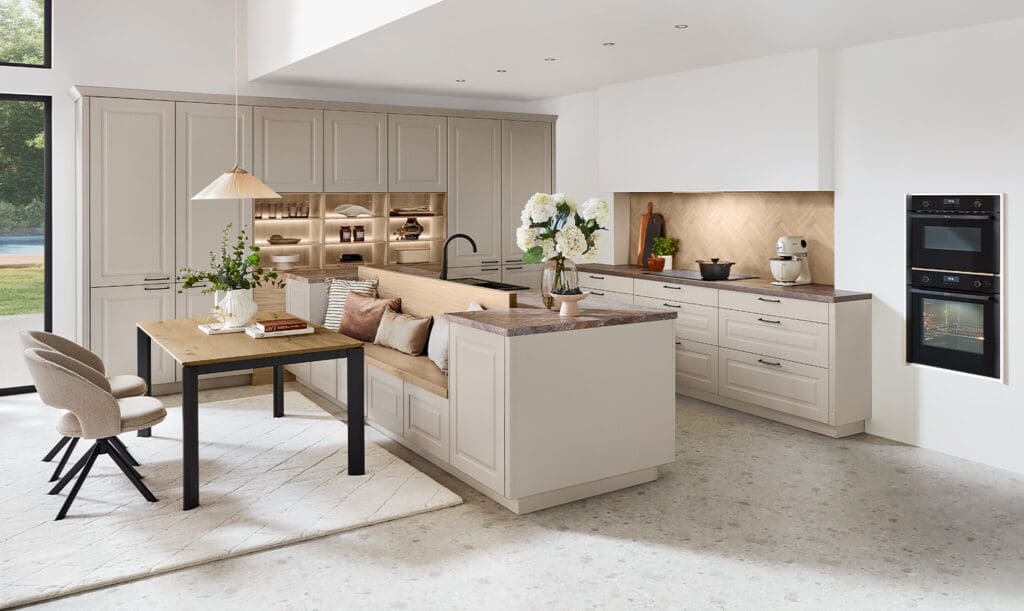
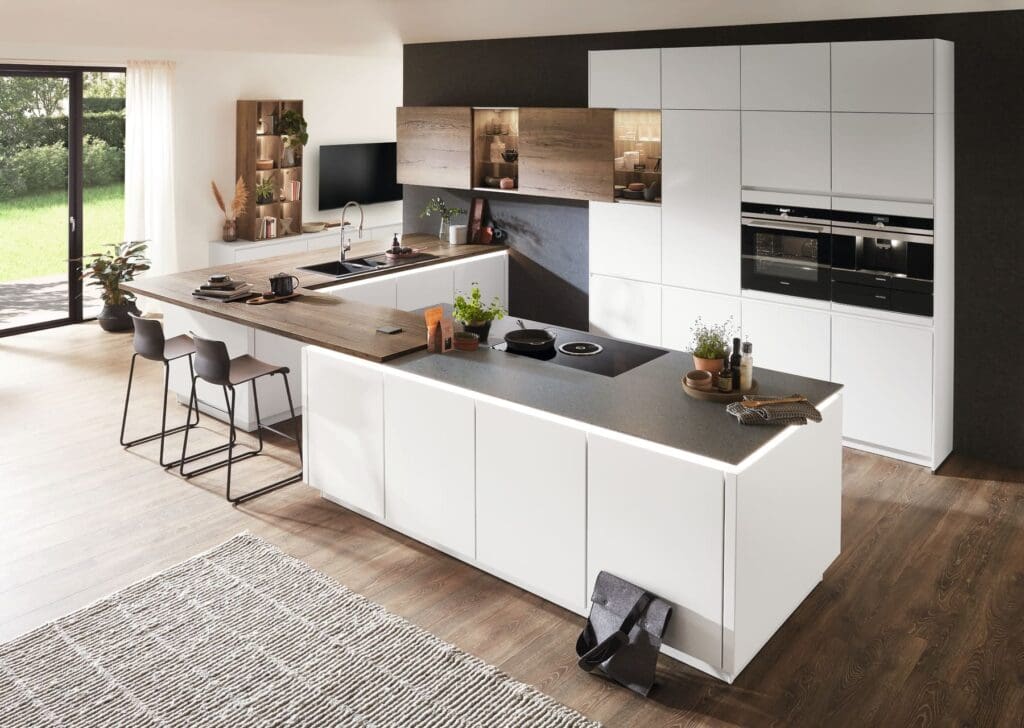
A split-level kitchen island features two or more distinct surfaces set at varying heights. Typically, one level sits at standard worktop height (around 900mm) for food preparation, while the other is raised or lowered for alternative functions, such as dining, serving, or housing appliances.
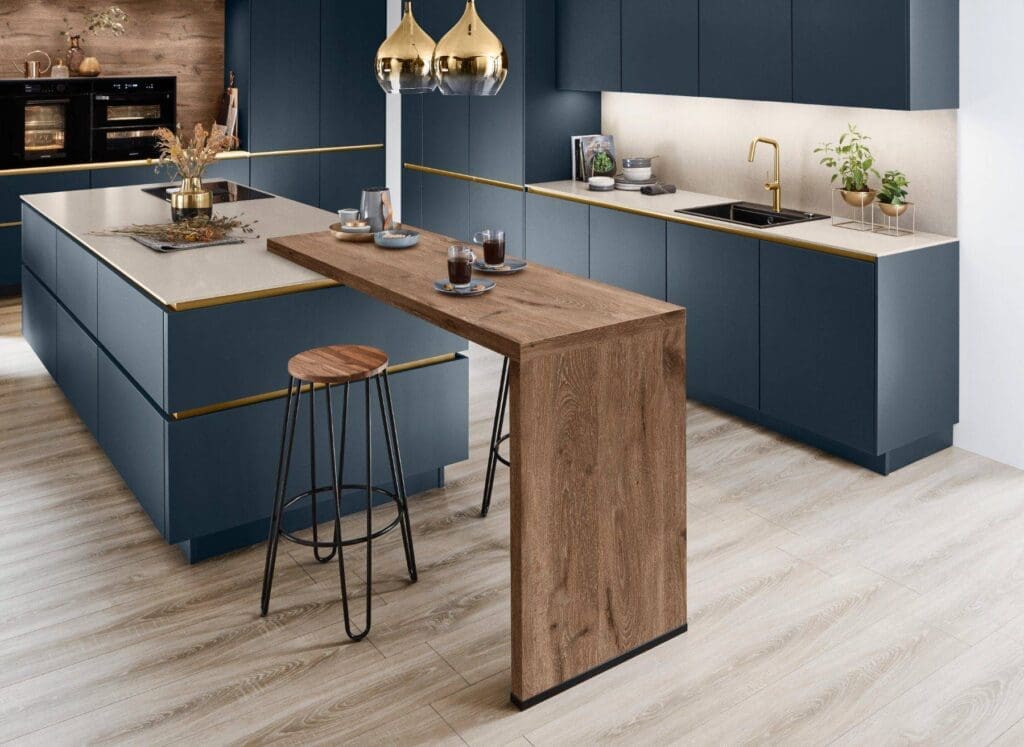
These differences in height create natural zones within the kitchen. For example, a raised breakfast bar can separate a cooking area from a seating space, while a lowered section can make food prep more ergonomic or accessible. It’s a clever way to define areas in an open-plan layout without the need for walls or bulky furniture.


The Benefits of Split Level Kitchen Islands
1. Zoned Functionality
A kitchen island with split levels allows you to separate tasks neatly. You could have a durable quartz surface for chopping and food prep, and a slightly higher or lower timber breakfast bar for casual dining. This design keeps the space organised and improves workflow — particularly useful if you have a busy household or love to entertain.
2. Improved Ergonomics
Not everyone works comfortably at the same height. A split level kitchen island design lets you tailor different sections for different needs. Lower worktops can be ideal for kneading dough or rolling pastry, while raised surfaces work better for standing tasks or concealing kitchen clutter from the dining area.
3. Seamless Social Connection
Open-plan kitchens can sometimes lack boundaries. A kitchen island with a breakfast bar or raised dining section helps to create a subtle divide between cooking and socialising zones. Guests can sit comfortably with a coffee while you prepare food, without getting in the way. It keeps everyone connected but allows you to maintain a sense of order.
4. Enhanced Aesthetics
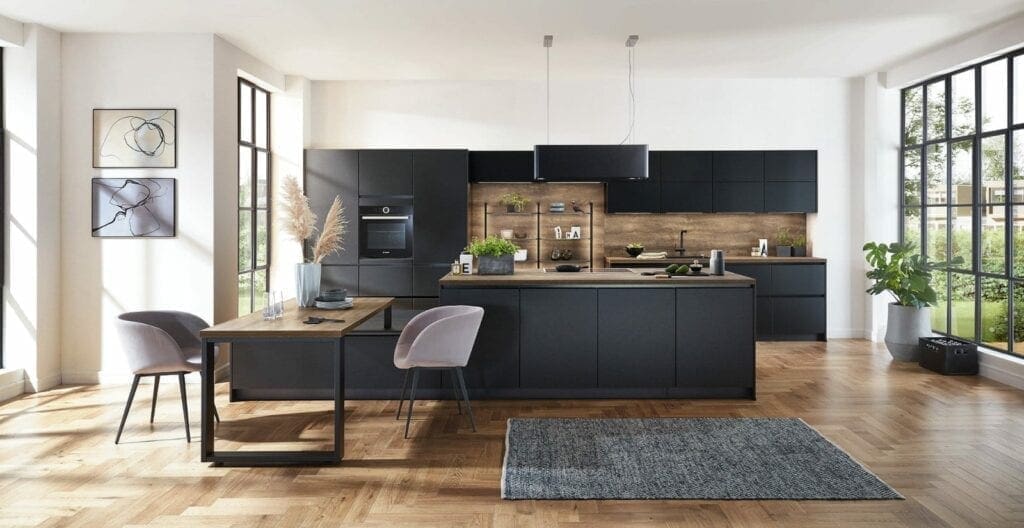
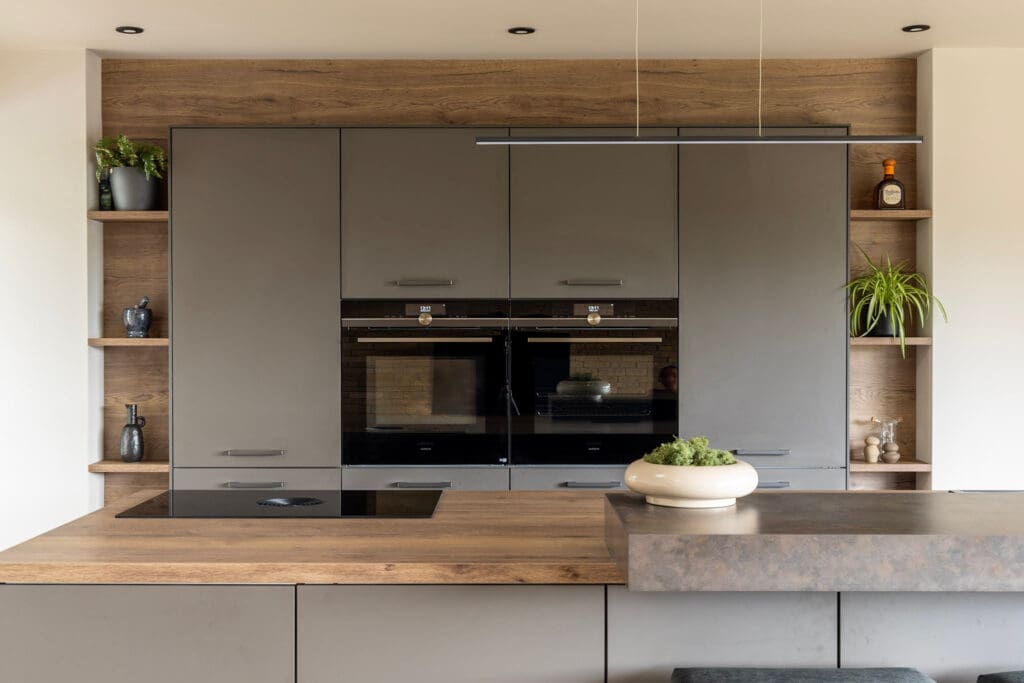
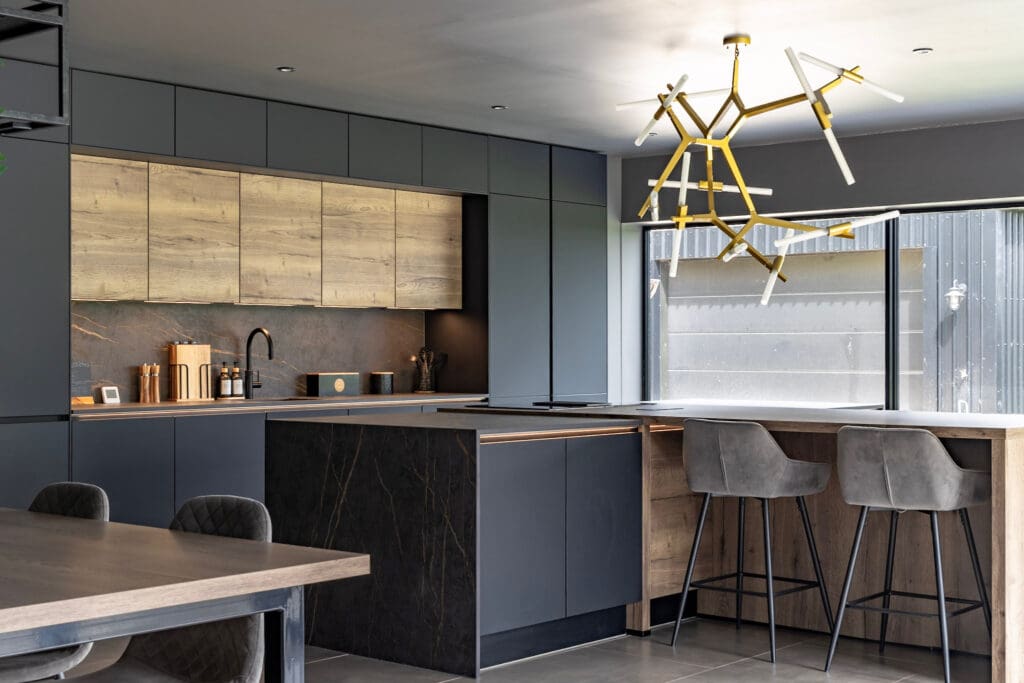
Split level kitchen islands create visual interest. The change in height draws the eye and gives your kitchen a dynamic, layered appearance. You can also play with contrasting materials — such as matt black cabinetry paired with a natural oak bar or ceramic worktop — for a bespoke, designer finish.
5. Practical Concealment
If you like to entertain but don’t want guests seeing every pot, pan or chopping board, a raised section can act as a discreet screen. It allows you to enjoy an open-plan space while keeping worktops looking tidy and uncluttered.
Making Split Level Kitchen Islands Work in Different Spaces
A common misconception is that multi-level kitchen islands only suit large kitchens. In reality, split level islands can be adapted to almost any layout with smart design.

For Smaller Kitchens
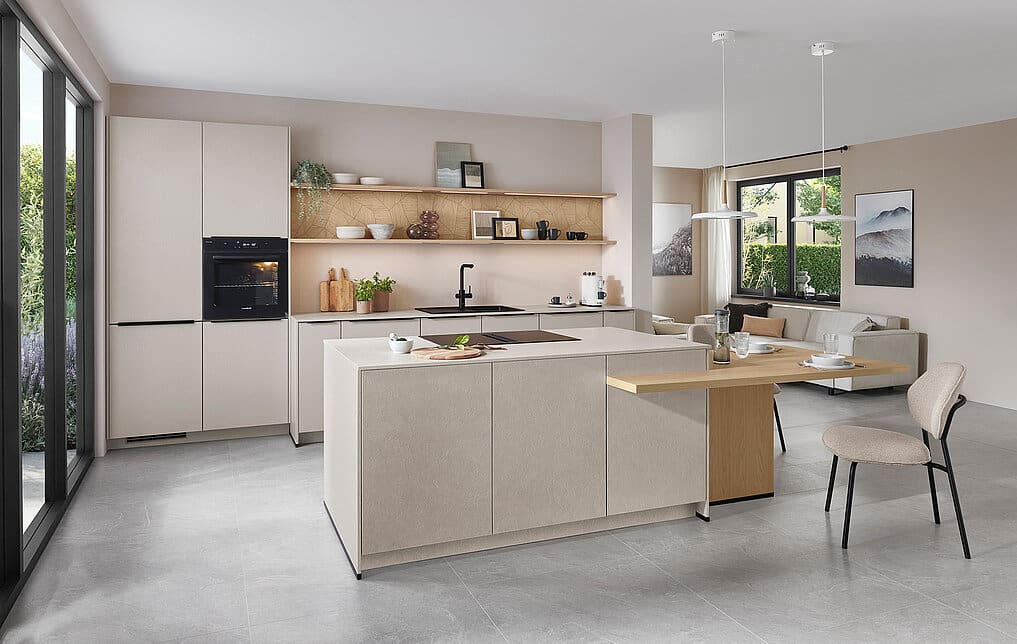
Compact kitchens benefit from multi-use furniture. A split level island can combine prep space, dining, and storage all in one. Brands such as Nobilia and Impuls are experts at designing kitchen islands with different levels tailored for smaller rooms.
For instance, Nobilia’s Touch and Laser collections offer compact kitchen island concepts with integrated seating and smart undercounter storage. The mix of surfaces — from durable laminate to warm wood tones — gives you both practicality and comfort without compromising space.
Impuls also provides clever modular island systems that can be configured with varying heights, ideal for studio apartments or narrower kitchens.
For Family Kitchens
If your kitchen doubles as a social space, a kitchen island with a breakfast bar works beautifully. Consider a raised section where children can enjoy breakfast or do homework while you cook.
German brand, Ballerina Kitchens offers elegant split-level concepts with child-friendly materials, anti-fingerprint finishes, and wipe-clean laminates — perfect for busy households. A two-tier kitchen island can also help define areas: one for family interaction, one for practical kitchen tasks.
For Open-Plan Living Spaces
In modern open-plan homes, the kitchen often flows into a dining or living area. A split level kitchen island helps create a natural division without losing openness.
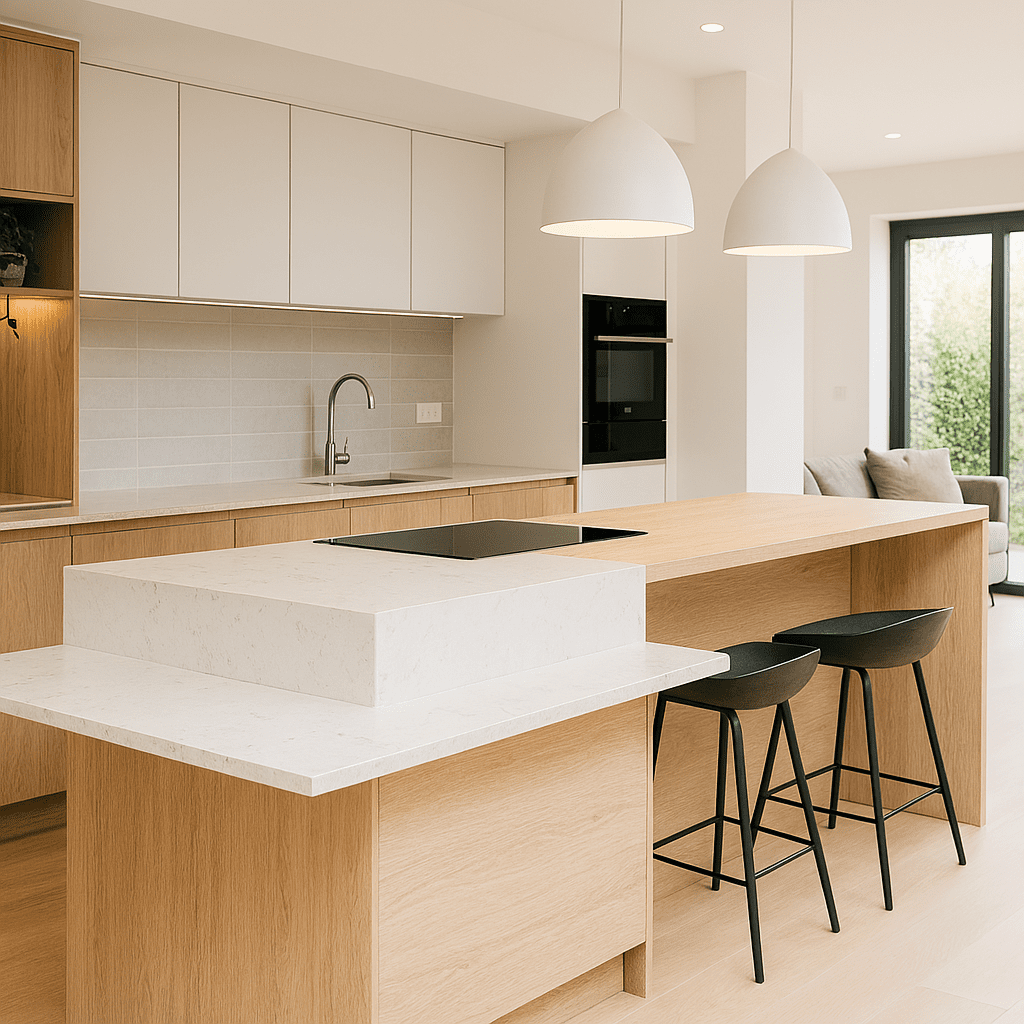
Next125, known for its architectural German kitchen designs, uses layered island structures to great effect. Their islands often combine a sleek quartz or ceramic prep surface with a slightly higher oak breakfast ledge, bringing both functionality and texture to large open spaces.
Similarly, Bauformat’s flexible island systems allow for varying worktop heights that transition seamlessly between cooking and entertaining zones.
Design Ideas for Kitchen Islands with Different Levels
When planning a kitchen island with split levels, there are several design directions to consider depending on your lifestyle and aesthetic preferences.
1. The Two-Tier Breakfast Bar
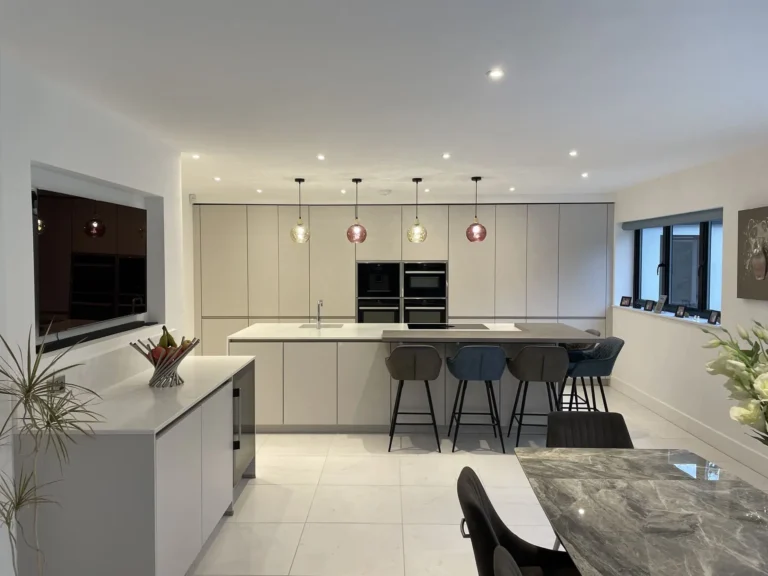
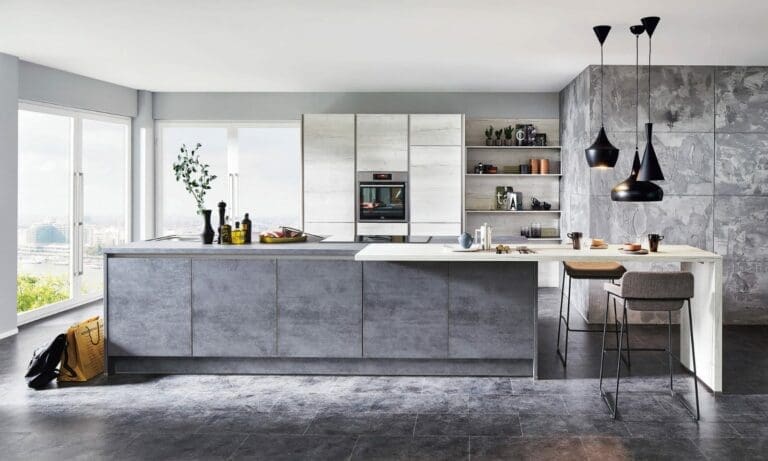
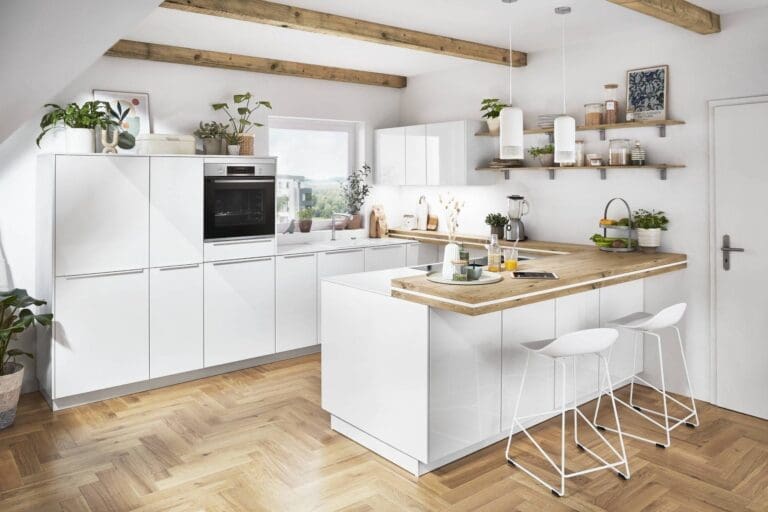
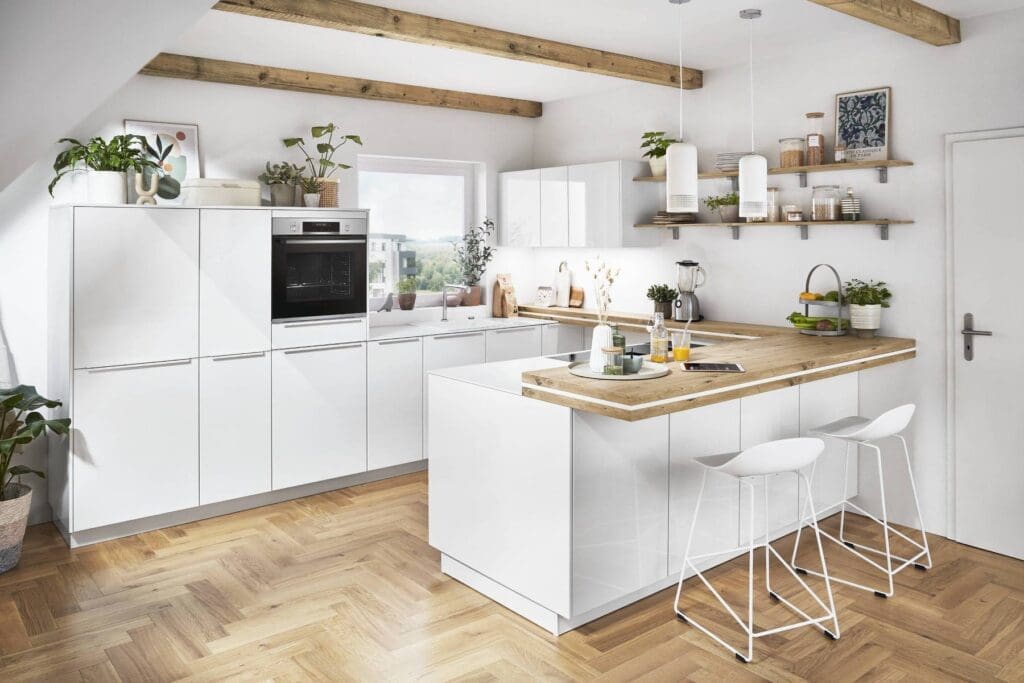
This is one of the most popular layouts. The main worktop sits at standard height, while a raised bar (around 1,050mm) creates an inviting seating area. It’s ideal for sociable kitchens, offering space for stools and casual dining. Use materials that contrast slightly to define each level — for example, a marble-effect quartz top paired with a warm oak breakfast bar.
2. The Waterfall Island Split
A stylish choice for contemporary interiors, the waterfall split involves extending one surface vertically down the island side. Brands like Brigitte Kitchens offer seamless stone and ceramic worktops that make this design look effortless, and it’s a striking feature that enhances the modern appeal of your kitchen while maintaining function.
3. The Sunken Prep Zone
If you love baking or prefer a lower workspace, consider a lowered section built into your island. A drop of 100–150mm from the main surface creates an ergonomic area for food prep. It’s also handy for children learning to cook, giving them easier access.
4. Integrated Dining Table Extension
A popular design in German and Scandinavian kitchens, this approach extends the kitchen island with a slightly lower dining table. Bauformat and Next125 both offer elegant table extensions using real wood veneers and metal accents. It’s a sophisticated solution that blends everyday dining with high design.
5. Mixed Materials for Visual Interest
Split level designs naturally lend themselves to material contrast. Combining finishes such as ceramic, quartz, glass, and timber gives depth and warmth to your kitchen. Nobilia’s Structura range, for example, pairs rustic oak textures with sleek matt surfaces to create balance between natural and modern elements.

Choosing the Right Materials
Because each level of your island may serve a different purpose, it’s worth choosing materials that suit each function.
- Preparation areas – Opt for durable, easy-to-clean worktops such as quartz or ceramic. They withstand daily use and are ideal for food prep.
- Dining or bar areas – Warm, tactile materials such as wood or wood-effect laminate create a welcoming atmosphere.
- Accent panels or end pieces – Consider using contrasting colours or finishes to highlight the split in height. For example, a graphite base with a walnut bar top.
Ballerina and Brigitte both excel in creating beautiful contrast finishes, from ultra-matt lacquered doors to soft-touch laminates and real wood veneers. These finishes complement split-level designs perfectly by adding depth and character.
Lighting for Split Level Islands
Lighting is key to showcasing a kitchen island with different levels. Consider combining task lighting above the main worktop with softer, ambient lighting above the raised or lower section.
Pendant lighting works particularly well above breakfast bars, while recessed LED strips can highlight the change in depth and add atmosphere during evening hours. Adjustable lighting also helps to define zones further — functional for cooking and inviting for socialising.
Kitchen Storage and Appliance Integration
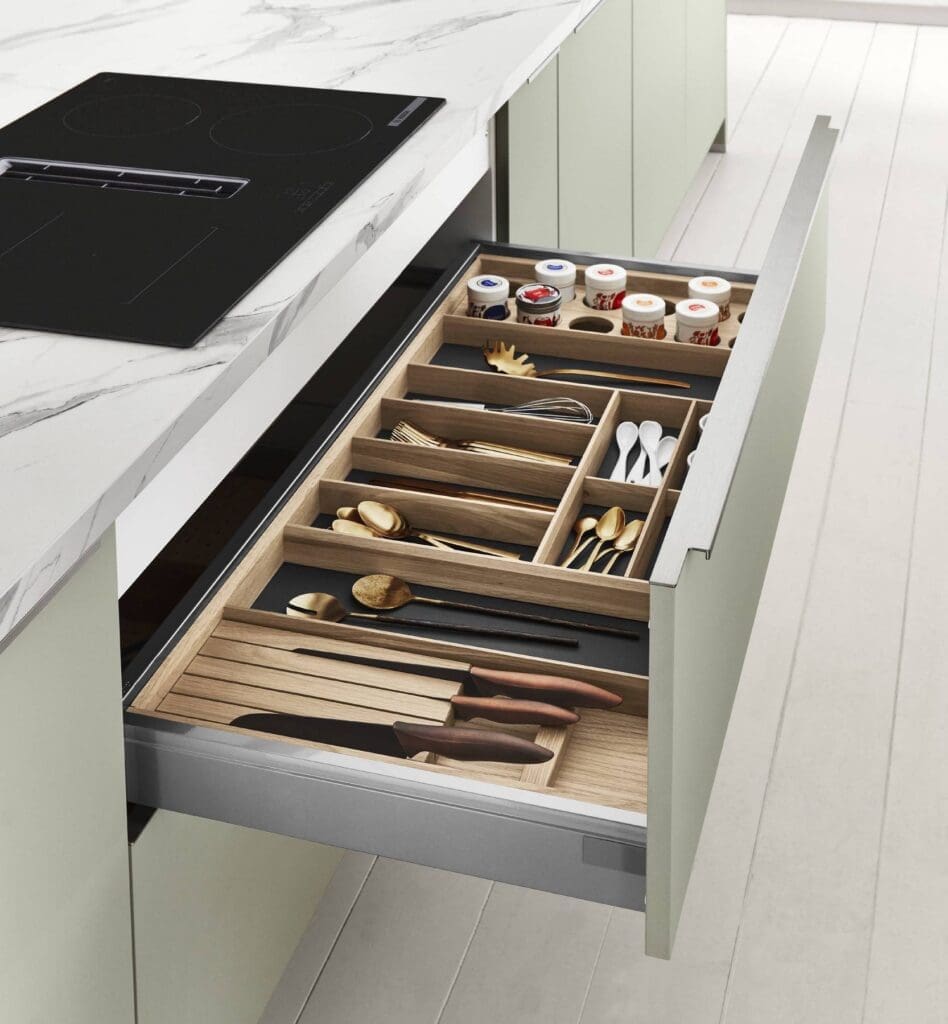
A well-planned split level kitchen island should also offer smart storage and integrated appliances. Drawer systems, open shelving, or built-in wine fridges can all be positioned cleverly beneath the varying heights.
German brands like Nobilia and Bauformat lead the way in modular design, allowing drawers, dishwashers, and sinks to be integrated without interrupting the aesthetic flow. Their precision engineering ensures cabinetry aligns perfectly across changing heights.
Practical Considerations Before You Build
Before committing to a split level design, think carefully about:
- Traffic flow: Allow at least 1 metre of clearance around the island for comfortable movement.
- Electrical and plumbing access: If you plan to include sinks or appliances, ensure proper service connections before installation.
- Stool height: Standard bar stools work best with a 1,050mm breakfast bar; counter stools suit heights around 900mm.
- Material durability: Different levels may receive different wear, so balance aesthetic appeal with practicality.
Bringing It All Together
A split level kitchen island offers the perfect balance of practicality and personality. It brings definition to open spaces, accommodates multiple functions, and gives your kitchen a distinctive, layered appearance. Whether you’re designing a compact urban kitchen or a spacious family hub, this approach can transform both the way your kitchen looks and how it works day to day.
From Nobilia’s modular efficiency to Next125’s architectural sophistication and Ballerina’s design-led flexibility, there’s no shortage of inspiration. With thoughtful planning and a professional designer’s guidance, you can create a kitchen island that not only stands out but also adapts effortlessly to the way you live.
Final Thoughts
If you’re exploring kitchen islands with different levels, be sure to visit a local showroom to see these designs in person. Seeing how varying heights, finishes, and lighting interact will help you visualise what suits your home best. Speak to your designer about incorporating elements from leading brands, ensuring you achieve premium craftsmanship and flexibility that make split-level designs truly shine.