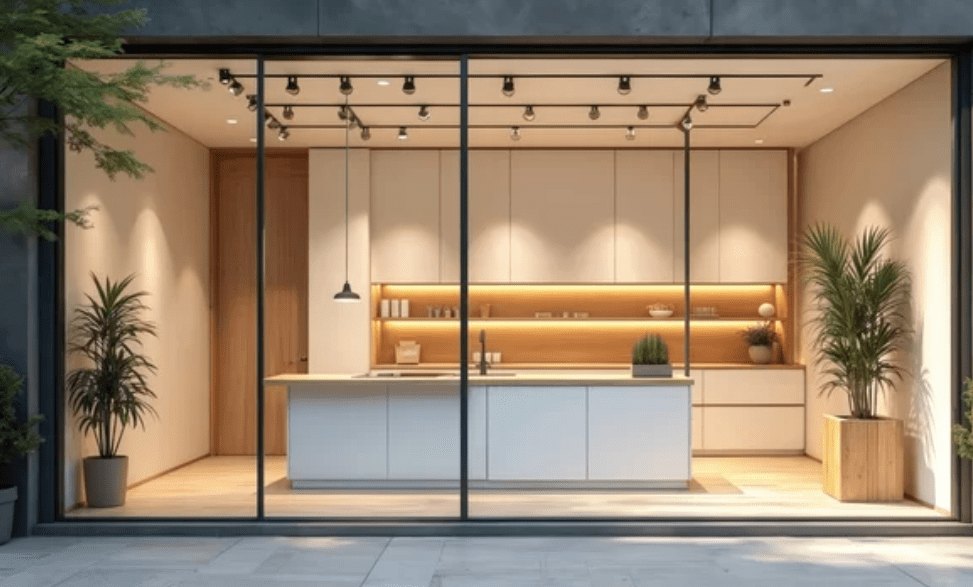
10 Common Kitchen Floorplan Mistakes That Could Cost You Thousands
When planning your dream kitchen, it’s easy to get caught up in finishes, door colours, and appliances — but the real success of your design starts with the kitchen floor plan. A poorly thought-out layout can lead to costly reworks, wasted space, and daily frustrations that undermine even the most beautiful design. Instead, getting the floor plan right from the start ensures your investment stands the test of time, both in functionality and value.
In this article, our Kitchen Experts will explore the most common kitchen floor plan mistakes homeowners make and how to avoid them, alongside expert insights into how professional kitchen designers create efficient, practical, and stylish kitchens that work for real life.
1. Straying Too Far From the Kitchen Work Triangle
The traditional kitchen work triangle — connecting the sink, hob, and fridge — has guided designers for decades. While modern kitchens have evolved to include extra appliances, islands, and open-plan spaces, the underlying principle still matters: the three main work areas should form a practical route without obstructions.
A common mistake is placing these elements too far apart, forcing you to travel across the room each time you cook. On the other hand, putting them too close together creates a cramped feel. Ideally, the total distance between all three points should be between 4 and 8 metres, allowing smooth movement while preparing meals.
If you’re adding an island, make sure it doesn’t block this flow. Many homeowners position a kitchen island where it looks aesthetically pleasing but later realise it interrupts access between the hob and sink. This mistake is often discovered too late — after the cabinets are installed.
Expert Tip: Before committing to a layout, mark out your proposed kitchen on the floor with masking tape. Walk through your daily routines and check whether anything feels awkward or out of reach.
2. Failing to Allow Adequate Walkways
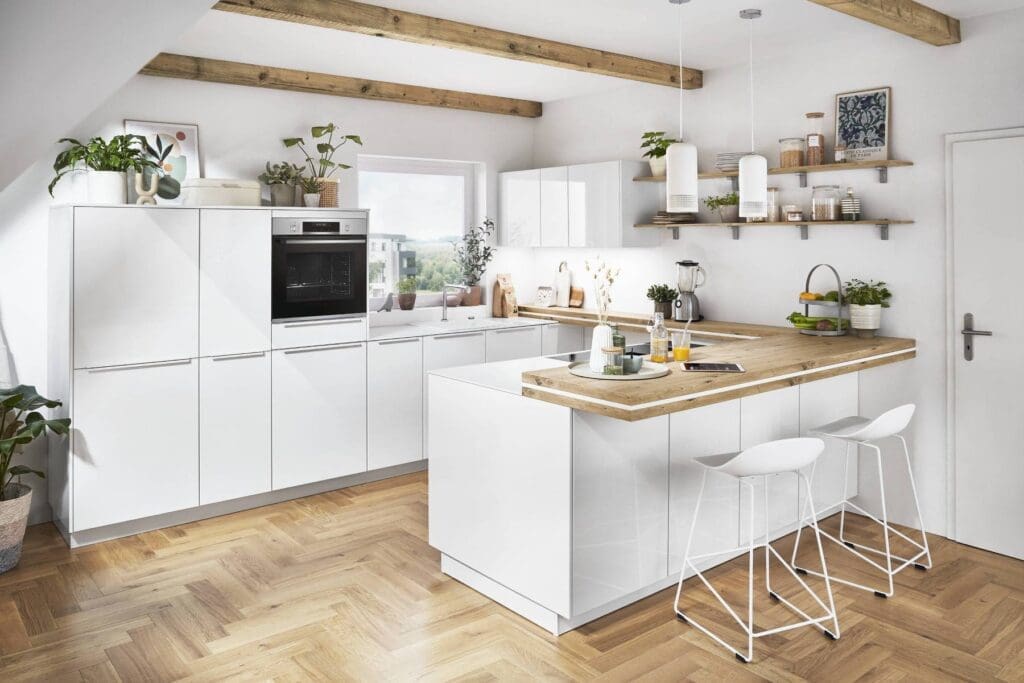
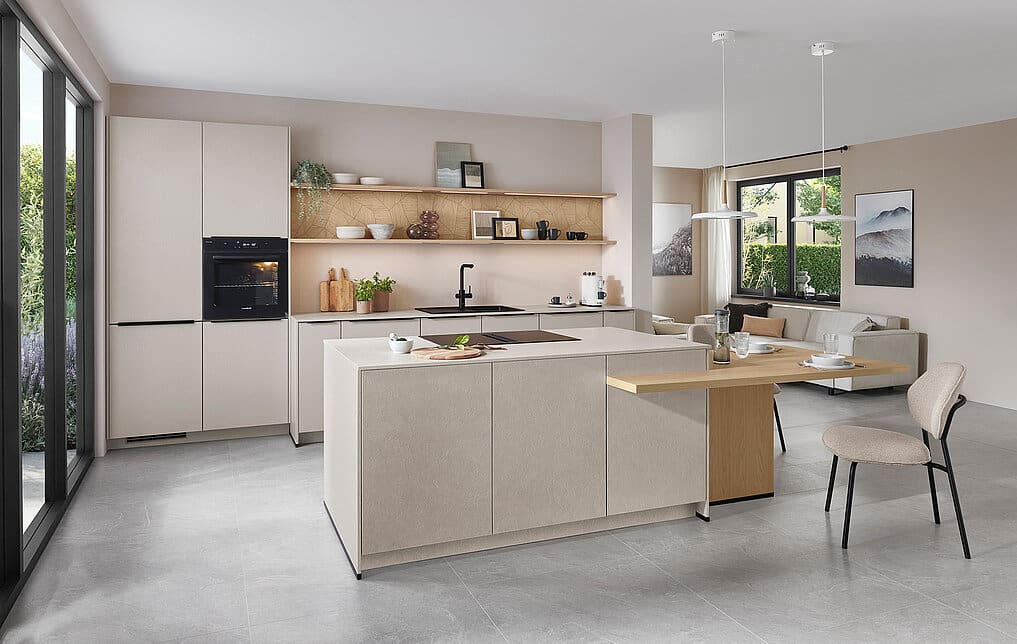
Another common kitchen floor plan mistake is underestimating how much space you need between cabinets, islands, and appliances. Designers often recommend at least 1 metre of clearance in main walkways. Anything less makes it difficult for two people to pass one another or open appliances comfortably.
If your kitchen includes an island or breakfast bar, measure carefully to ensure stools can be pulled out without blocking access. In smaller spaces, you may be better off with a peninsula rather than a freestanding island — it still provides worktop and seating space but keeps traffic flowing more naturally.
Many top kitchen brands such as Nobilia, Bauformat, and Brigitte offer modular cabinetry designed for tighter spaces. These allow designers to maximise function without compromising movement or comfort.
3. Overlooking Natural Light and Window Placement
Lighting has a huge impact on how your kitchen feels and functions, yet it’s often overlooked during the planning stage. Placing tall cabinets or wall units in front of windows is one of the most expensive layout errors to correct later. It limits daylight, affects ventilation, and can make your space feel smaller.
Instead, position worktops near natural light sources wherever possible. This not only improves visibility when preparing food but also enhances mood and energy throughout the day.
If your kitchen doesn’t have generous windows, consider open shelving, glass-fronted wall units, or lighter finishes to reflect available light. Brands like Next125 and Ballerina excel at combining sleek finishes with glass or metallic accents that make even compact kitchens appear brighter.
4. Forgetting About Workflow Zones
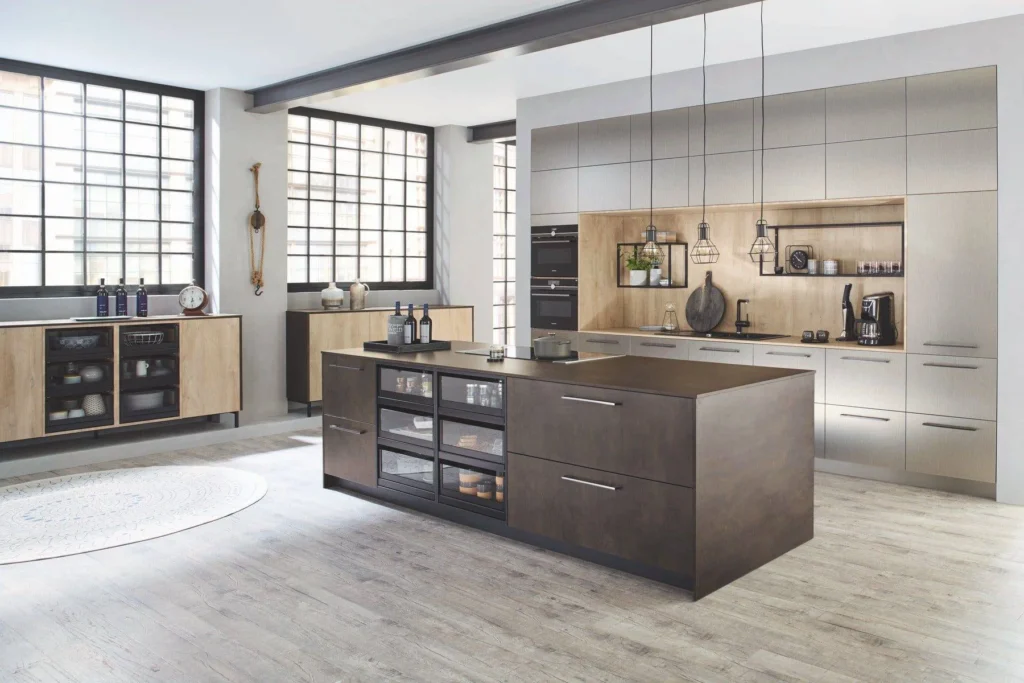
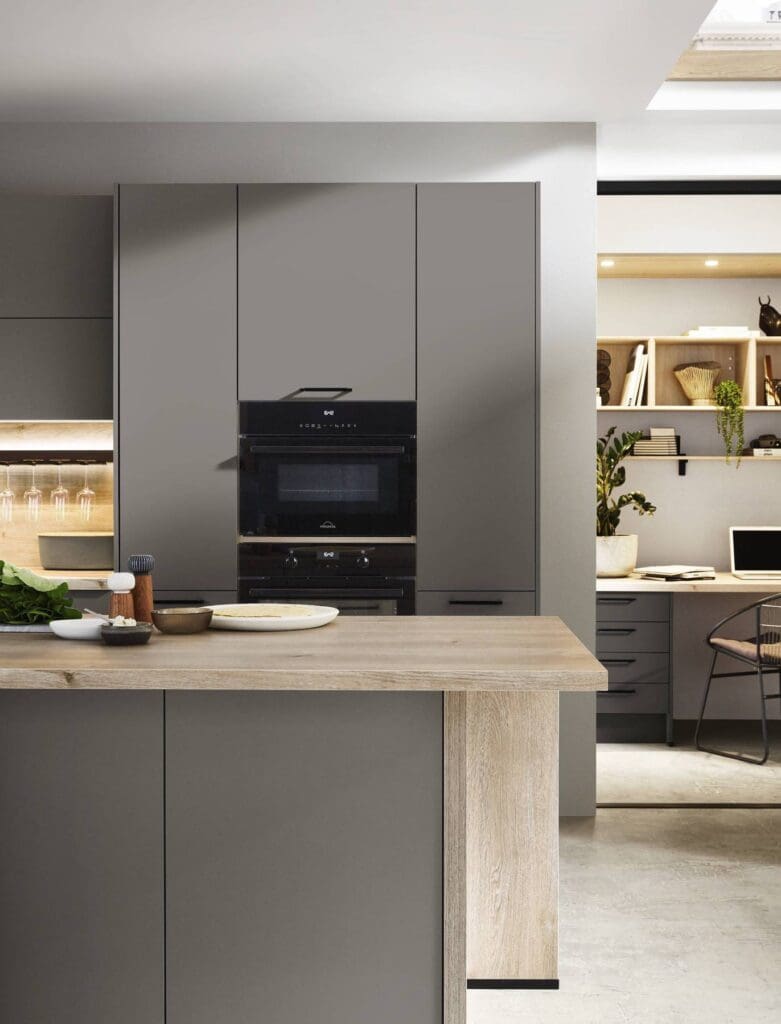
Modern kitchen design is about more than the traditional work triangle. Today’s kitchens often include multiple zones — cooking, prepping, washing, and entertaining. A poor floor plan ignores how these zones interact, creating bottlenecks and wasted movement.
For example, dishwashers are frequently installed far from crockery storage, meaning you’re crossing the room with dripping dishes. Similarly, bin placement can be an afterthought, even though it’s one of the most used areas during food preparation.
Plan your layout to support your routine:
- Keep bins and recycling near the sink and prep area.
- Store plates and cutlery close to the dishwasher.
- Position dry food storage near the cooking zone for quick access.
Kitchen designers will often integrate tall, integrated storage towers or pull-out larder systems to streamline movement between zones, even in compact kitchens.
5. Neglecting Power Points and Appliances
It’s surprisingly common to overlook electrical outlets during kitchen planning. Once the cabinets are installed, discovering that you lack sockets for appliances, lighting, or charging stations can be a costly mistake to fix.
Before finalising your kitchen floor plan, list every appliance you use — from your kettle and toaster to mixers, blenders, and coffee machines — then ensure there’s a socket exactly where you’ll want to use it. And don’t forget hidden appliances like extractor fans, wine coolers, or integrated charging drawers! Many luxury German kitchen brands now incorporate smart features requiring extra wiring, so detailed electrical planning is essential.
Expert Tip: Include a few spare sockets, ideally tucked beneath the island or within cabinetry, for future flexibility.
6. Poor Kitchen Island Placement
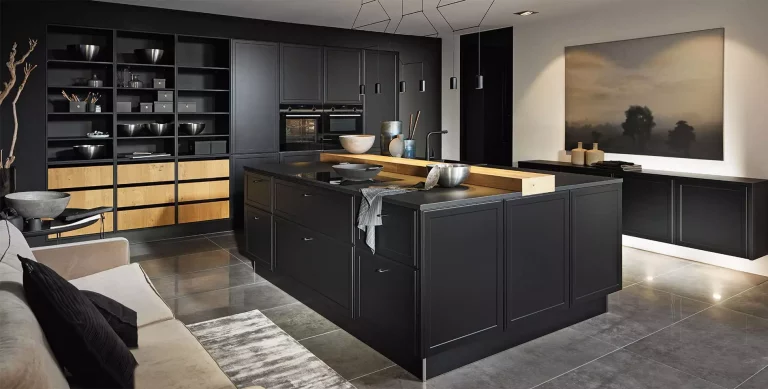
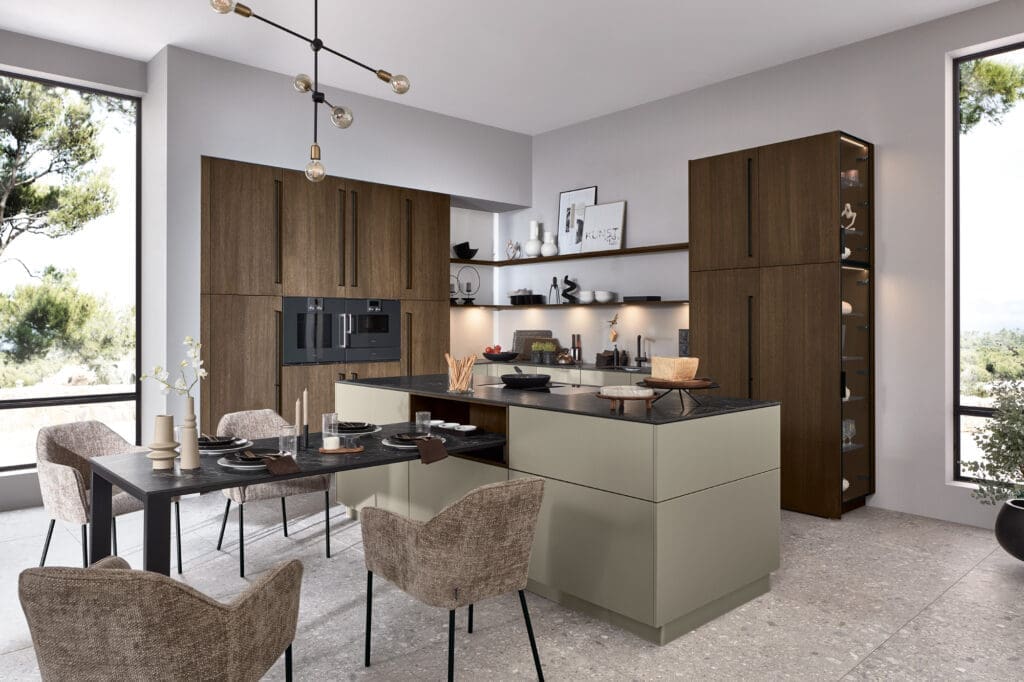
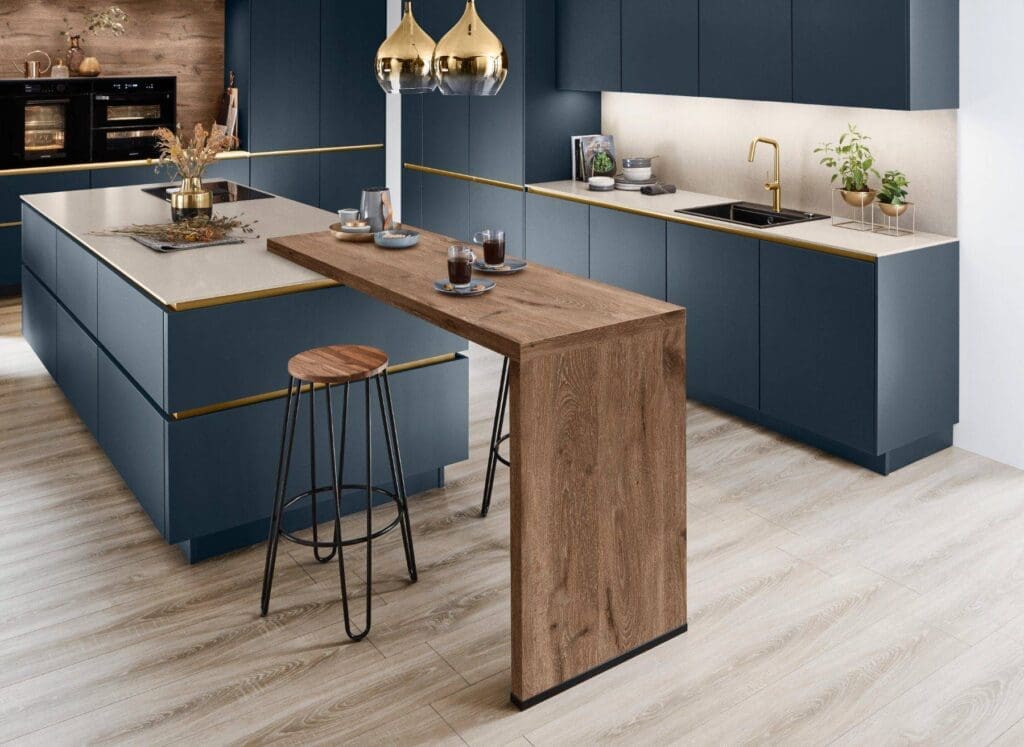
Kitchen islands remain one of the most desirable features in modern homes, yet they’re also one of the easiest ways to waste money if positioned incorrectly. An island should enhance workflow, not obstruct it.
Common island layout mistakes include:
- Placing the island too close to other cabinetry.
- Making it too large, dominating the space.
- Forgetting power and lighting.
- Ignoring seating comfort or legroom.
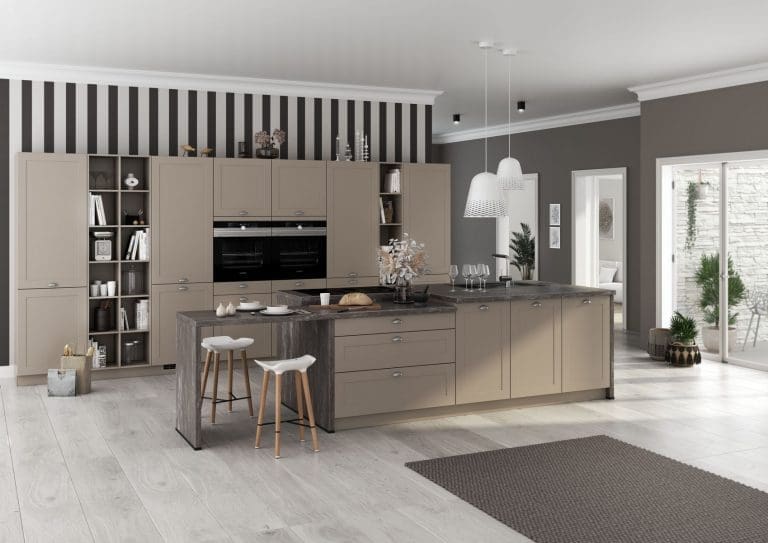
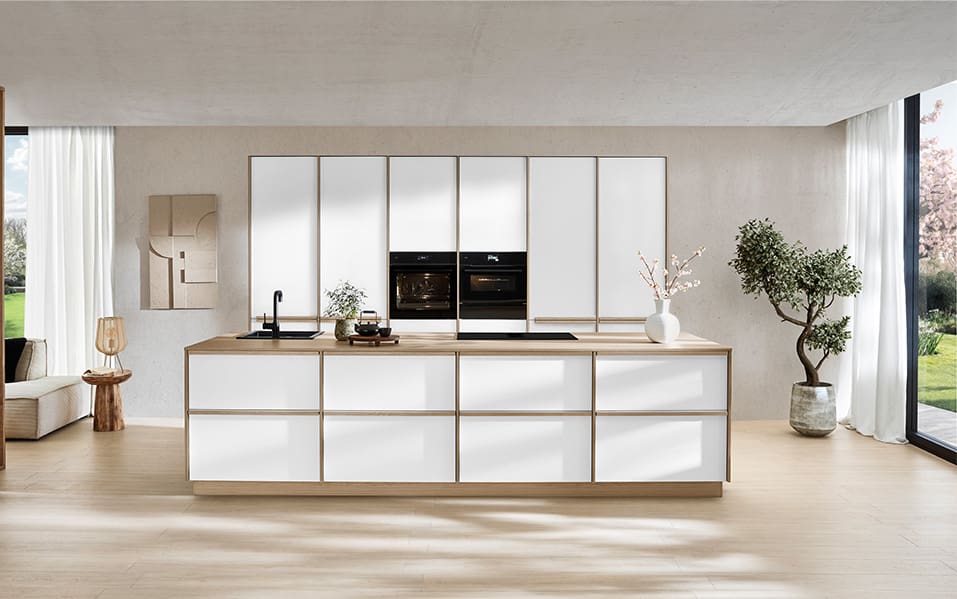
A kitchen island works best when there’s at least one metre of circulation space around all sides. In smaller kitchens, opt for a split-level island with a lower preparation area and a higher bar surface — this provides extra functionality without overcrowding the floor plan.
For sleek, efficient solutions, look to Next125’s floating island designs or Brigitte’s compact modular options, which combine integrated seating and concealed storage.
7. Misjudging Storage Requirements
Even the most stylish kitchen can fall short if storage hasn’t been considered from the outset. One of the most expensive kitchen floor plan mistakes is having to retrofit extra cabinetry after installation because there’s simply not enough space for daily items.
Take time to assess what you own — from cookware and small appliances to baking trays and cleaning products. Then, plan tailored storage solutions accordingly.
Brands like Nobilia and Ballerina are known for their efficient use of space, with features such as deep pan drawers, corner carousels, and pull-out systems that ensure everything has its place.
Expert Tip: Prioritise vertical space. Tall larder units and ceiling-height cabinets make the most of compact rooms without cluttering the floor plan.

8. Forgetting About Future Flexibility
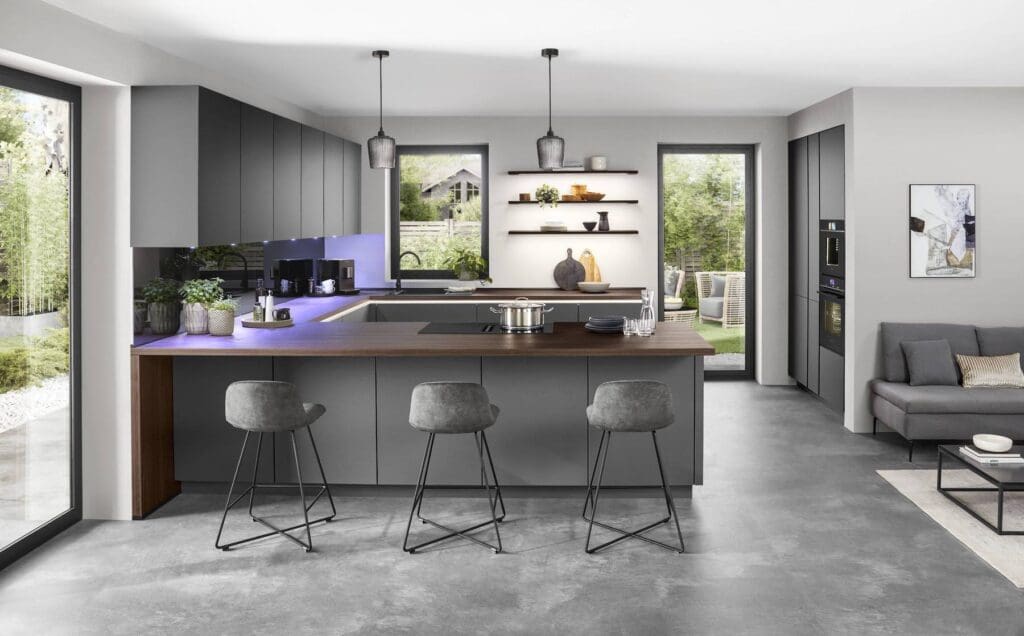
A kitchen is a long-term investment, so your layout should evolve with your lifestyle. Neglecting flexibility is one of the most costly design oversights. Families grow, habits change, and appliances get upgraded.
Consider wiring extra points for future technology, allowing for potential upgrades such as boiling water taps, integrated extractors, or smart ovens. Also, think about how you might adapt the space for entertaining, remote work, or even accessibility in later years.
Many German kitchen manufacturers design cabinetry with adaptable configurations, meaning you can reconfigure internal drawers and dividers later without replacing entire units.
9. Overlooking Ventilation and Extraction
A poorly ventilated kitchen quickly becomes unpleasant. Odours, moisture, and grease can damage finishes and compromise air quality. One of the most common mistakes in open-plan kitchen floor plans is neglecting adequate extraction.
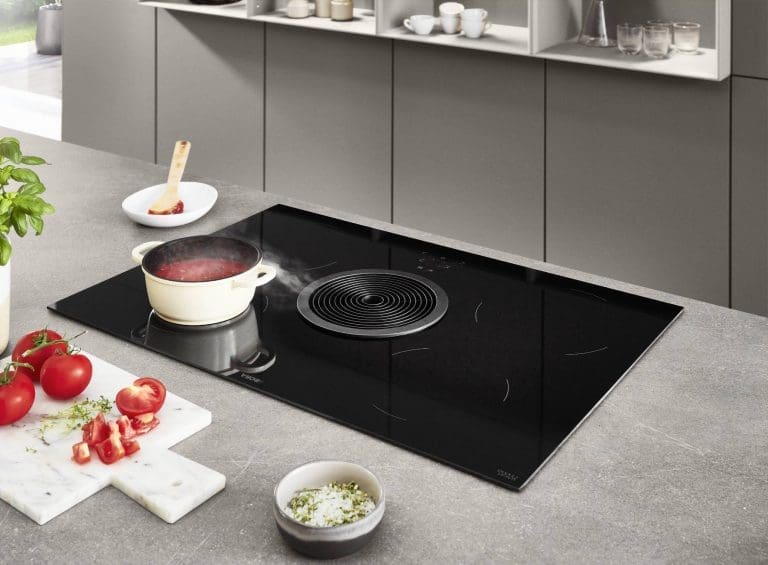
If your hob sits on an island, consider a downdraft extractor or an integrated venting hob. If it’s against a wall, ensure the ducting route is efficient and unobstructed. Retrofitting extraction after installation can be an expensive process that easily runs into four figures.
Good ventilation not only protects your kitchen investment but also ensures a more comfortable cooking experience.
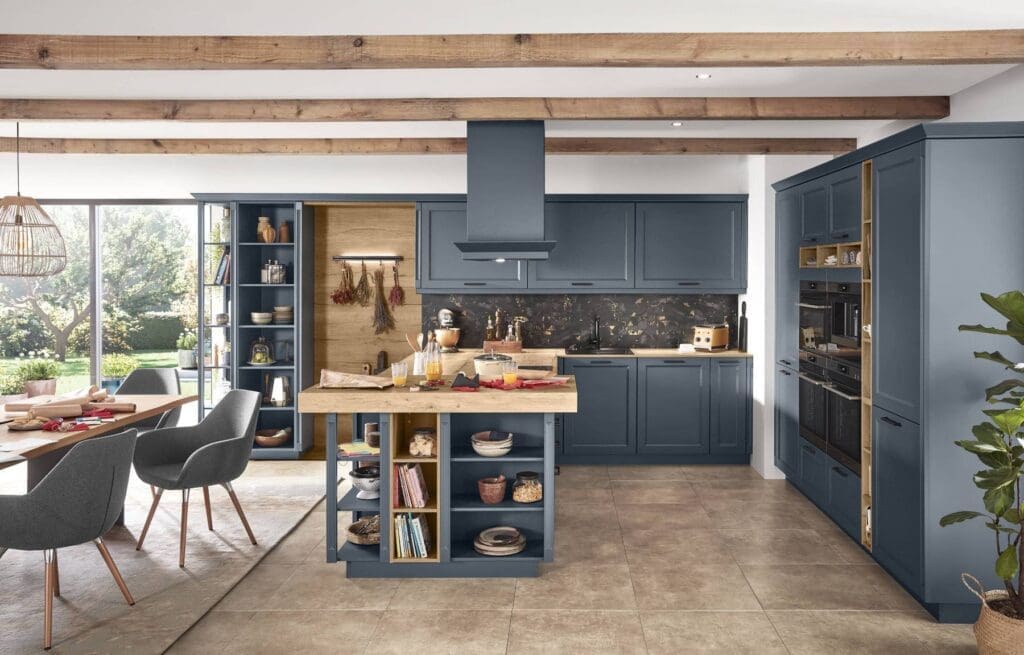
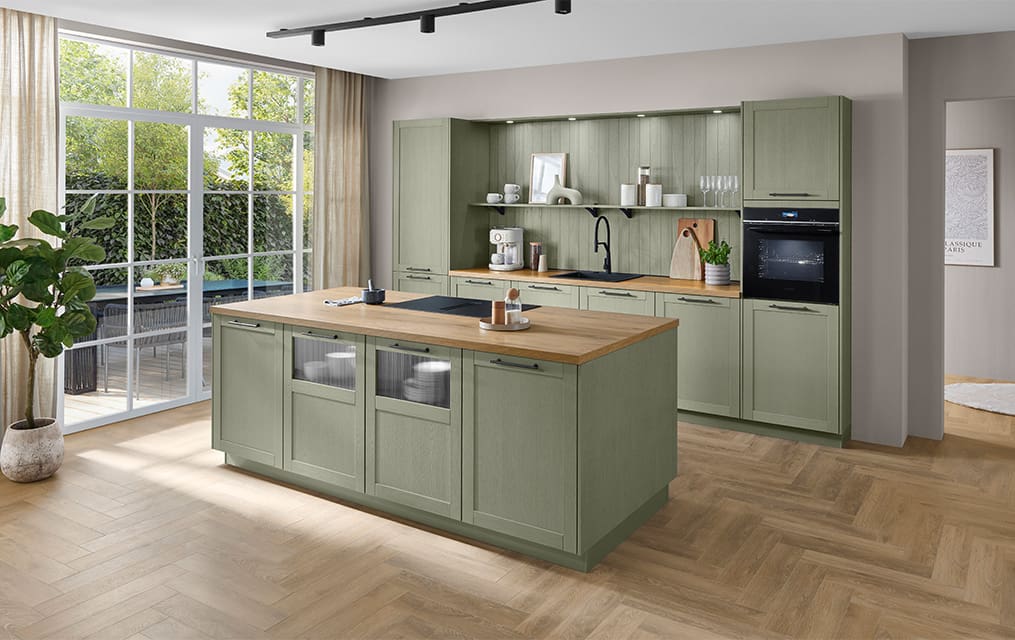
10. Prioritising Aesthetics Over Function
Beautiful kitchen finishes and colour schemes can easily steal attention during planning, but function must come first. An awkward or impractical kitchen layout will cause daily irritation, no matter how stylish it looks.
When reviewing your kitchen floor plan, ask yourself:
- Can two people cook comfortably without colliding?
- Are the main appliances within easy reach?
- Is there enough worktop space for food prep?
- Are the bin and dishwasher conveniently located?
If the answer to any of these is no, it’s worth revisiting the design before committing.
The Benefits of Getting Your Kitchen Floor Plan Right
Investing time and expertise in a well-thought-out kitchen floor plan pays dividends in the long run. A functional, efficient layout means:
- Fewer costly adjustments later – avoiding the need to move plumbing, electrics, or cabinets.
- Higher property value – buyers prioritise kitchens that “just work.”
- Better everyday living – cooking, cleaning, and entertaining all feel effortless.
- Enhanced energy efficiency – optimised layouts reduce lighting and heating costs.
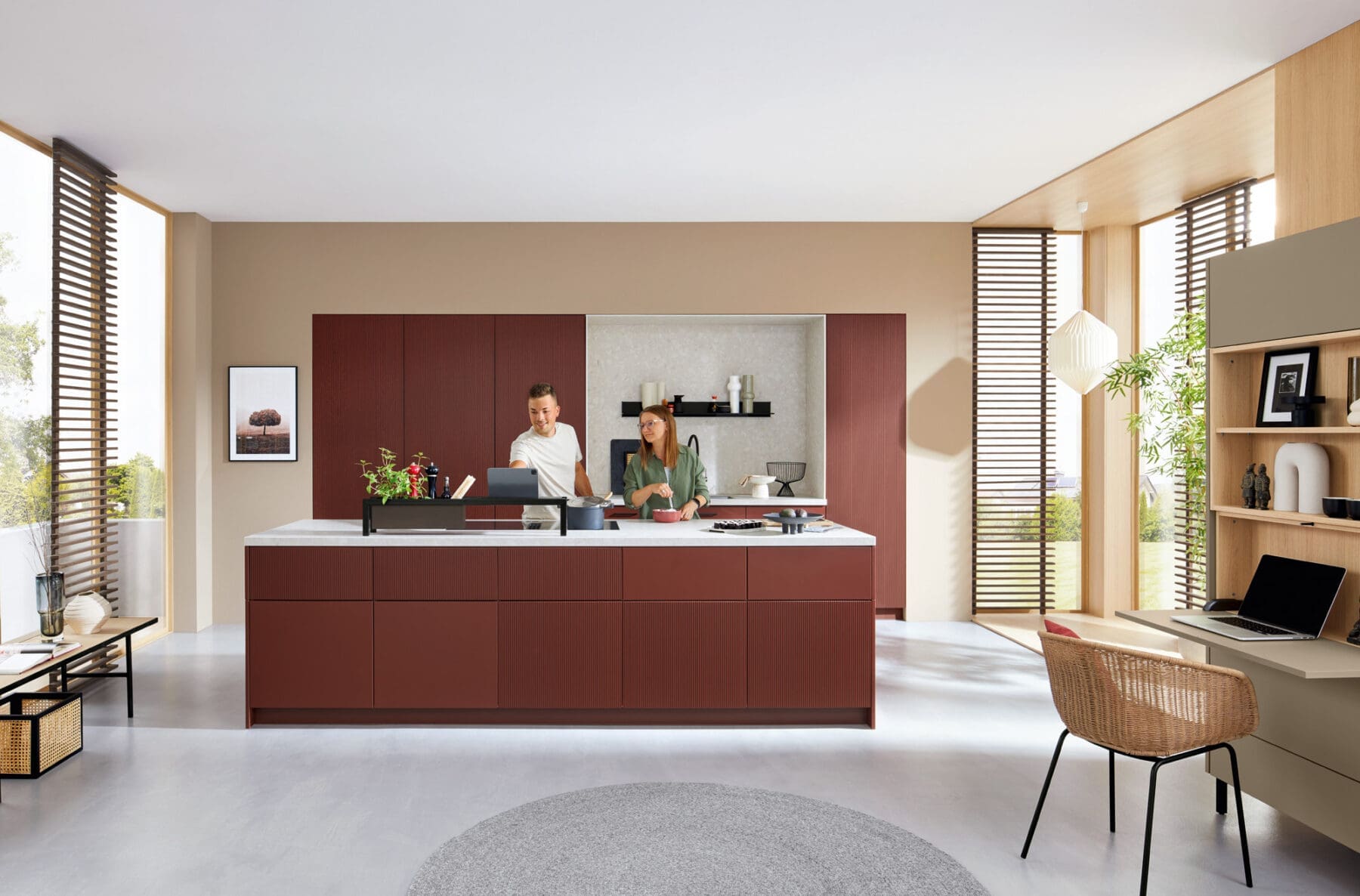
Professional kitchen designers use advanced software to visualise the space and simulate how you’ll move around it. They also factor in building constraints, appliance specifications, and ergonomic design principles — ensuring your investment delivers both practicality and style.
Final Thoughts
A kitchen is one of the biggest financial investments in your home, and the floor plan is its foundation. By understanding and avoiding common kitchen floor plan mistakes, you’ll save thousands in potential reworks while ensuring your kitchen looks and functions beautifully for years to come.
If you’re planning a new kitchen, consider consulting an experienced designer who can translate your lifestyle and preferences into a layout that truly works. From modular designs by Nobilia and Impuls to the sleek, architectural lines of Next125 and Ballerina, today’s options offer flexibility, innovation, and lasting quality — but only when combined with a smart, well-planned layout.
Download a Brochure