Fluted Kitchen Cabinetry: Design, Materials, Costs and Practical Considerations
Fluted kitchen cabinetry has moved from a niche architectural detail to a mainstream design feature across modern, classic and transitional kitchens. Characterised by vertical grooves or reeded detailing, fluted cabinet fronts introduce texture, rhythm and shadow without relying on colour or ornamentation. As a result, they appeal to homeowners looking for kitchens that feel refined and distinctive, yet timeless.
Interest in fluted kitchen cabinets has increased significantly over the past few years, driven by broader interior trends towards tactile surfaces, natural materials and subtle craftsmanship. However, while the aesthetic appeal is clear, fluted cabinetry raises practical questions around cost, durability, cleaning, layout suitability and long-term performance.
This guide brings together aggregated insight from independent kitchen specialists across the UK, reflecting what is most commonly discussed with homeowners considering fluted cabinet doors. The aim is to provide clear, experience-led guidance on where fluted kitchen cabinetry works well, where it can present challenges, and how to make informed decisions before committing.
Whether you are exploring fluted kitchen doors for a full renovation or considering them as a feature element — such as a kitchen island, pantry or glazed unit — this article explains how fluted cabinetry is made, how it compares to flat or shaker doors, and what to consider in real-world use.
What is fluted kitchen cabinetry?
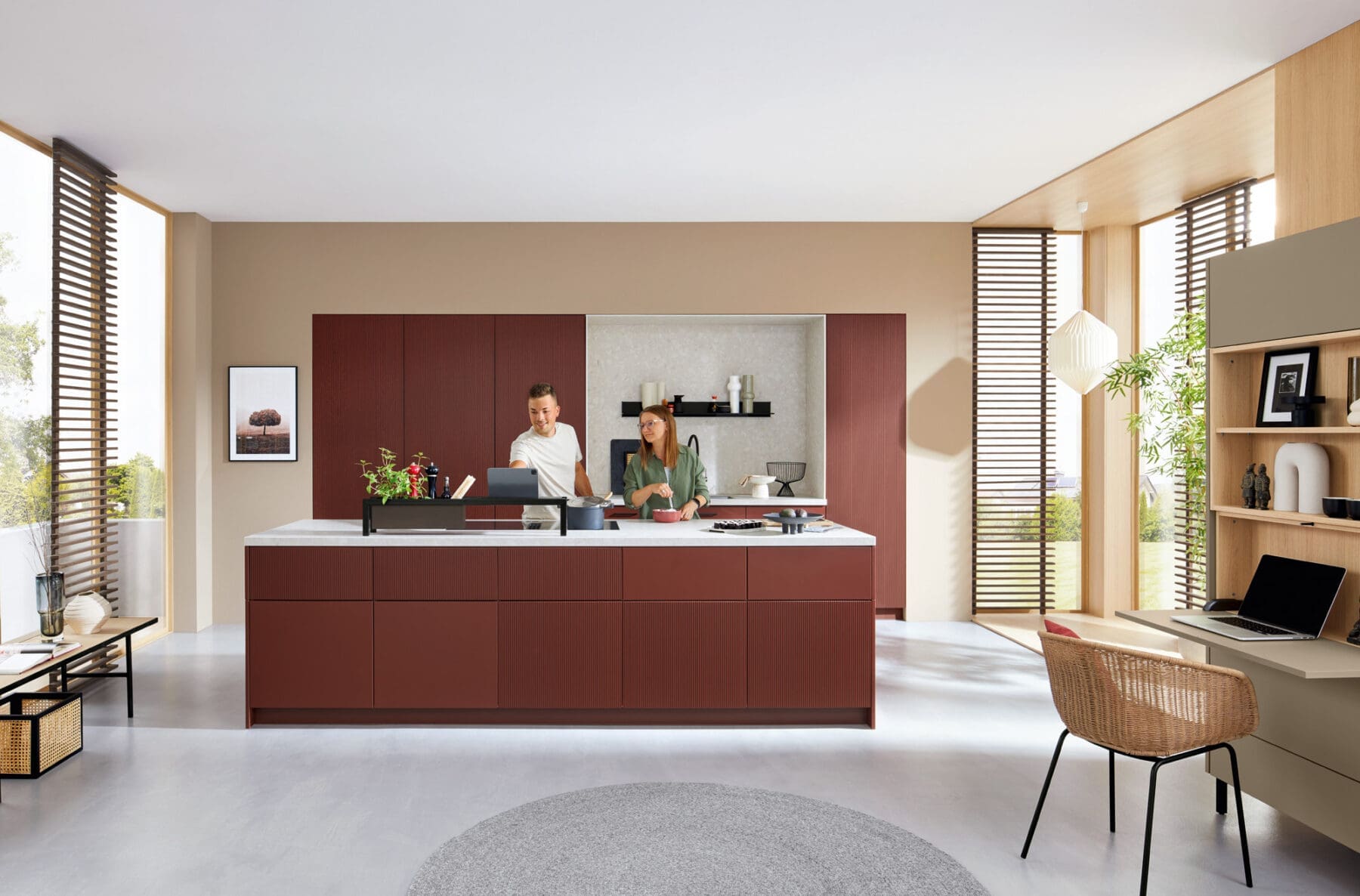
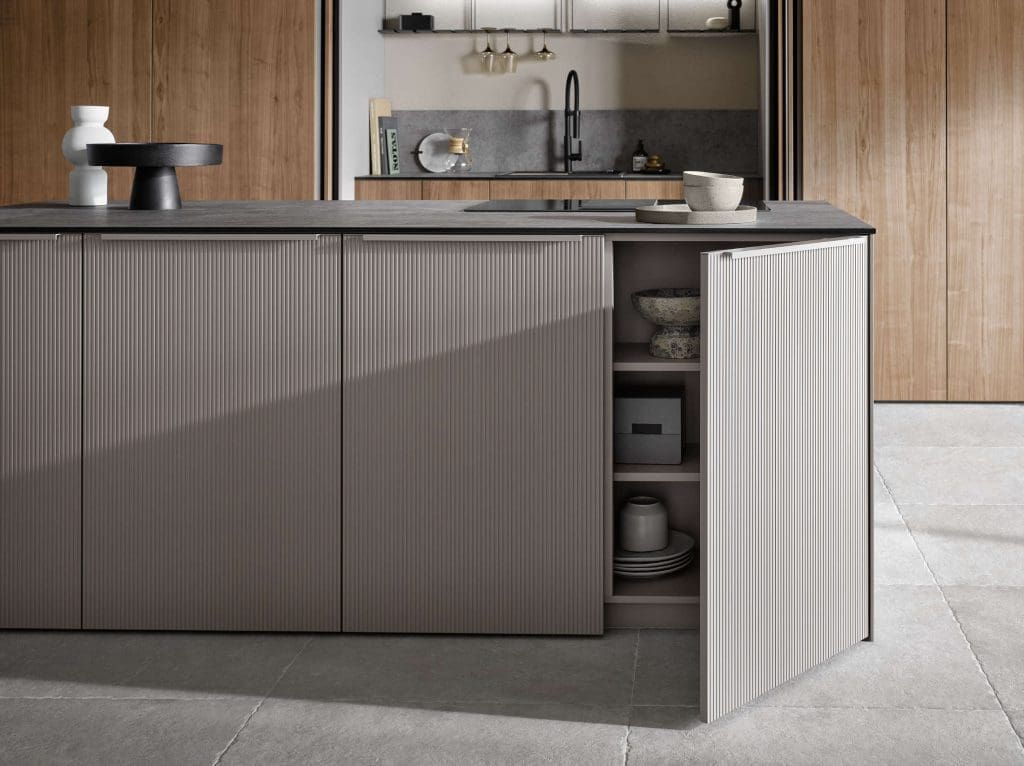
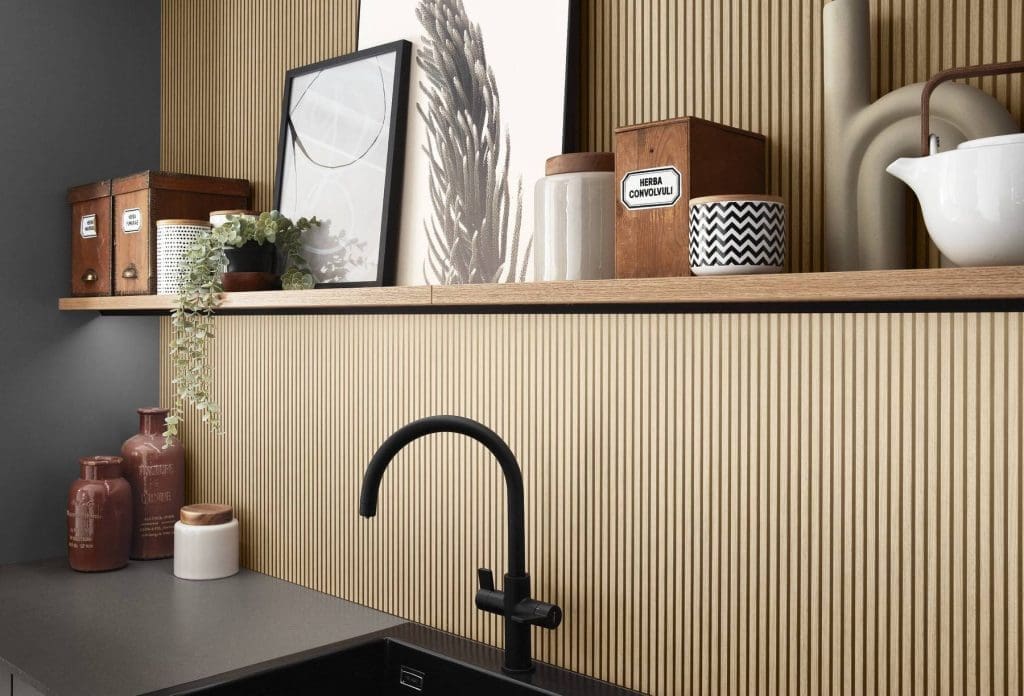
Fluted kitchen cabinetry refers to cabinet doors or panels with vertical grooves carved, machined or applied into the surface. These grooves may be shallow or deep, narrow or wide, and evenly spaced to create a reeded, textured appearance.
Why Fluted Kitchen Cabinets Are Popular
Fluted cabinetry sits at the intersection of minimalism and detail. Unlike heavily decorated doors, the vertical lines add interest without visual clutter. This makes fluted doors particularly popular in:
- Contemporary kitchens needing warmth and texture
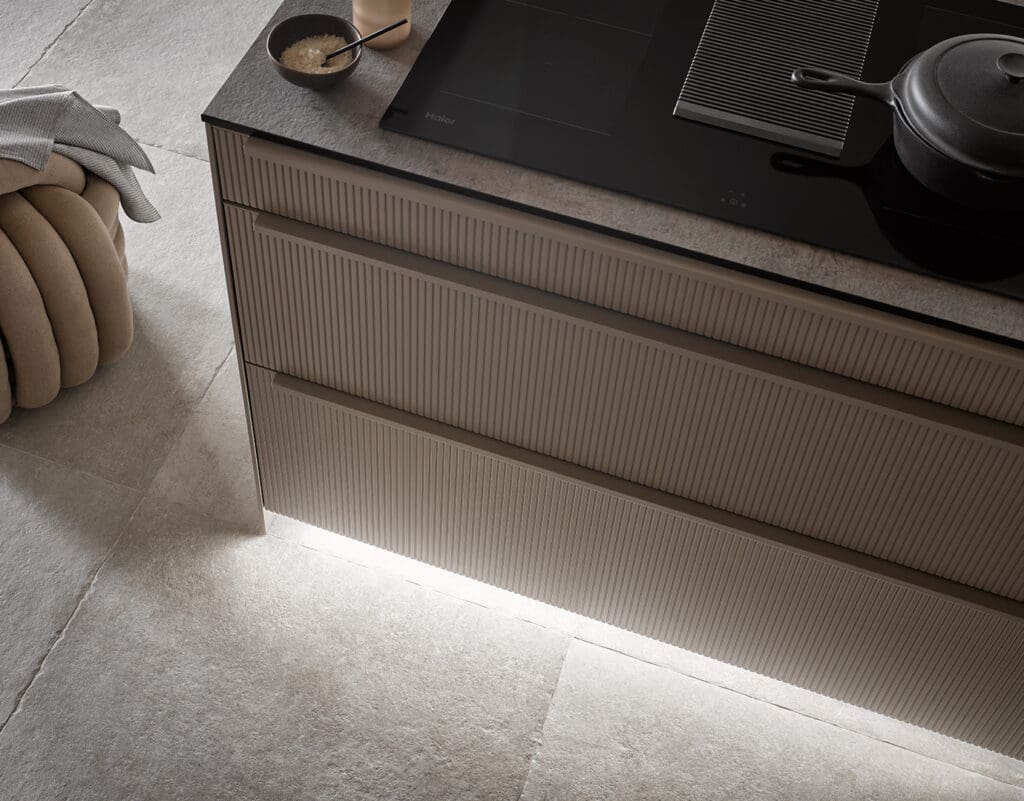
- Handleless or integrated-handle layouts
- Open-plan spaces where cabinetry is visible from multiple angles
Vertical fluting also subtly draws the eye upward, which can enhance the sense of height in kitchens with standard ceiling levels.
Another reason for their popularity is versatility. Fluted detailing works across multiple materials — painted timber, stained wood, lacquered MDF and even glass — allowing homeowners to achieve different looks using the same underlying concept.
Types of Fluted Kitchen Cabinet Doors
1. Solid wood fluted doors
These are machined directly from solid wood or laminated timber blanks. They offer depth, authenticity and strong visual character, particularly when stained or oiled.
Considerations:
- Higher cost
- Natural movement of timber
- Requires high-quality finishing
2. MDF fluted kitchen doors
Fluted MDF doors are precision-routed and then painted or lacquered. They are common in painted kitchens and allow consistent groove depth and spacing.
Considerations:
- Excellent for smooth painted finishes
- Less depth than solid wood
- Not suitable for clear staining
3. Veneered fluted kitchen doors
A fluted substrate is finished with a real wood veneer, combining texture with the appearance of natural grain.
Considerations:
- Balanced cost vs appearance
- Veneer quality is critical
- Limited refinishing potential
4. Fluted glass cabinetry
Reeded or fluted glass is often used in wall units or display cabinets to introduce texture while maintaining light flow.
Where Fluted Cabinetry Works Best in a Kitchen
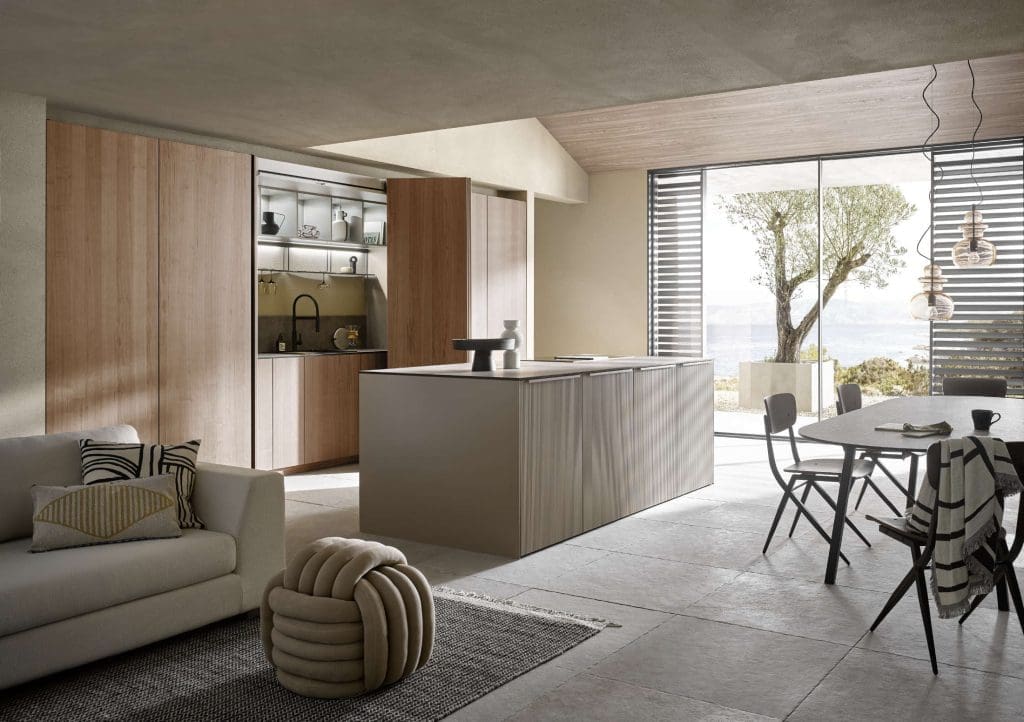
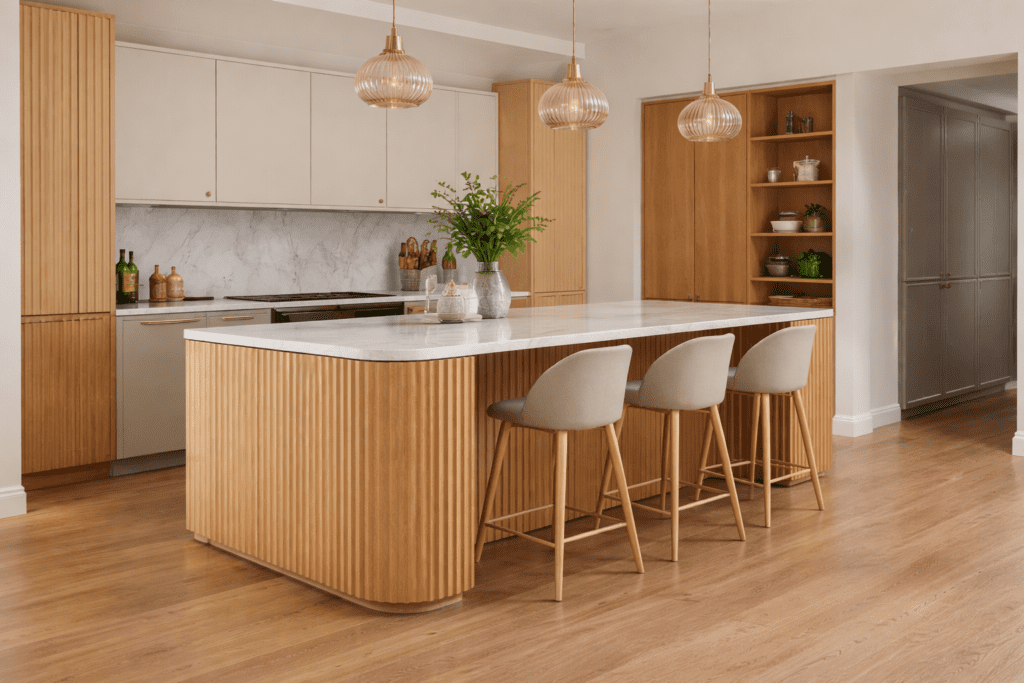
Fluted kitchen doors can be visually strong. For that reason, many specialists recommend strategic use rather than full coverage.
Common applications include:
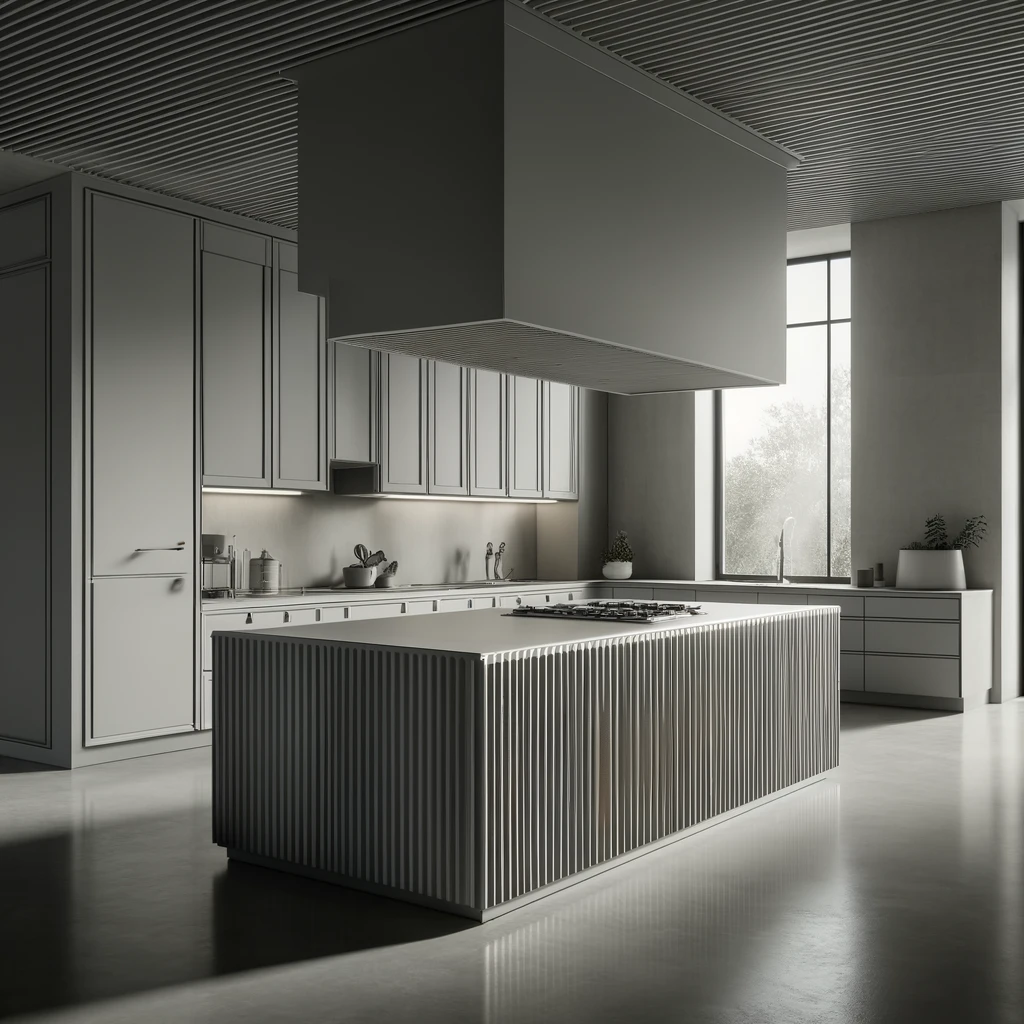
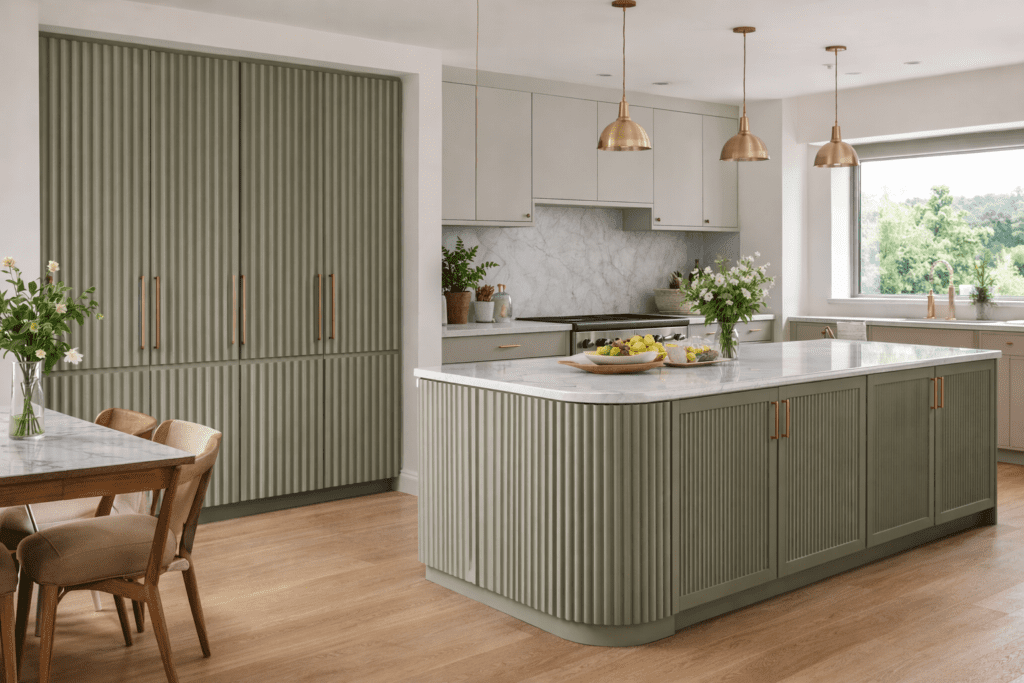
- Kitchen islands
- Tall pantry units
- Larder doors
- Feature wall runs
- Bar or drinks cabinets
Using fluted cabinetry alongside flat or plain doors helps maintain balance and prevents visual overload, particularly in smaller kitchens.
Practical Considerations: Cleaning, Durability and Wear
Cleaning fluted cabinet doors
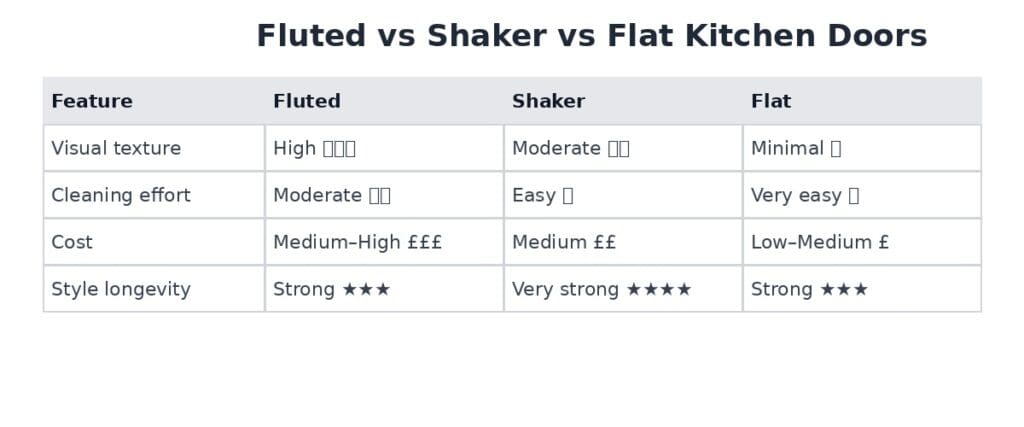
Vertical grooves can collect dust, grease and cooking residue more easily than flat surfaces.
Best practice tips:
- Shallow fluting is easier to maintain
- Satin or matt finishes hide marks better
- Microfibre cloths and soft brushes help with cleaning
Highly polished finishes may highlight residue within grooves under directional lighting.
Durability and daily use
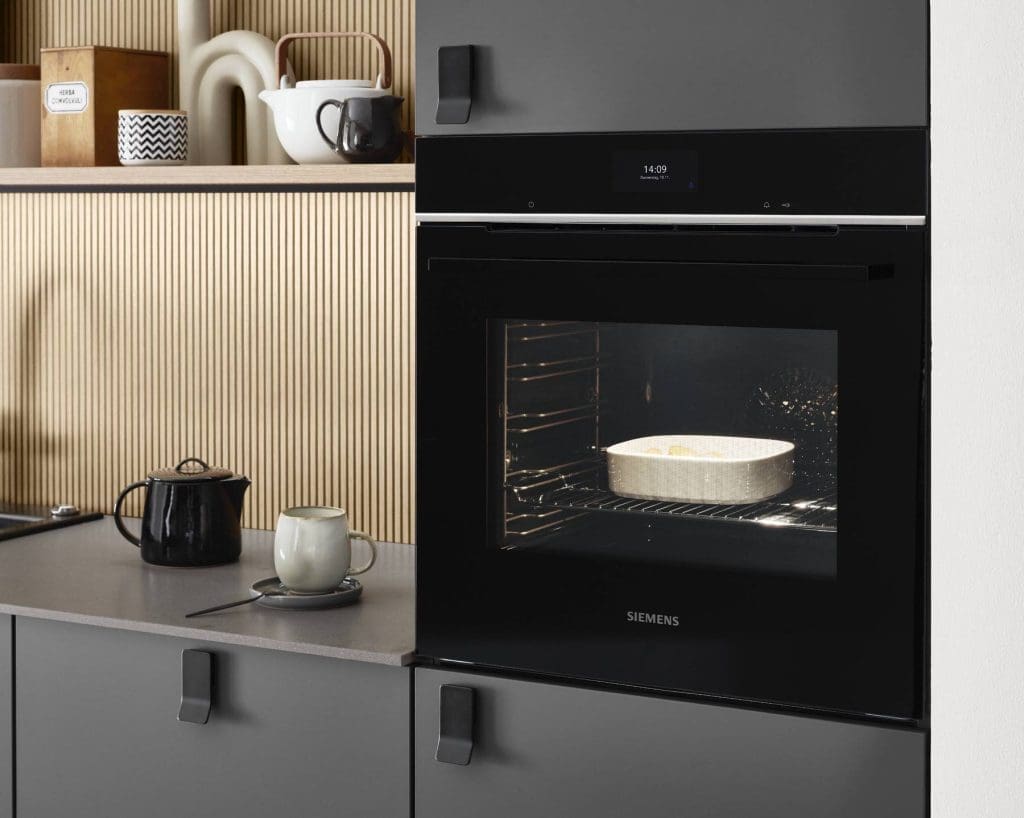
Fluted MDF and timber doors perform well in kitchens when properly finished, but groove edges are more vulnerable to knocks than flat doors. This is particularly relevant for:
- High-traffic areas
- Narrow walkways
- Homes with young children
Costs: Are fluted kitchen cabinets more expensive?
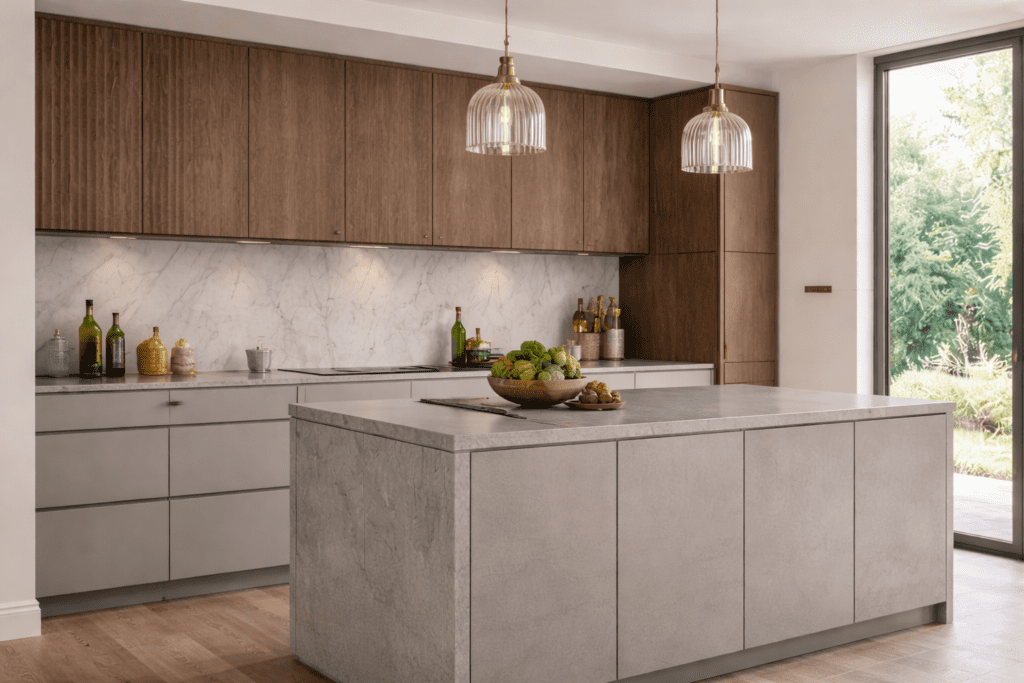
In most cases, fluted kitchen cabinetry costs more than flat or standard shaker doors due to:
- Additional machining time
- Higher material waste
- More complex finishing
As a rough guide, fluted doors often sit 15–40% above comparable flat doors, depending on material, finish and supplier.
Colour and Finish Considerations
Fluted cabinetry responds particularly well to:
- Soft neutrals (stone, greige, taupe)
- Deep tones (olive, navy, charcoal)
- Natural wood finishes
Lighter colours emphasise shadow lines, while darker tones create a subtler, more architectural effect.
Is Fluted Kitchen Cabinetry Right for Your Space?
Fluted cabinetry tends to work best when:
- The kitchen has good natural or layered lighting
- There is sufficient wall or island length to appreciate the rhythm
- The overall design is restrained elsewhere
In very small kitchens, excessive fluting can feel busy. In these cases, a single fluted element often delivers better results.
Final thoughts
Fluted kitchen cabinetry offers a refined way to introduce texture, depth and architectural interest into modern kitchens. When used thoughtfully, it can elevate a space without dominating it. The key is understanding where fluted doors add value visually, how they perform in daily use, and how they integrate with the wider kitchen layout.
By balancing aesthetic appeal with practical considerations — material choice, placement, finish and cleaning — homeowners can decide whether fluted cabinetry suits both their lifestyle and long-term expectations.
Ready to explore the world of fluted cabinetry?… Visit your local Kitchen Experts today!
Author & Review Note
Originally written in 2024, this article was reviewed for accuracy and balance using aggregated insights from independent kitchen specialists within the Kitchen Experts network, reflecting common guidance shared with homeowners across the UK. Last updated Feb 2026.
FAQ’s: Fluted Kitchen Cabinetry
Is fluted cabinetry suitable for handleless kitchens?
Yes. Fluted doors pair particularly well with handleless or integrated handle systems.
Do fluted cabinets suit small kitchens?
They can, but are usually best limited to feature areas to avoid visual clutter.
Are fluted kitchen cabinets hard to clean?
They require slightly more attention than flat doors, but shallow grooves and durable finishes make routine cleaning manageable with the right tools.
Do fluted cabinets date quickly?
When used selectively and in neutral finishes, fluted cabinetry has strong longevity due to its architectural origins.
Are fluted kitchen cabinets more expensive?
Yes, they typically cost more than flat doors due to additional machining and finishing.
Can fluted cabinets be painted?
MDF fluted doors are commonly painted. Solid timber may be painted or stained depending on the species.