Invisible Induction Hobs: How They Work, The Benefits, and Worktop Requirements
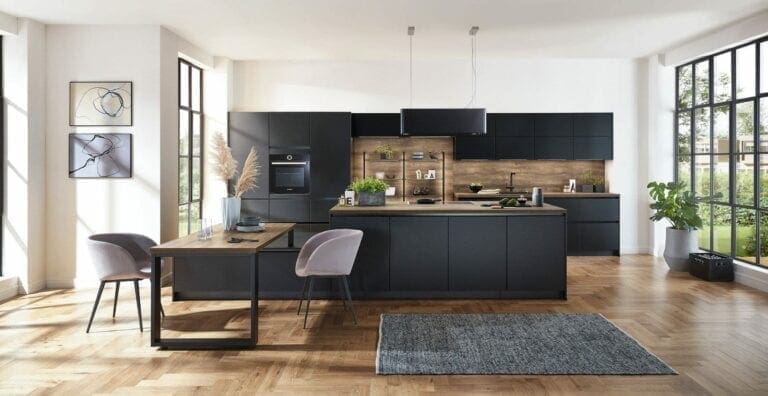
Invisible induction hobs are one of the most distinctive recent developments in kitchen appliance design. Instead of sitting visibly on top of the worktop like a standard induction hob, the cooking technology is installed beneath a compatible surface, allowing the worktop to remain visually uninterrupted when the hob is not in use.
That makes invisible induction especially relevant to homeowners planning minimalist kitchens, open-plan layouts, or islands where visual continuity matters as much as cooking performance.
However, invisible induction is not simply a design feature. It also affects appliance choice, worktop specification, cookware compatibility, installation method and long-term service access. This means it should be treated as a technical kitchen planning decision, not just a styling upgrade.
This guide explains what an invisible induction hob is, how it works, which worktops are typically compatible, the main benefits and drawbacks, and what to consider before choosing one.
What Is An Invisible Induction Hob?
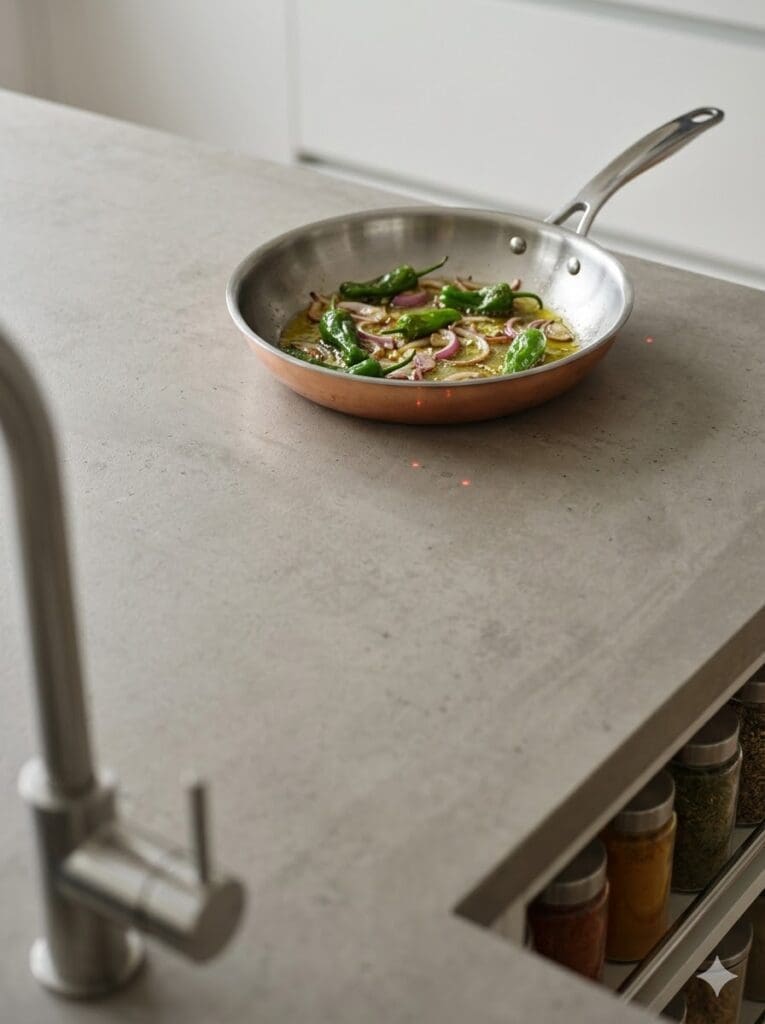
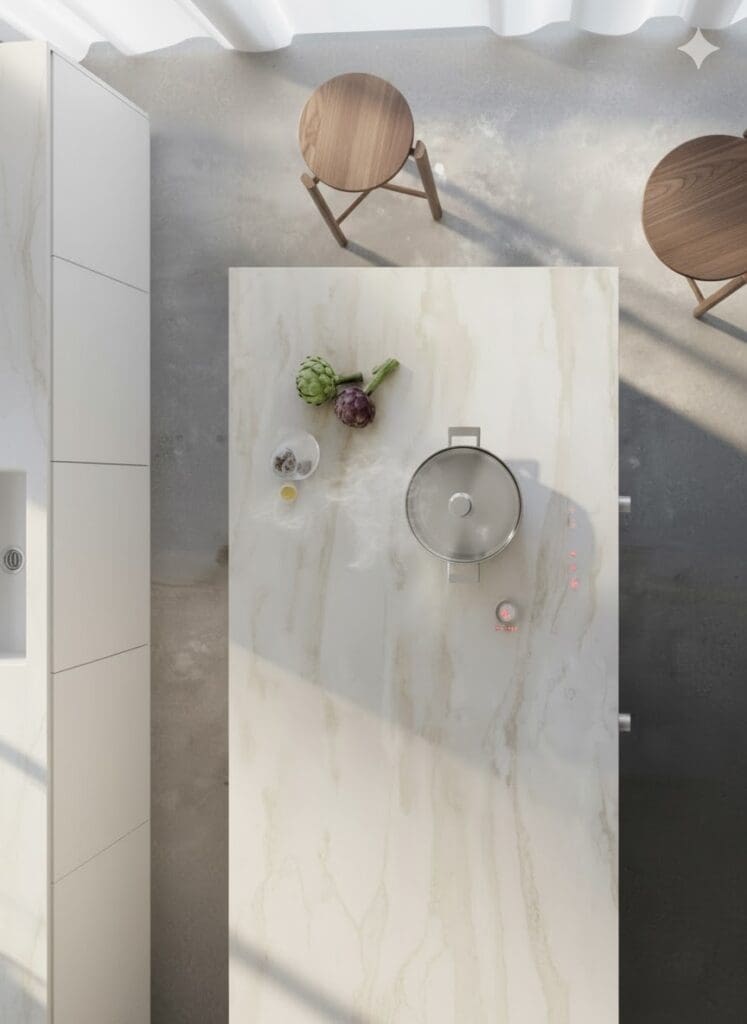
An invisible induction hob is an induction cooking system installed beneath a compatible worktop surface so that the cooking area is hidden from view when not in use. The cooking zones are typically indicated by subtle markings, lights or controls, while heat is generated in induction-compatible cookware placed on the designated zone.
Why Invisible Induction Is Gaining Attention
Invisible induction appeals to homeowners because it combines two things that are often hard to achieve at once: full worktop continuity and induction cooking performance.
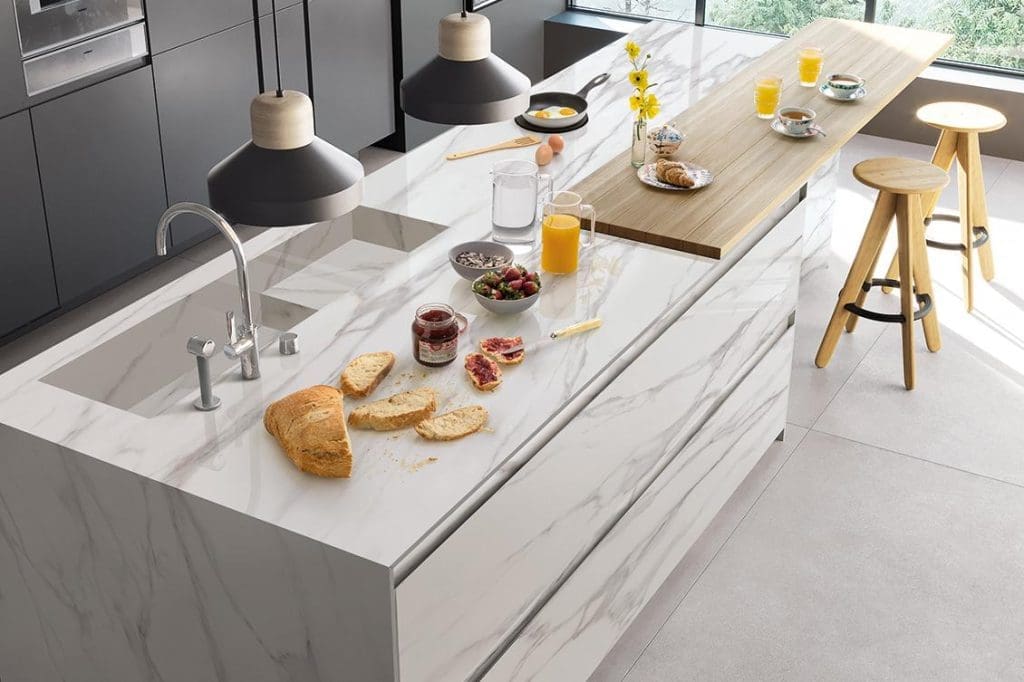
Unlike a standard hob, which permanently occupies visible surface area, invisible induction allows the worktop to function as a preparation space, serving space or everyday surface when cooking is not taking place. Gaggenau describes its Essential Induction as a cooktop and worktop combined into one surface, while Invisacook similarly positions the system as cooking directly on the countertop.
That makes this technology particularly relevant in:
- minimalist kitchens
- kitchen islands
- open-plan rooms
- compact kitchens where clear worktop space matters
- high-end kitchens where uninterrupted surfaces are a design priority
How Invisible Induction Works
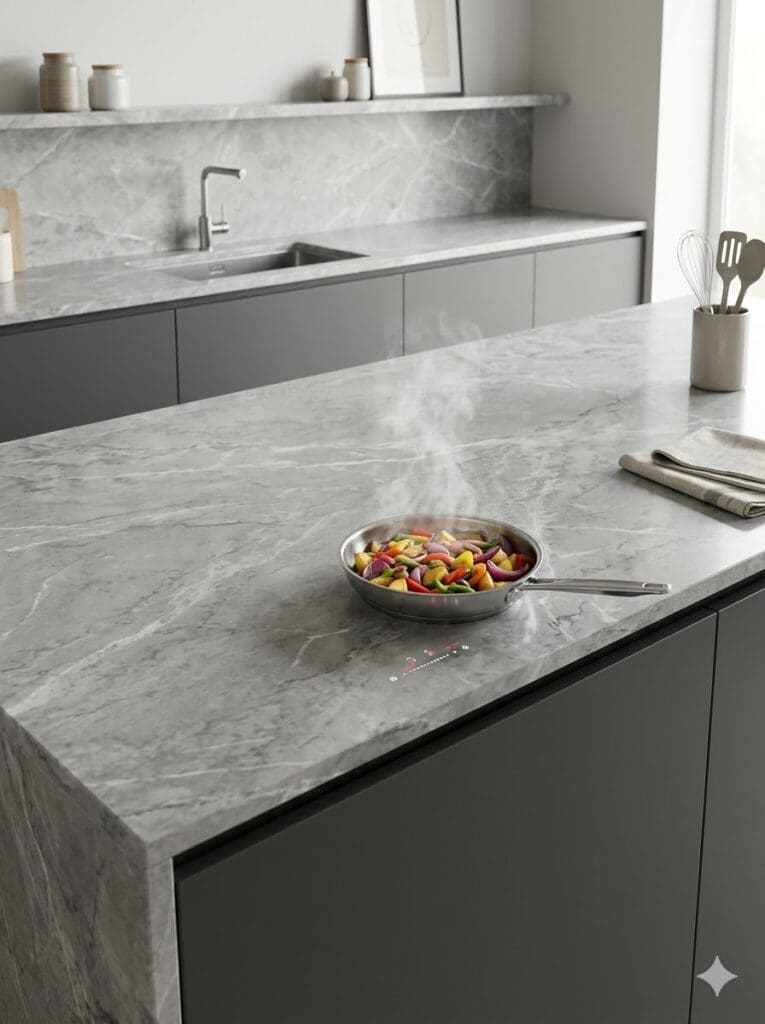
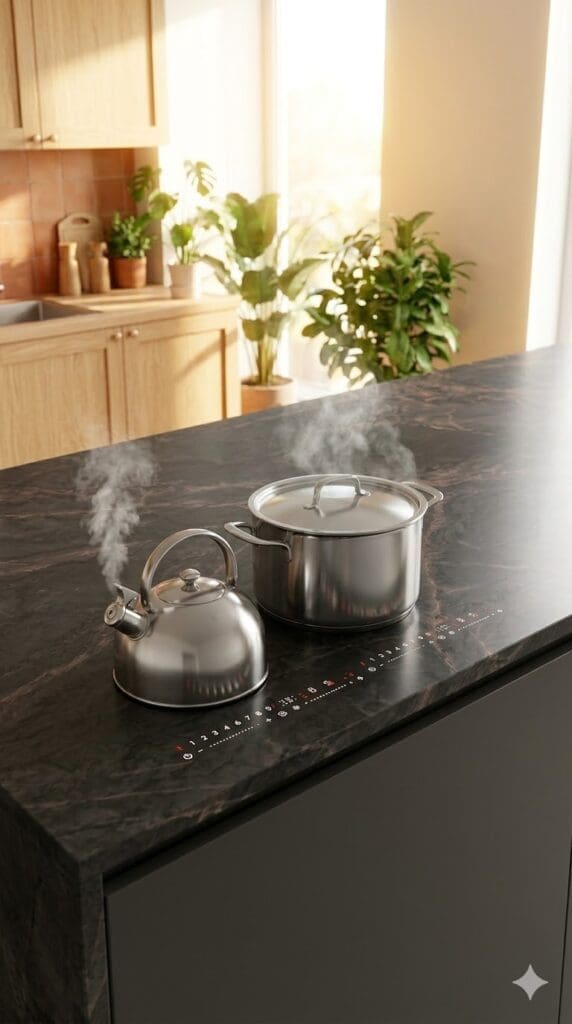
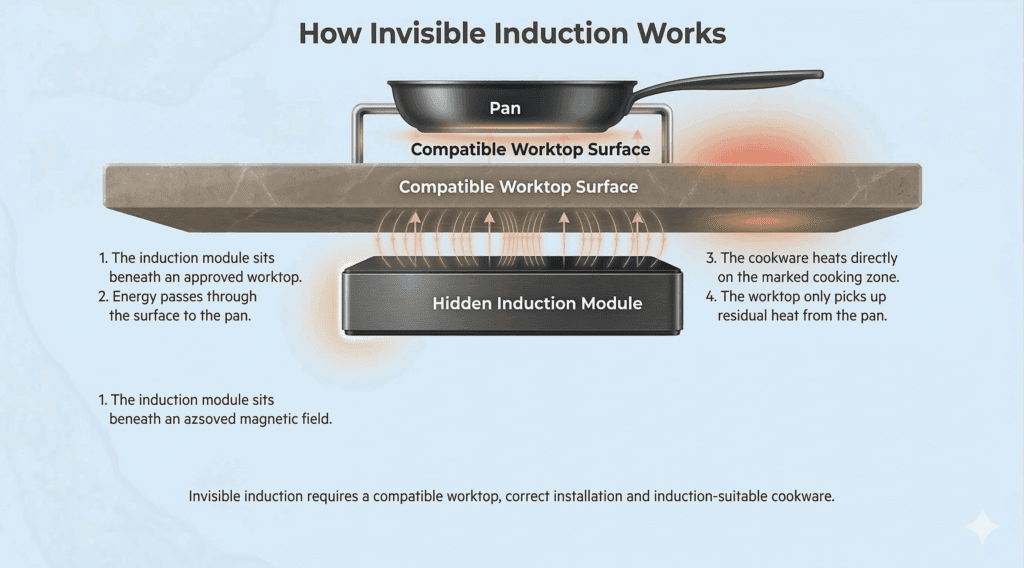
Invisible induction still uses the same core principle as conventional induction cooking: an electromagnetic field transfers energy into compatible cookware, heating the pan rather than using a flame or exposed electric element.
The difference is that the induction module sits under the worktop rather than beneath a visible glass hob. When a suitable pan is placed on the marked cooking zone, the induction system heats the cookware through the surface. Gaggenau states that its induction modules are used directly on the worktop in combination with 12 mm Dekton worktops, while Invisacook provides approved countertop guides for specific surface brands and systems.
In practice, that means invisible induction depends on three things working together:
- the induction module
- the compatible worktop material and thickness
- induction-suitable cookware
Compatible Worktops
This is the most important practical point on the page. Invisible induction does not work with every worktop.
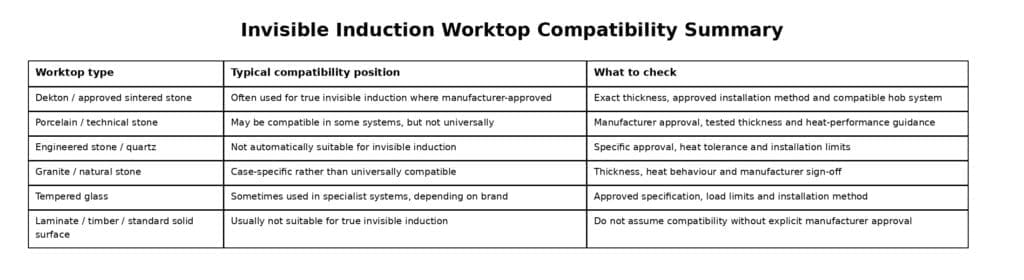
Manufacturers require specific surfaces, thicknesses and installation methods. Gaggenau explicitly pairs Essential Induction with Dekton worktops, and its product listing references use with 12 mm Dekton worktops. Cosentino also states that Dekton is suitable for invisible induction applications and highlights its heat and abrasion resistance.
Invisacook likewise publishes lists of tested and approved countertop brands and installation guides, which underlines that worktop compatibility is a controlled specification rather than a broad assumption.
What This Means For A Buyer
You should not choose an invisible induction system first and assume any stone or porcelain surface will work. The hob, worktop material, thickness and installation method need to be planned together from the start.
Cookware Compatibility
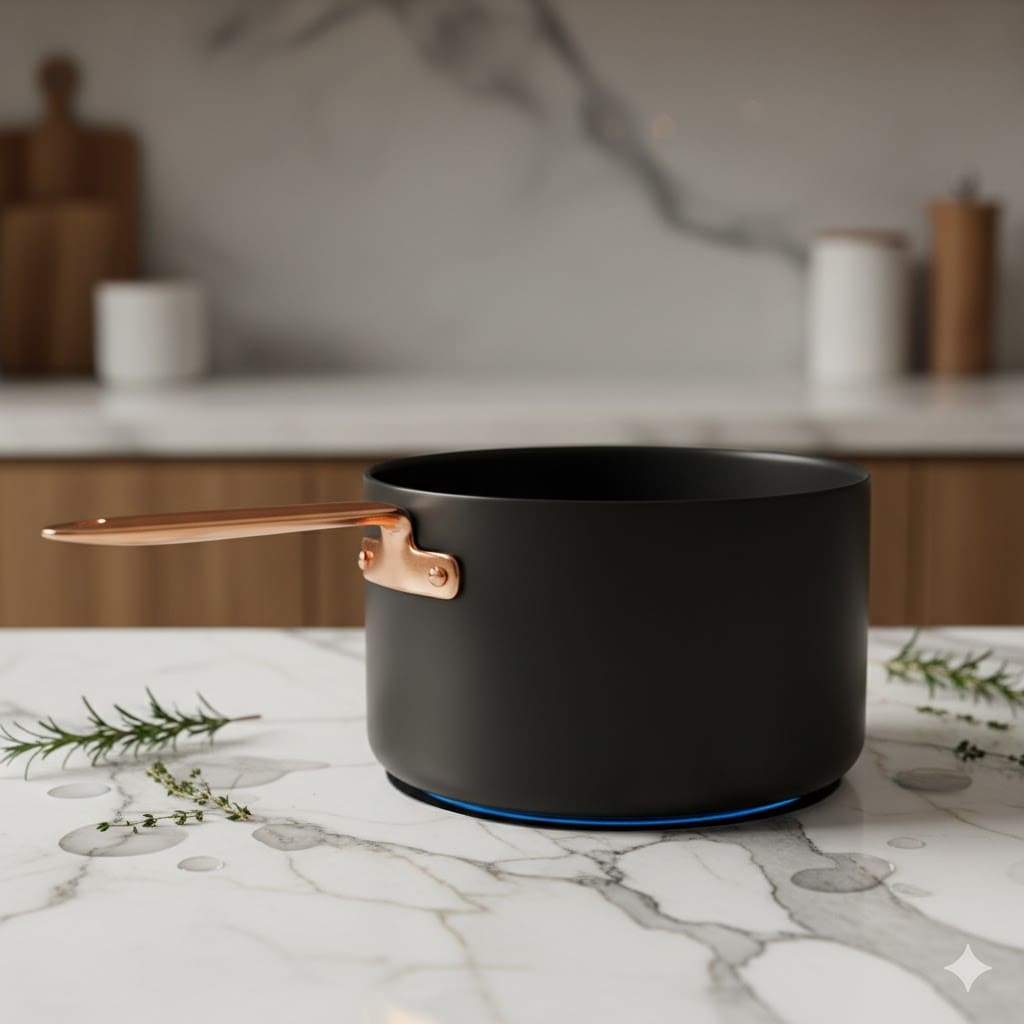
Like all induction systems, invisible induction requires cookware with a ferromagnetic base. That usually includes many stainless steel and cast iron pans, but not all cookware is suitable.
This is not unique to invisible induction, but because the cooking surface is hidden, pan positioning and compatibility become even more important. Buyers should expect to use pans approved for induction cooking and follow the manufacturer’s guidance on pan size and zone placement.
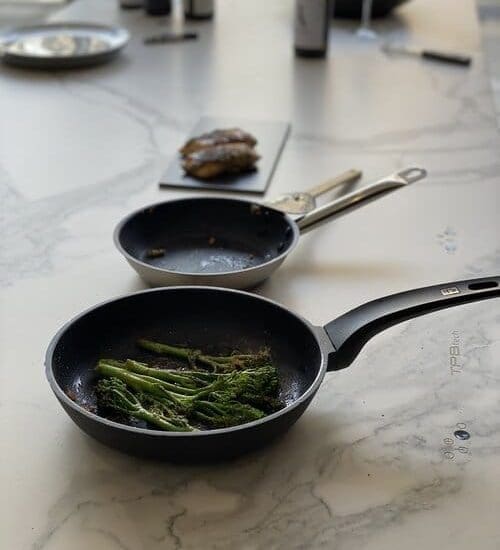
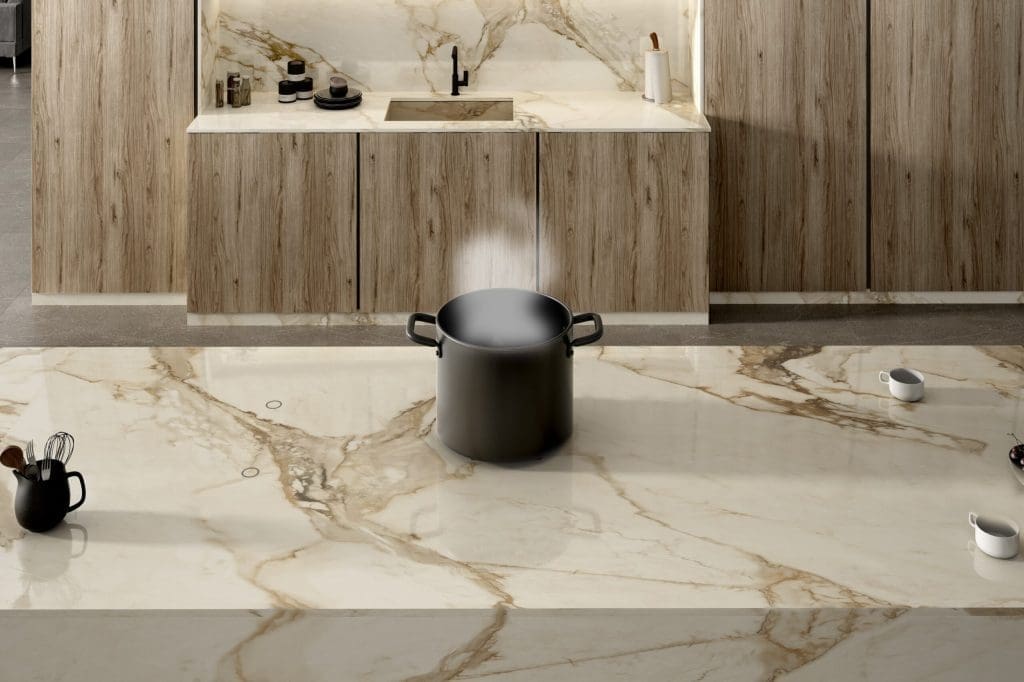
Main Benefits of Invisible Induction Hobs
1. Uninterrupted worktop design
This is the biggest attraction. The worktop remains visually clean and continuous, which suits contemporary kitchen design especially well. Gaggenau explicitly frames this as a single surface with no barriers, frames or gaps.
2. More usable surface space
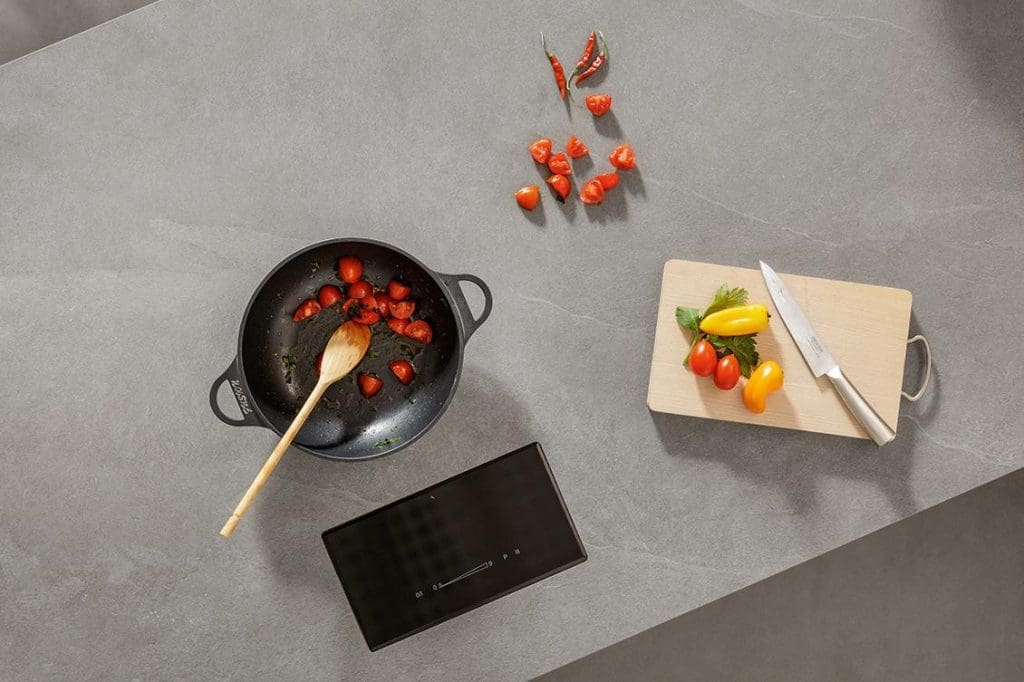
When the hob is not in use, the area can serve as prep space, dining space or general worktop area, subject to the manufacturer’s guidance.
3. Induction efficiency
Invisible induction still benefits from the core efficiency advantages of induction cooking: faster response, direct pan heating and less wasted ambient heat than many traditional electric methods. Cosentino states that its invisible induction applications are safe and that the surface does not directly heat up, only acquiring some residual heat from cookware.
4. Easier visual integration
For islands and open-plan kitchens, removing a visible hob from the surface can make the room feel calmer and less appliance-led.
5. Easy wipe-clean surface
With no visible hob frame, burners or raised edges, the surface can be easier to wipe clean, provided cleaning guidance for the worktop material is followed.
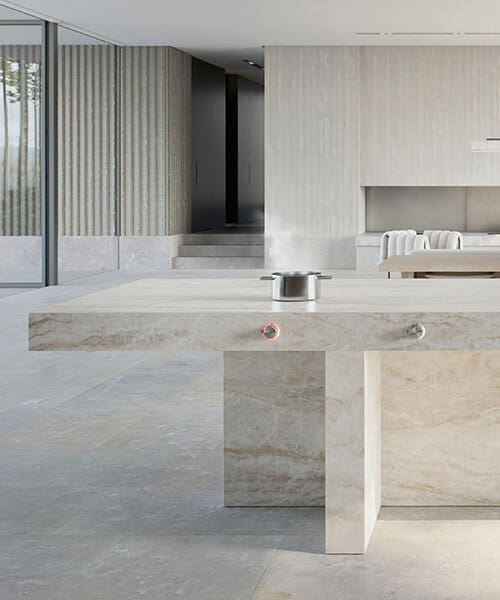
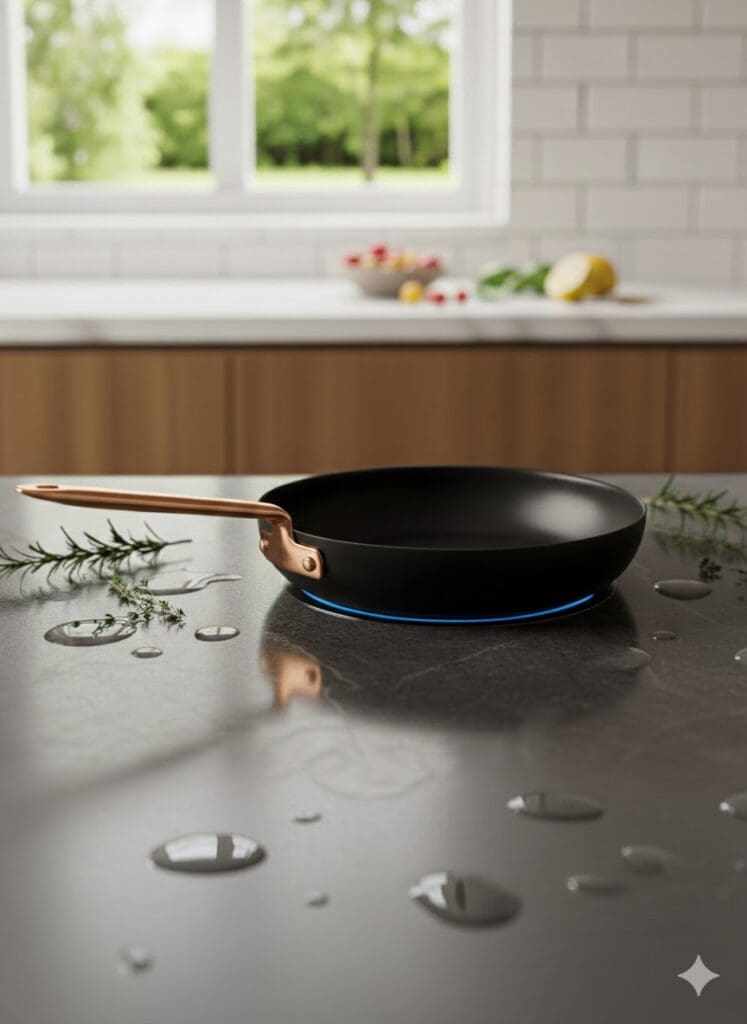
Potential Drawbacks of Invisible Induction
1. Higher cost
Invisible induction is a specialist solution and is typically more expensive than a standard induction hob. The cost includes not just the appliance but also the compatible worktop and more specialist installation planning.
2. Restricted worktop choices
This is not a fit-any-worktop product category. Surface type, thickness and approved installation methods matter.
3. More complex installation
Invisible induction is best planned as part of a full kitchen project or major worktop replacement. Retrofitting into an existing kitchen may be more complicated and not always practical.
4. Service and access considerations
Because the cooking system is hidden beneath the worktop, servicing and repair may be less straightforward than replacing or accessing a standard visible hob.
5. Less familiar to buyers
Because this is still a niche category, many buyers will want more showroom guidance, demonstration and specification support than they would for a standard induction hob.
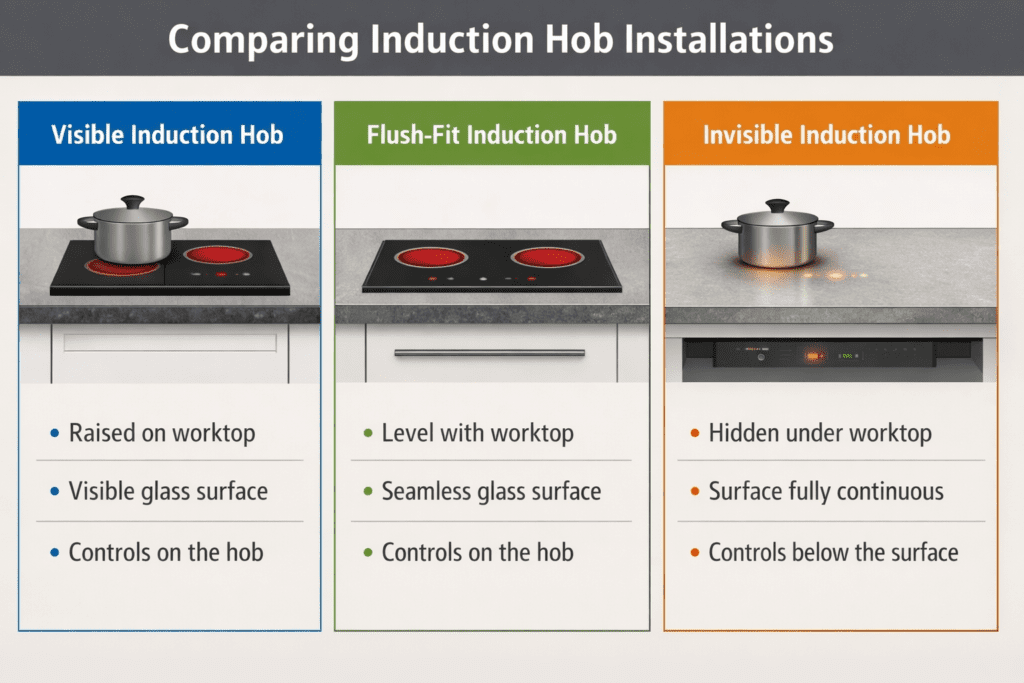
Are Invisible Induction Hobs the Same as Vented Hobs or Flush-Fit Hobs?
- No, a vented hob is still a visible hob, usually with integrated extraction.
- A flush-fit induction hob sits level with the worktop but is still visible.
- A true invisible induction hob is concealed beneath the worktop surface.
Who Is Invisible Induction Best Suited To?
Invisible induction is generally best suited to buyers who want:
- a minimalist kitchen aesthetic
- a premium or architectural kitchen finish
- uninterrupted island or worktop design
- induction cooking without a visible glass hob
- a project where hob and worktop can be specified together
It is usually less suited to:
- budget-led kitchen upgrades
- simple like-for-like hob replacements
- projects where the worktop material is already fixed and incompatible
- buyers who want maximum flexibility with little technical planning
Final Thoughts
Invisible induction hobs are not just a visual trend. They represent a more integrated way of approaching kitchen planning, where the cooking system and the worktop are designed as one specification.
That makes them highly appealing in the right kitchen, especially where uninterrupted surfaces and a minimalist look are priorities. But it also means they need careful planning. Worktop compatibility, installation requirements and service access matter just as much as visual appeal.
For the right project, invisible induction can be a compelling option. For the wrong one, a conventional induction hob may be the more practical choice.
Author’s Note
This guide has been prepared using aggregated insight from independent kitchen retailers in the Kitchen Experts network, alongside current manufacturer guidance for invisible induction systems and compatible worktops. It is intended to help homeowners understand the specification questions to ask when comparing this type of appliance.
FAQs
What is an invisible induction hob?
An invisible induction hob is an induction cooking system installed beneath a compatible worktop so the cooking area is hidden when not in use. The cooking zone is usually marked by subtle indicators or lights.
How does invisible induction cooking work?
It works by using electromagnetic induction to heat induction-compatible cookware placed on a designated area above the hidden module. The pan heats directly while the worktop only picks up residual heat.
Do invisible induction hobs need a special worktop?
Yes. Invisible induction systems require compatible worktop materials and thicknesses approved by the manufacturer. Dekton is one of the best-known surfaces used for this type of system.
Are invisible induction hobs safe?
Manufacturers position invisible induction as a safe cooking method because the cookware is heated directly and the surrounding surface does not heat in the same way as a traditional hob, although some residual heat can remain.
Can you use any pan on an invisible induction hob?
No. As with standard induction, the cookware must be induction-compatible, typically with a ferromagnetic base.
Are invisible induction hobs expensive?
Yes. They are generally a premium kitchen solution because they combine specialist induction modules, compatible worktop materials and more technical installation requirements.
Are invisible induction hobs the same as flush-fit induction hobs?
No. A flush-fit hob is still visible at the worktop surface, while a true invisible induction hob is concealed beneath the surface.