Halogen Hobs Explained: How They Work, Benefits, Drawbacks and How to Choose
Halogen hobs are a type of electric hob that gained popularity as a faster, more responsive alternative to traditional solid-plate electric cooktops. Although they are now less common than induction hobs in new kitchen installations, they continue to appear in UK homes — particularly in replacement scenarios and properties where induction may not be suitable.
For homeowners researching cooking appliances, halogen hobs often raise practical questions rather than lifestyle ones. How do they actually work? Are they energy efficient? Do they still make sense compared with induction or ceramic hobs? And are they likely to remain available in the coming years?
Search behaviour shows that many people encounter halogen hobs while comparing different electric hob types or when replacing an existing unit with minimal disruption. In those situations, understanding the real strengths and limitations of halogen technology becomes more important than marketing claims or surface-level comparisons.
This guide takes a detailed, neutral look at halogen hobs. It explains how they generate heat, how they differ from other electric hobs, what types of households they tend to suit, and where compromises are unavoidable. The aim is not to recommend one technology over another universally, but to help you decide whether a halogen hob aligns with your kitchen, cooking habits and expectations.
What Is a Halogen Hob?
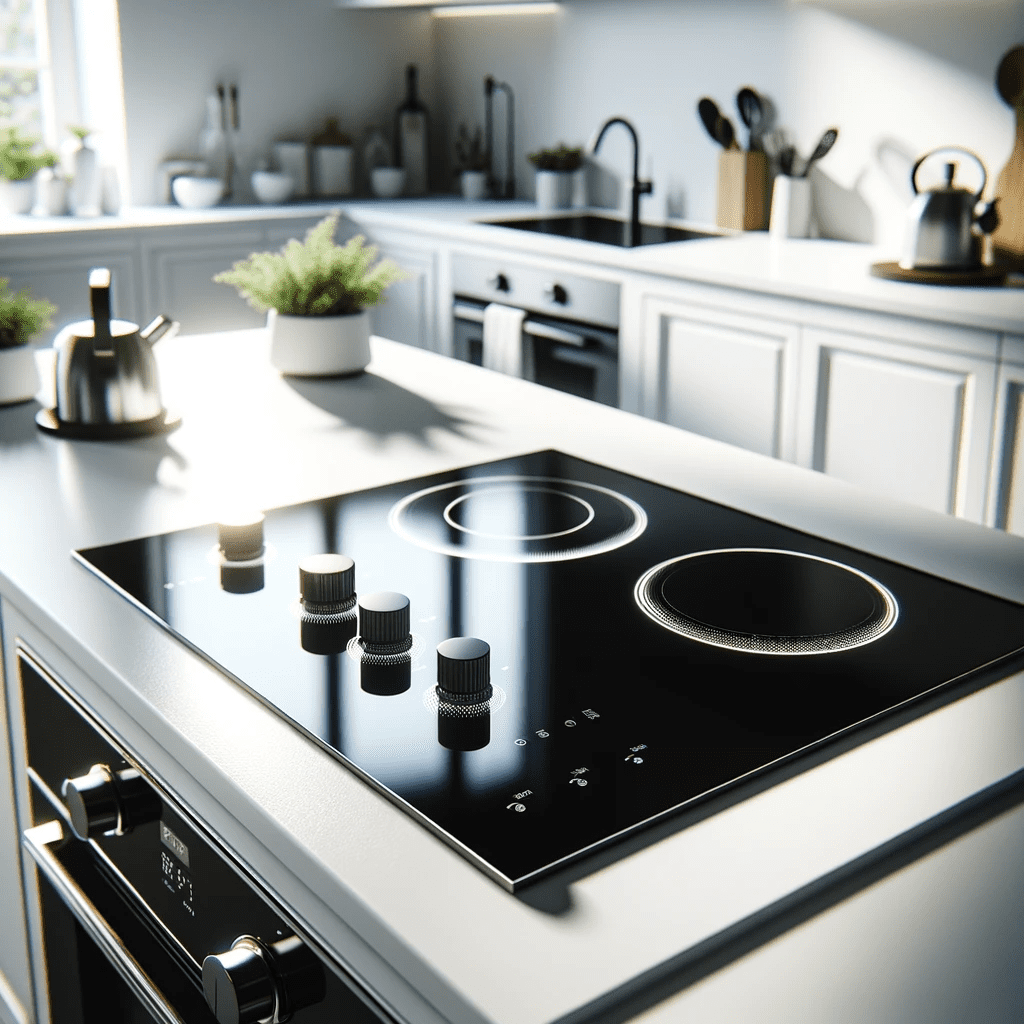
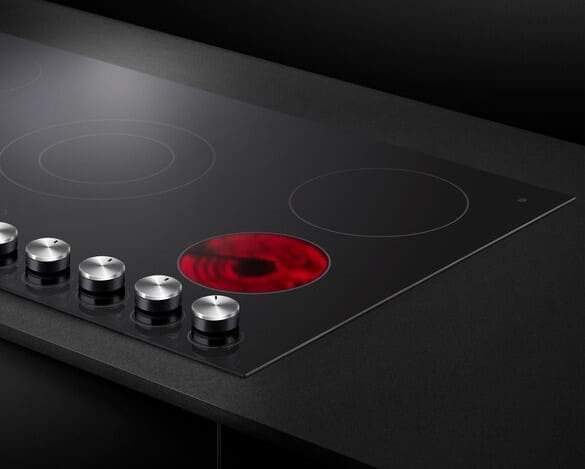
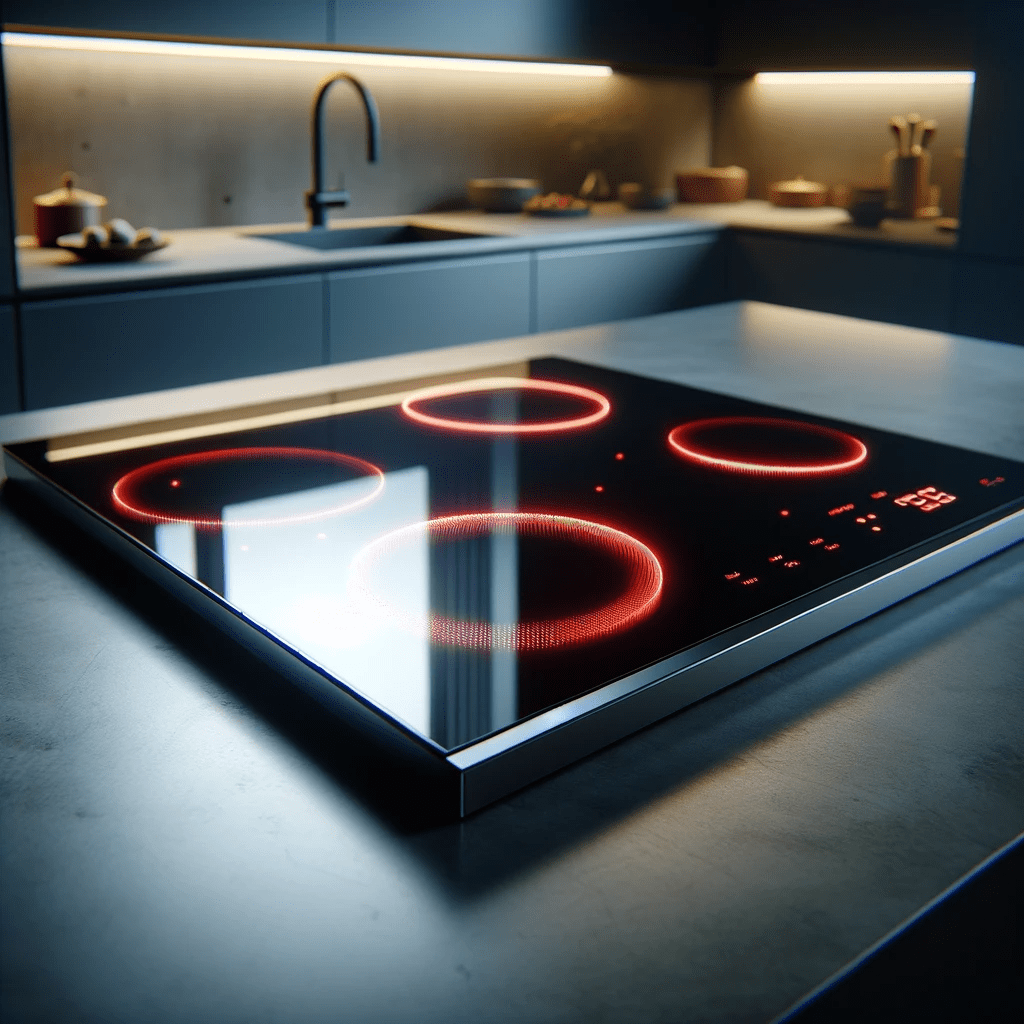
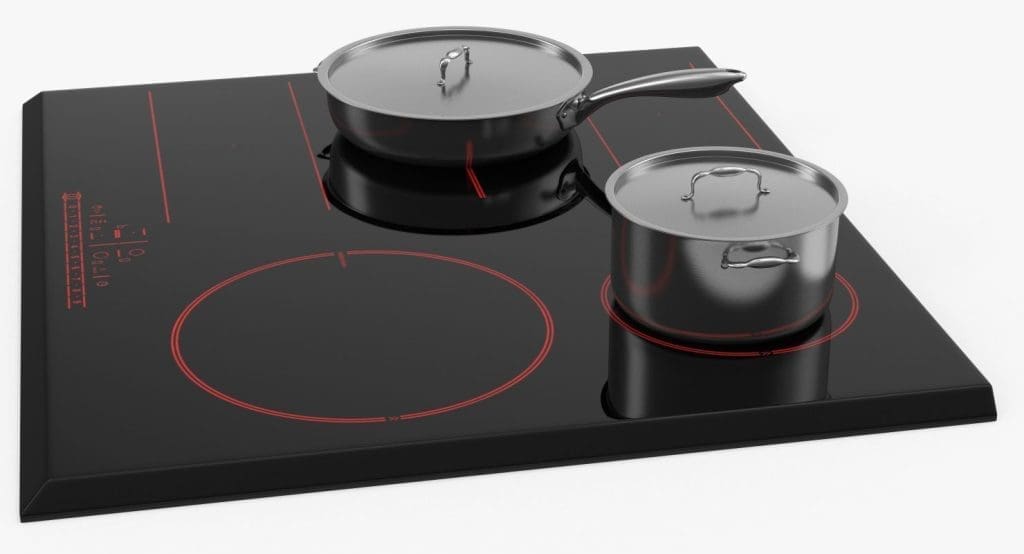
A halogen hob is an electric hob that uses halogen lamps beneath a glass-ceramic surface to produce heat. When switched on, the lamps emit infrared radiation, which passes through the glass and heats cookware placed on top. The surrounding hob surface also becomes hot during use.
How Halogen Hobs Work
Halogen hobs rely on tungsten halogen bulbs as their heating element. These bulbs are similar in principle to halogen light bulbs, but are designed to operate at very high temperatures.
When electricity flows through the lamp:
- The filament heats rapidly
- The lamp emits infrared radiation and visible light
- Infrared energy travels upward through the glass-ceramic surface
- Heat is absorbed by the base of the pan
- The glass surface around the pan also heats up
This process allows halogen hobs to reach cooking temperature more quickly than older electric coil or solid-plate hobs. However, because the glass surface itself becomes hot, halogen hobs behave differently from induction hobs, which heat cookware directly without significantly heating the surface.
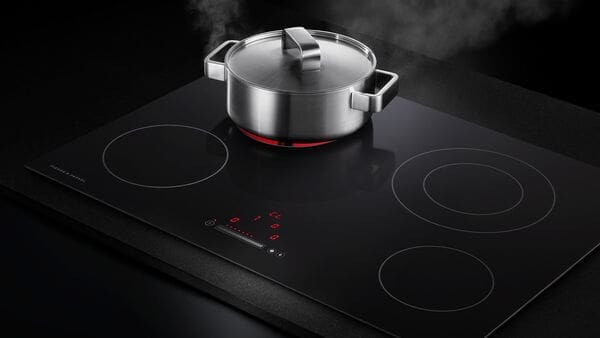
Key characteristics of halogen heating
- Fast initial heat-up
- Visible glow when active
- Heat spreads beyond the pan base
- Slower cooling once switched off
Types of Electric Hobs: Where Halogen Fits
To understand halogen hobs properly, it helps to see where they sit among other electric hob types:
- Ceramic hobs
Ceramic hobs use radiant heating elements beneath glass. They look similar to halogen hobs but usually heat more slowly and less responsively.
- Halogen hobs
Halogen hobs are a variation of ceramic hobs, using halogen lamps to improve heat-up speed and responsiveness.
- Induction hobs
Induction hobs use electromagnetic fields to heat compatible cookware directly. They are typically the fastest and most energy-efficient option.
- Solid-plate electric hobs
These use metal plates that heat slowly and retain heat for a long time. They are now largely outdated.
Halogen hobs were developed as an improvement on standard ceramic hobs, but have since been overtaken by induction in many new kitchens.
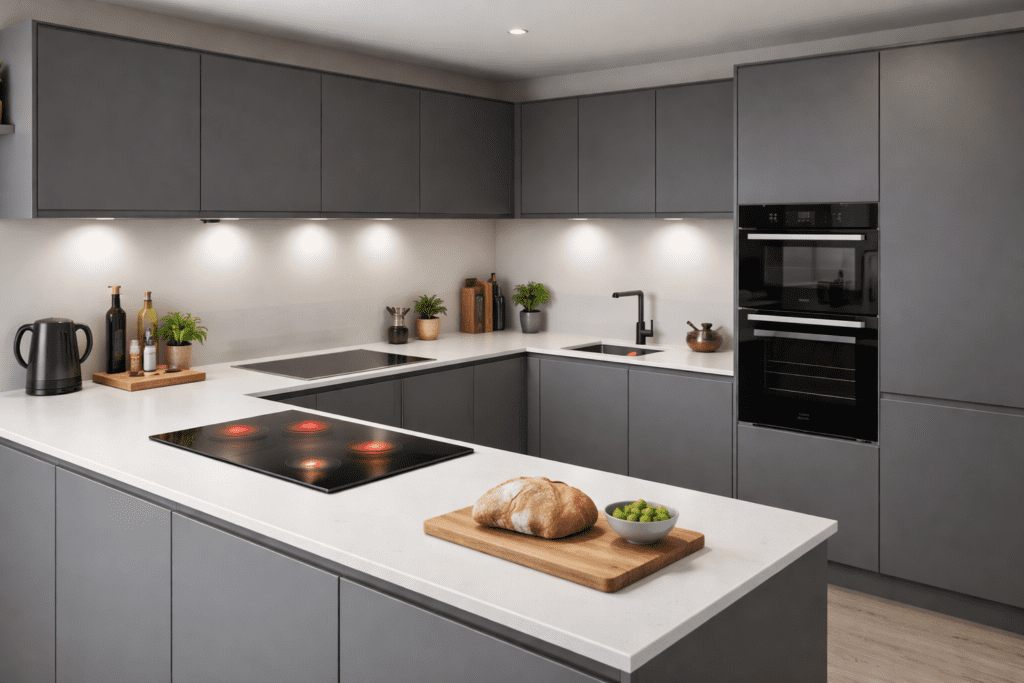
Advantages of Halogen Hobs
Faster heating than standard ceramic hobs
Halogen lamps reach high temperatures quickly, making halogen hobs noticeably more responsive than older ceramic designs.
Broad cookware compatibility
Most flat-bottomed cookware works on a halogen hob, including:
- Stainless steel
- Aluminium
- Copper-base pans
- Cast iron
This can be useful in households with mixed cookware collections.
Familiar cooking behaviour
Because the surface heats up in a visible and predictable way, halogen hobs feel intuitive to many users transitioning from older electric systems.
Smooth, easy-to-clean surface
The flat glass-ceramic surface can be wiped clean once cooled, with no burner parts or grates to remove.
Lower upfront cost than induction
Halogen hobs are often cheaper to purchase than induction models, particularly in entry-level ranges.
Disadvantages and Limitations of Halogen Hobs
Lower energy efficiency
A significant amount of heat is lost into the glass surface and surrounding air, making halogen hobs less efficient than induction.
Residual heat
The glass surface remains hot after cooking, increasing the risk of accidental burns and requiring residual heat indicators.
Slower cooling time
Once switched off, halogen hobs take longer to cool than induction hobs, which can affect kitchen workflow.
Limited availability
Fewer manufacturers now prioritise halogen technology, resulting in a smaller range of models and features.
Fewer advanced controls
Smart functions, precision temperature control and automation are more common on induction hobs.
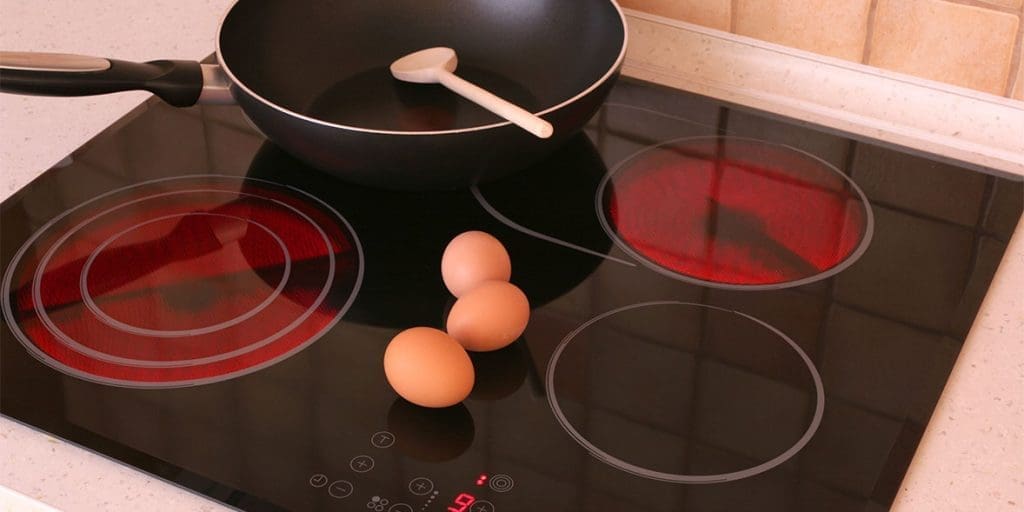
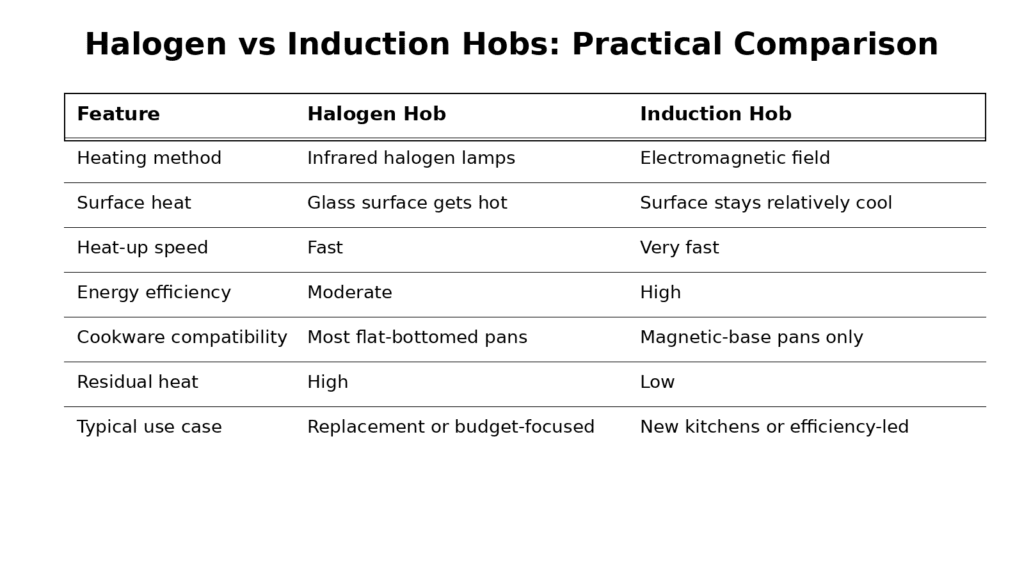
Halogen vs Induction Hobs: A Practical Comparison
In practical terms, induction tends to outperform halogen in speed, efficiency and safety. However, halogen may still be preferred where cookware compatibility or electrical limitations are a concern.
Energy Efficiency and Running Costs
Halogen hobs are more efficient than traditional electric hobs but less efficient than induction. Because they heat the hob surface as well as the pan, some energy is inevitably wasted.
Actual running costs depend on:
- Electricity tariff
- Cooking duration
- Pan size relative to cooking zone
- Power level used
For households cooking frequently, induction generally offers lower long-term energy use. For occasional cooking or replacement scenarios, the difference may be less noticeable.
Halogen Hob Safety Considerations
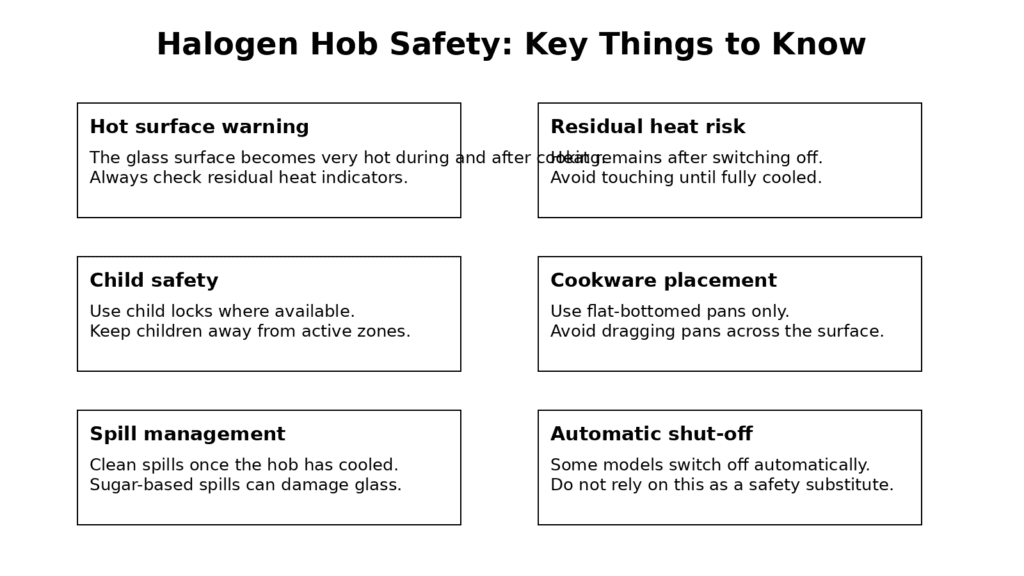
Halogen hobs are safe when used correctly, but users should be aware of:
- Hot surface risks after cooking
- The importance of residual heat indicators
- Proper ventilation to manage ambient heat
Many models include automatic shut-off features and child safety locks, though these are more limited than on induction hobs.
When Is a Halogen Hob a Sensible Choice?
Halogen hobs are most often suitable when:
- Replacing an existing ceramic or halogen hob
- Avoiding induction due to cookware limitations
- Working within a constrained budget
- Preferring familiar electric cooking behaviour
They are less suitable for:
- Energy-focused households
- New kitchen installations where induction is viable
- Users prioritising fast cooling and advanced controls
Longevity and Future Availability
While halogen hobs are no longer at the forefront of appliance innovation, they are not obsolete. Replacement units remain available, and support for existing installations continues.
However, long-term availability is likely to narrow further as manufacturers focus on induction technology. For this reason, halogen hobs are generally chosen for practical rather than future-proofing reasons.
Final Thoughts
Halogen hobs represent a transitional technology between traditional electric and modern induction cooking. They offer faster heating than older electric systems and broad cookware compatibility, but fall short of induction in efficiency, safety and long-term innovation.
For some kitchens, particularly replacement scenarios, a halogen hob can still be a sensible and cost-effective choice. For others, especially new installations, understanding these limitations helps avoid compromises later on.
For help in planning your perfect kitchen appliances, talk to your local Kitchen Experts today.
Haogen Hobs: FAQ’s
Are halogen hobs energy efficient?
Halogen hobs are more energy efficient than traditional solid-plate electric hobs, but less efficient than induction hobs. Because the glass surface heats up as well as the pan, some energy is lost compared with induction, which heats cookware directly.
Do halogen hobs work with all pans?
Halogen hobs work with most flat-bottomed cookware, including stainless steel, aluminium and cast iron. Unlike induction hobs, they do not require magnetic pans.
Are halogen hobs better than ceramic hobs?
Halogen hobs are generally faster to heat and more responsive than standard ceramic hobs, as halogen lamps reach temperature more quickly. However, both types share similar efficiency and surface heat characteristics.
Do halogen hobs stay hot after cooking?
Yes. The glass-ceramic surface retains heat after the hob is switched off. Most models include residual heat indicators to show when the surface is still hot.
Are halogen hobs still being made?
Halogen hobs are still available, mainly for replacement purposes, but they are less common than induction hobs. Many manufacturers now focus on induction technology for new product development.
Can I replace a ceramic hob with a halogen hob?
In many cases, yes — provided the cut-out dimensions and electrical supply are compatible. It’s important to check manufacturer specifications before replacing any hob like-for-like.
Are halogen hobs safe to use?
Halogen hobs are safe when used correctly. As with all electric hobs, care should be taken around hot surfaces, and safety features such as residual heat indicators and automatic shut-off should be used.
Who are halogen hobs best suited for?
Halogen hobs are typically best suited to replacement installations, households with mixed cookware, or situations where induction is not suitable due to electrical or budget constraints.