How to Design a Kitchen in a Narrow or Galley Space
Designing a kitchen in a narrow or galley space can feel challenging, but with the right approach, it can lead to one of the most efficient and stylish layouts of all. Galley kitchens have long been the choice of professional chefs and urban homeowners alike, known for their practicality and streamlined flow. If your kitchen is compact or positioned between two walls, careful planning can ensure every inch works hard, while still looking elegant and modern.
Here, the Kitchen Experts will help you understand how to design a galley or narrow kitchen that feels spacious, balanced, and functional — and all without compromising on style.
Understanding the Galley Kitchen Layout
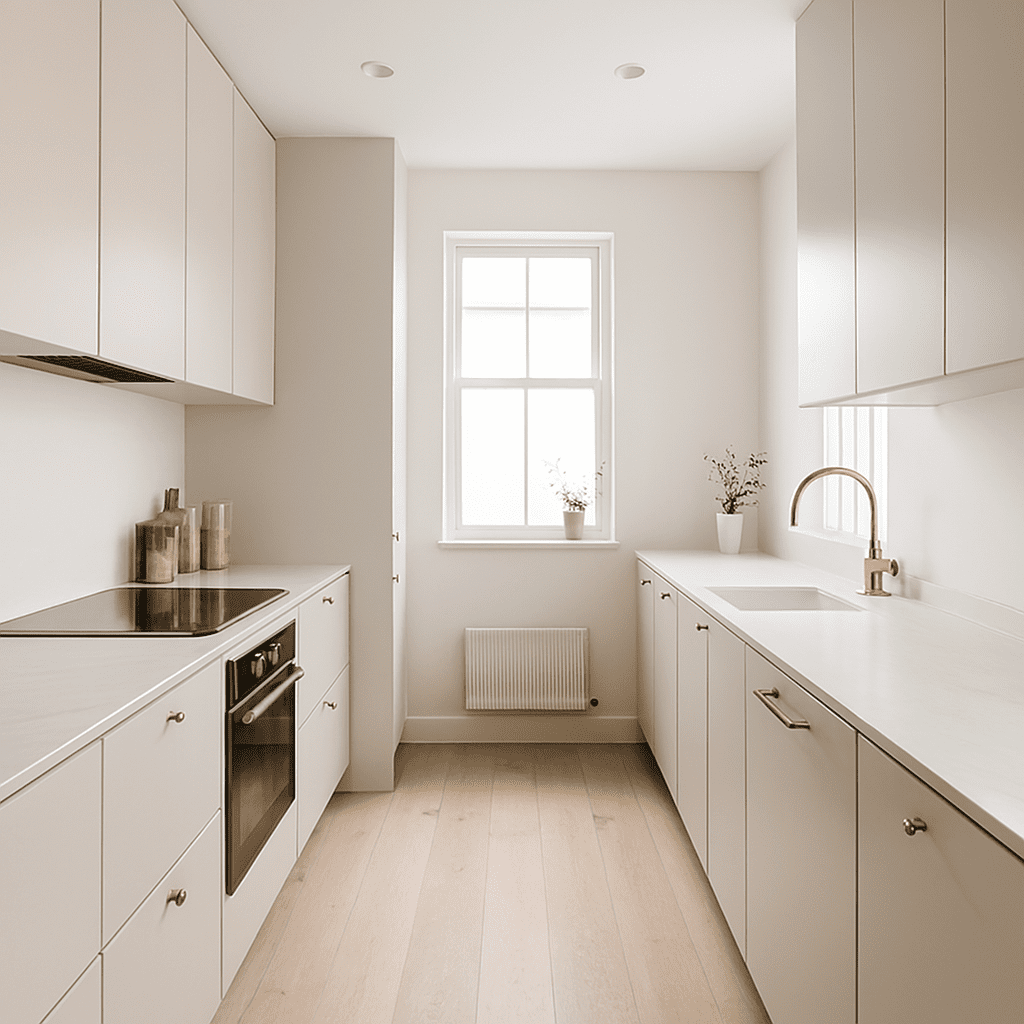
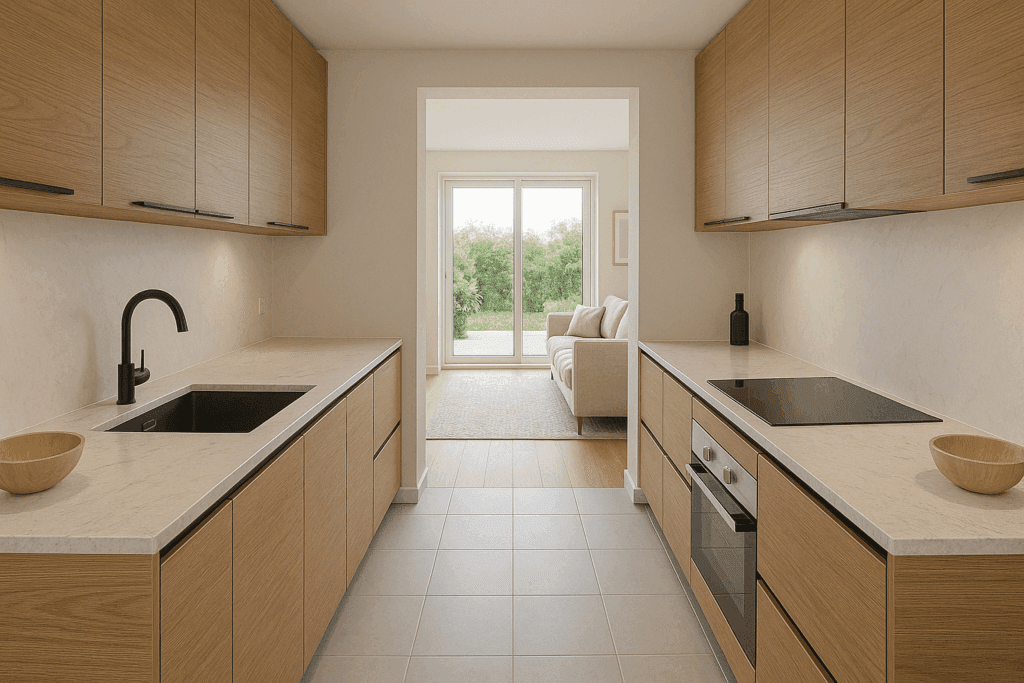
A galley kitchen typically features two parallel runs of cabinetry facing each other, with a walkway in between. This linear arrangement creates an efficient kitchen floor plan known for its ergonomic “cook’s triangle” — the natural flow between the sink, hob, and fridge.
The key to success in a narrow space lies in maintaining clear zones and preventing it from feeling enclosed. Unlike open-plan layouts, galley kitchens rely heavily on clever planning, light, and proportion.

The Benefits of a Galley or Narrow Kitchen
Despite their modest footprint, galley kitchens offer several major advantages:
- Efficiency: With everything within easy reach, this design minimises unnecessary movement and maximises workflow.
- Affordability: Smaller spaces often require fewer cabinets and materials, meaning a more cost-effective renovation.
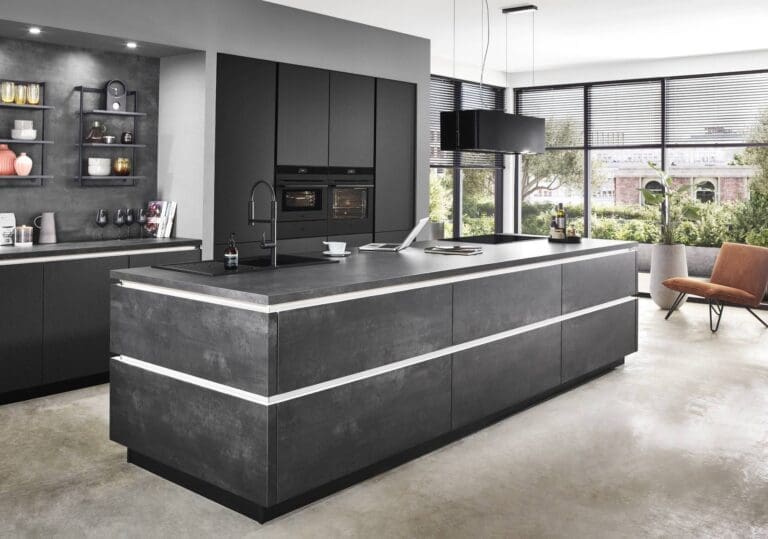
- Style flexibility: Modern German kitchen brands such as Nobilia, Bauformat, and Brigitte offer sleek handleless options perfect for narrow spaces, enhancing the sense of openness.
- Optimised kitchen storage: Tall units, internal drawers, and integrated solutions allow you to store more without crowding the room.
- Ease of cleaning: The compact footprint means fewer surfaces to maintain, ideal for busy households or city apartments.
Start with the Right Floor Plan
When it comes to kitchen floor plans, a galley layout demands precision. Begin by mapping your available dimensions and considering how much walkway space is required — ideally 1–1.2 metres between the two runs of cabinetry.
If your space is particularly tight, consider a single-wall kitchen rather than a full galley. This keeps one wall clear and creates more visual depth. Alternatively, an L-shaped layout can work well if the end of the galley opens into a dining or living area.
Professional tip: Keep major appliances — fridge, oven, and dishwasher — positioned for easy access without overlapping opening doors. Choose integrated models to maintain a clean look.

Maximise Light and Visual Space
One of the main challenges with a narrow kitchen is avoiding a tunnel-like feel. Natural and artificial light play a big part in solving this.
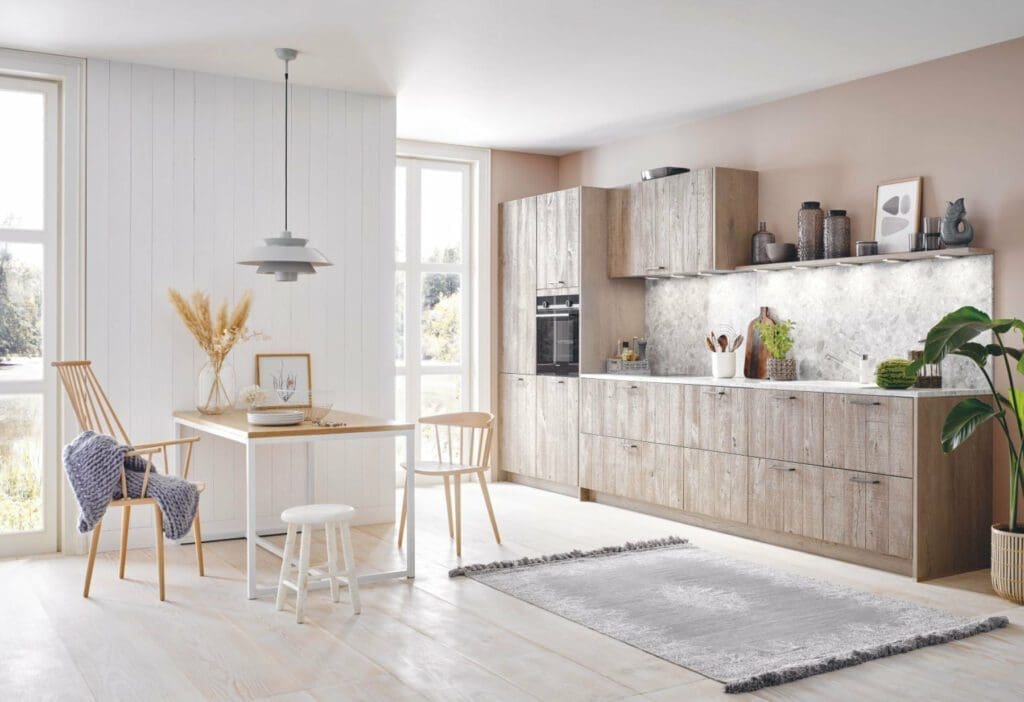
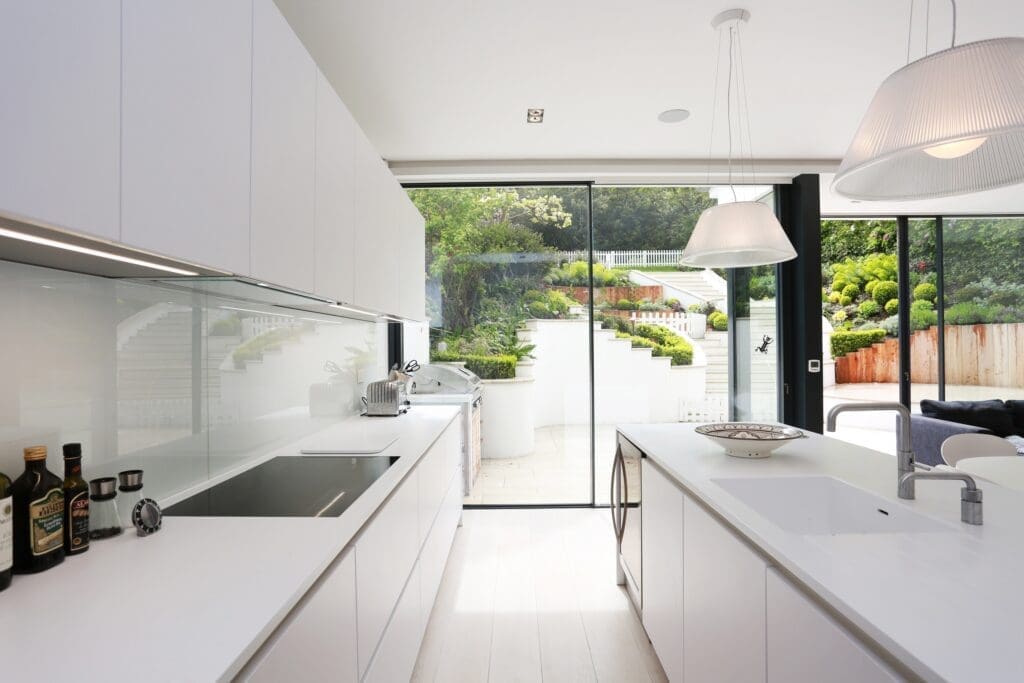
- Use pale tones: Soft neutrals, off-whites, and warm greys instantly make the space feel larger, whilst brands such as Next125 and Ballerina offer matt finishes that reflect light beautifully without glare.
- Gloss finishes: If you want to bounce even more light around, consider high-gloss laminate or lacquer doors. Impuls Kitchens, for instance, has modern gloss ranges that suit small, reflective environments.
- Lighting layers: Combine under-cabinet LEDs, ceiling spotlights, and strip lighting to ensure even illumination.
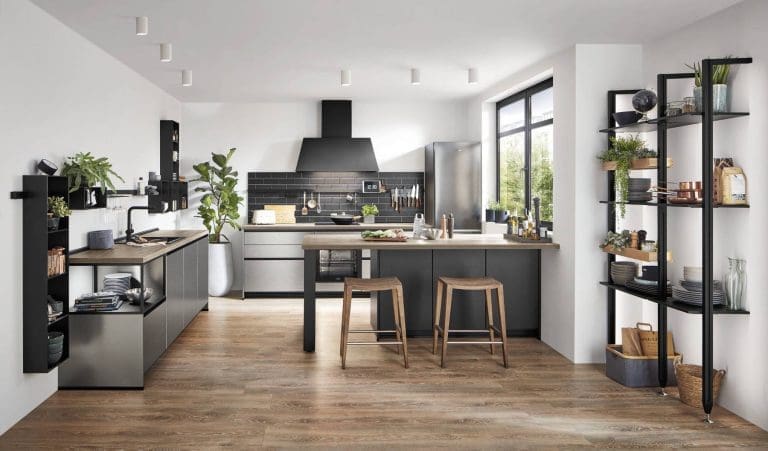
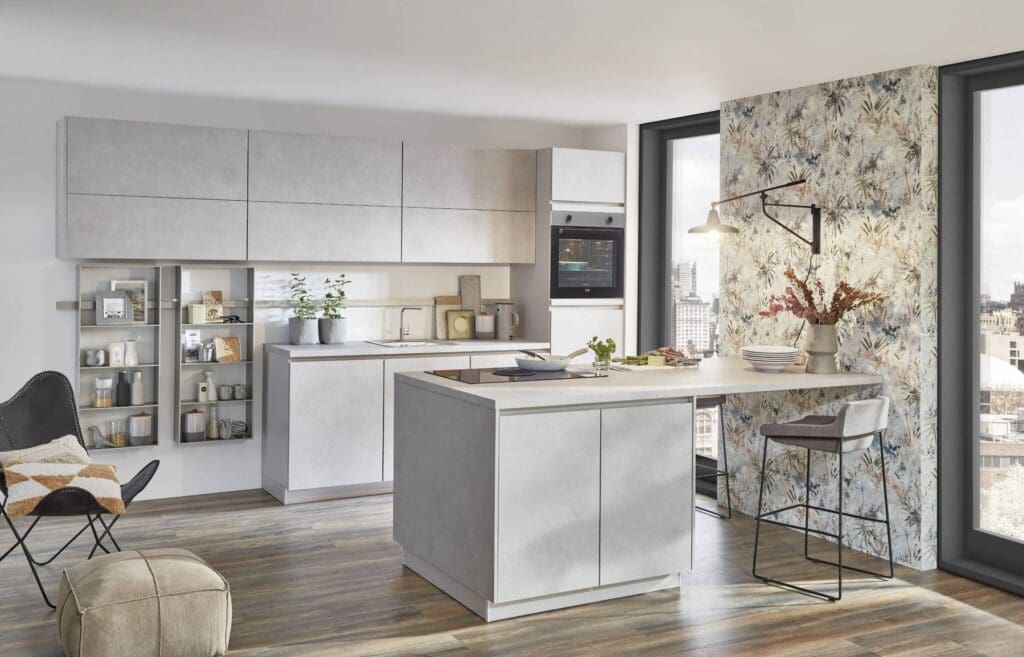
- Open up one side: If possible, remove upper cabinets on one wall and replace them with open shelving or a tiled feature wall. This prevents a claustrophobic effect while maintaining style.
Prioritise Smart Storage
Clever kitchen storage is what makes a galley kitchen truly functional. Every cabinet and drawer should serve a purpose.
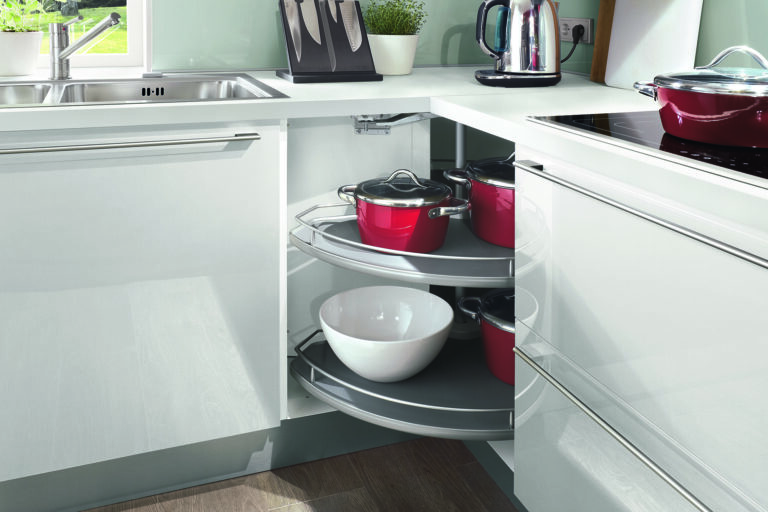
- Pull-out larders and corner carousels help use hard-to-reach spaces effectively.
- Deep drawers rather than cupboards make accessing pots and pans easier.
- Tall units can house ovens, microwaves, and built-in coffee machines vertically to save counter space.
- Slimline pull-outs for spices, oils, and trays can be installed beside the cooker or fridge.
- Overhead cabinetry can extend to the ceiling for additional storage, reducing clutter elsewhere.
For premium solutions, brands such as Bauformat and Nobilia are known for their precision-engineered internal mechanisms — ensuring smooth operation and maximum usability even in compact layouts.

Focus on Flow and Functionality
In a narrow kitchen layout, functionality depends on an intuitive flow. The traditional “work triangle” remains useful but can be adapted for modern habits.
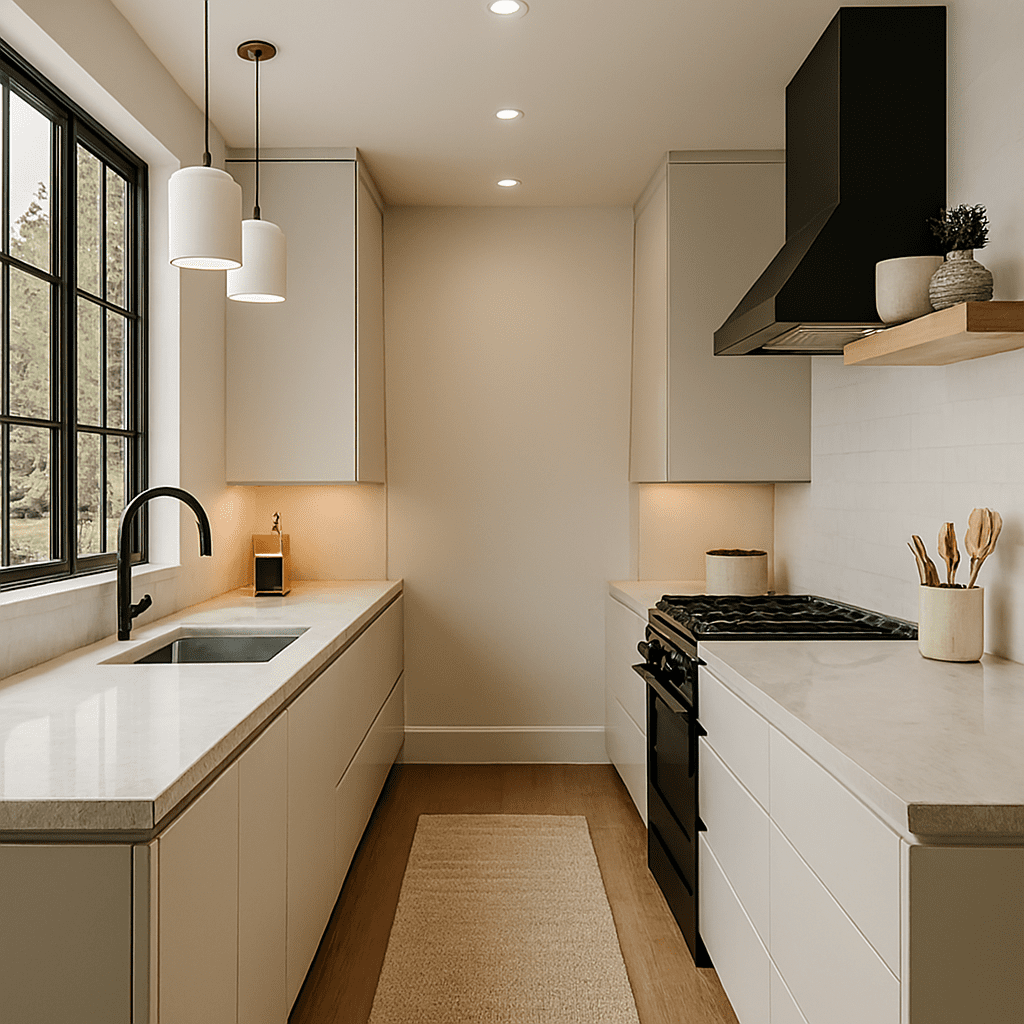
- Cooking zone: Position the hob centrally, ideally on one run, with preparation space on either side.
- Cleaning zone: Keep the sink close to the dishwasher to simplify plumbing and loading.
- Storage and refrigeration zone: Place tall fridge and pantry units at the ends of the layout to visually ‘bookend’ the space.
Avoid placing the oven or fridge directly opposite each other; overlapping doors can cause frustration and restrict movement.
Choosing Materials and Finishes
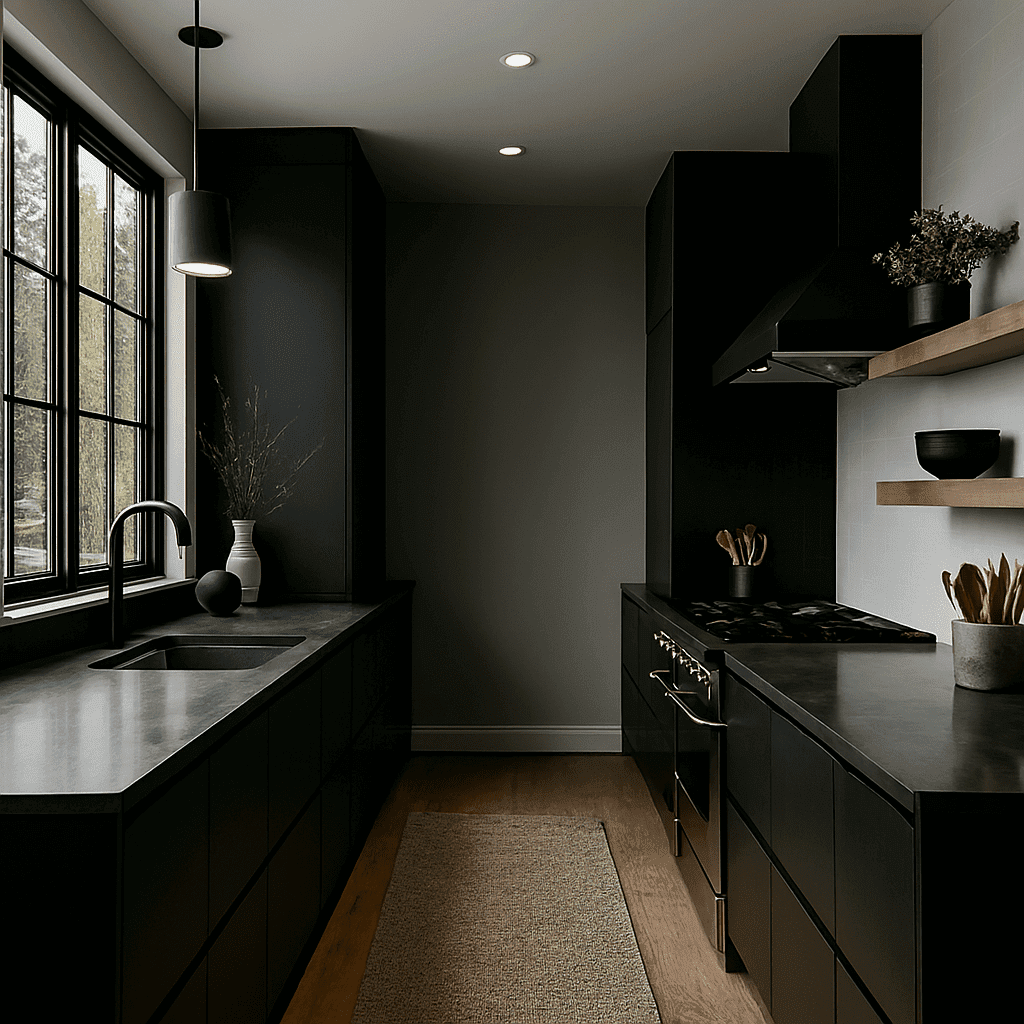
A narrow or galley kitchen can look extraordinary when the right materials are combined thoughtfully. The goal is to create contrast without clutter.
- Worktops: Light quartz, composite stone, or slimline laminate can brighten the space.
- Cabinet finishes: Matt finishes reduce glare and create a calm atmosphere; gloss options make the room appear larger.
- Handles or handleless: Handleless kitchens streamline the look and improve movement through tighter gaps.
- Splashbacks: Reflective glass or large-format tiles enhance the feeling of depth.
- Professional insight: Use consistent finishes on both runs of cabinetry to maintain visual balance. Mixing colours or materials can make a small kitchen feel busy if not handled carefully.

Make Every Detail Count
In smaller kitchens, the details have the biggest impact.
- Consistent lines: Align wall and base units perfectly for a clean, architectural feel.
- Thin-profile worktops: Slimline worktops (as little as 12mm) help lighten the appearance.
- Integrated handles: Recessed J-pull designs or push-to-open mechanisms eliminate visual clutter.
- Compact appliances: Consider slimline dishwashers, 45cm ovens, or combination appliances to save space.
- Example: A Nobilia galley kitchen with integrated Siemens appliances and a light matt lacquer finish offers a contemporary and practical solution for modern UK homes.
Don’t Forget Ventilation
Galley kitchens can trap heat and cooking odours if ventilation is poor. Installing a powerful yet quiet extractor fan is crucial. Bora downdraft systems, often compatible with German kitchen brands like Next125 or Ballerina, are an excellent choice as they remove odours at source and avoid overhead clutter.
Design Tricks to Make a Narrow Kitchen Feel Larger
Visual design plays a huge role in perception of space. Small adjustments can make a galley kitchen feel open and inviting:
- Continuous flooring: Use the same flooring throughout adjoining rooms to create flow.
- Minimal colour contrast: Keep cabinetry and wall colours within a close tone range for a seamless effect.
- Mirrored splashbacks: These reflect both light and space, giving the illusion of depth.
- Horizontal lines: Long handles or linear grain wood-effect finishes help stretch the visual width of the room.
- Glass cabinet doors: Use sparingly to break up solid surfaces and reflect light.
Open Up the Ends
If your galley kitchen has a blank wall at one end, use it creatively:
- Add a window or glazed door to bring in natural light.
- Install a breakfast bar or small seating area if space allows.
- Incorporate open shelving for display and easy access to everyday items.
This makes the space feel more social but also avoids the closed-off feeling often associated with galley layouts.


Consider Professional Kitchen Design Support
Even the most creative homeowner benefits from expert guidance when designing a galley kitchen. Professional kitchen designers are trained to optimise small spaces, ensuring that style and practicality go hand in hand. They’ll help with layout decisions, appliance integration, and material choices to ensure your kitchen functions beautifully and stands the test of time.
Bringing It All Together
A well-designed galley kitchen proves that size doesn’t limit creativity or luxury. With thoughtful planning, smart storage, and quality craftsmanship, you can achieve a design that’s efficient, modern, and effortlessly stylish. Whether you favour the minimalist precision of a Next125 handleless range, the textured wood veneers of Ballerina, or the practical solutions from Impuls Kitchens, your galley kitchen can become a model of efficient living.

Final Thoughts
Designing a narrow kitchen is all about balance — creating flow without clutter, maximising light, and choosing finishes that enhance the sense of space. Focus on functionality first, then layer in the design details that reflect your taste and lifestyle.
By making smart use of every inch, your galley kitchen can become one of the most enjoyable and efficient spaces in your home — proof that great design isn’t about how much space you have, but how well you use it.
Download a Brochure