Floating Kitchen Island: Design Ideas, Layout Rules and Practical Considerations
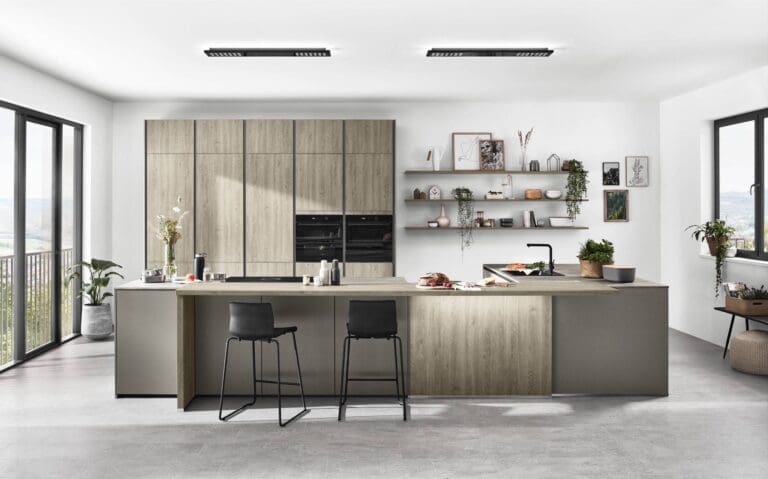
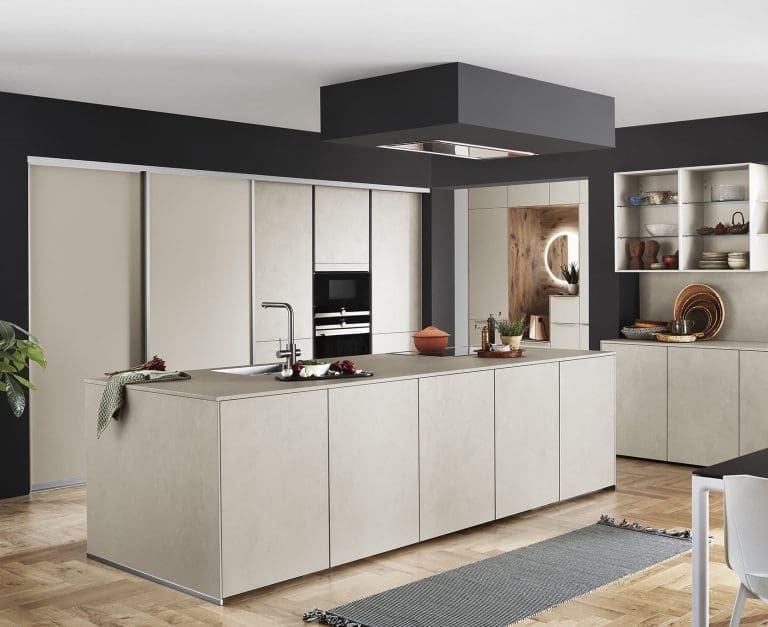
A floating kitchen island has become a defining feature of modern kitchen layouts, but its success depends less on appearance and more on how it functions within a space. Unlike fixed islands anchored to cabinetry or walls, a floating kitchen island is a freestanding unit positioned to improve flow, zoning and everyday usability.
In many UK homes, a floating island is used to create additional workspace while maintaining clear movement around the kitchen. However, not every kitchen can accommodate a floating kitchen island effectively. The layout, available clearance, and intended use all play a critical role in determining whether a floating island will enhance the space or create practical limitations.
This guide explains how to plan a floating kitchen island with a focus on real-world use. It covers essential factors such as kitchen island size, clearance requirements, layout scenarios and functional configurations. It also outlines common mistakes, technical considerations like plumbing and electrics, and simple decision frameworks to help you assess whether a floating island is the right fit for your kitchen.
What is a Floating Kitchen Island?
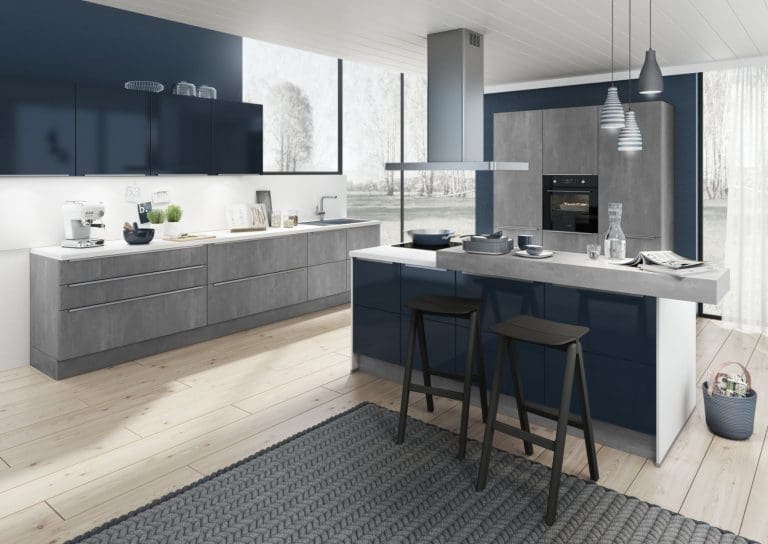
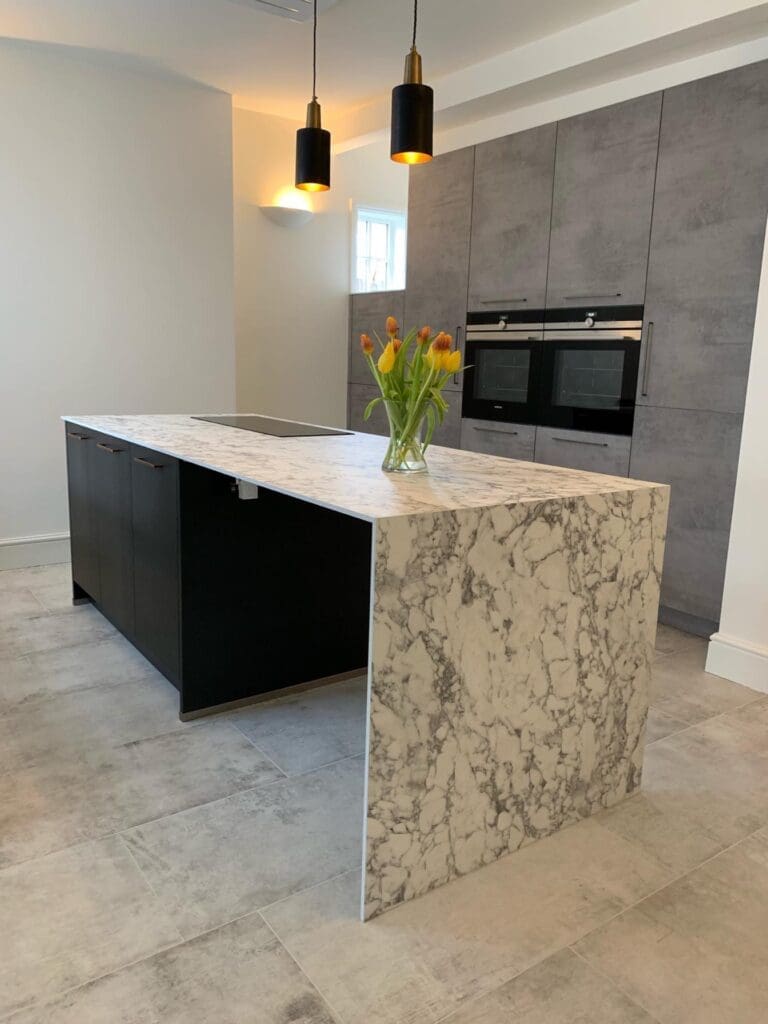
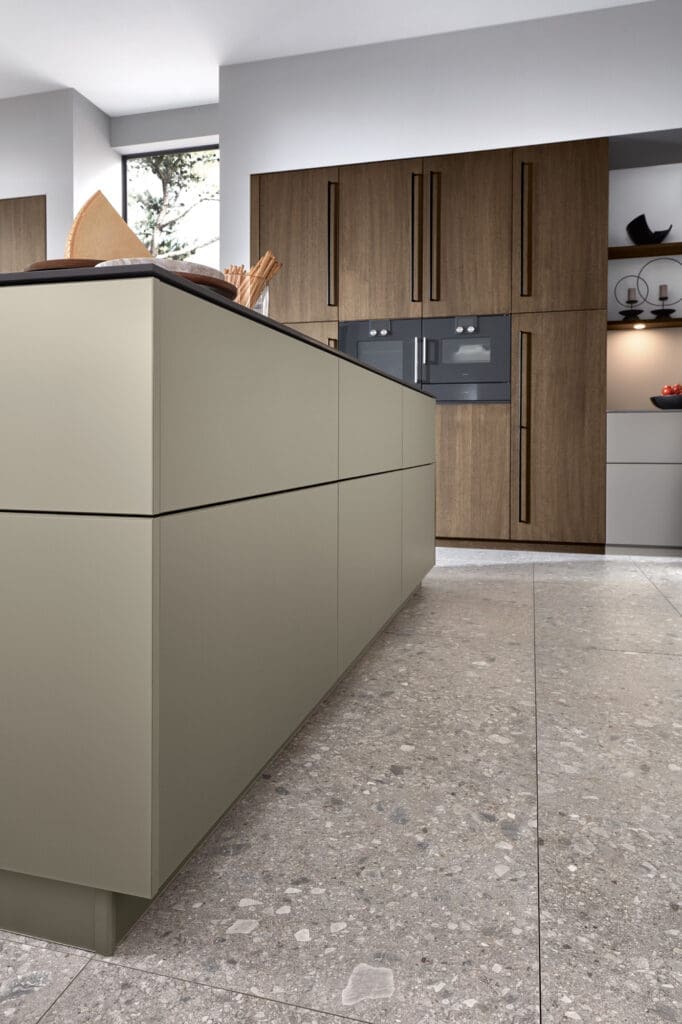
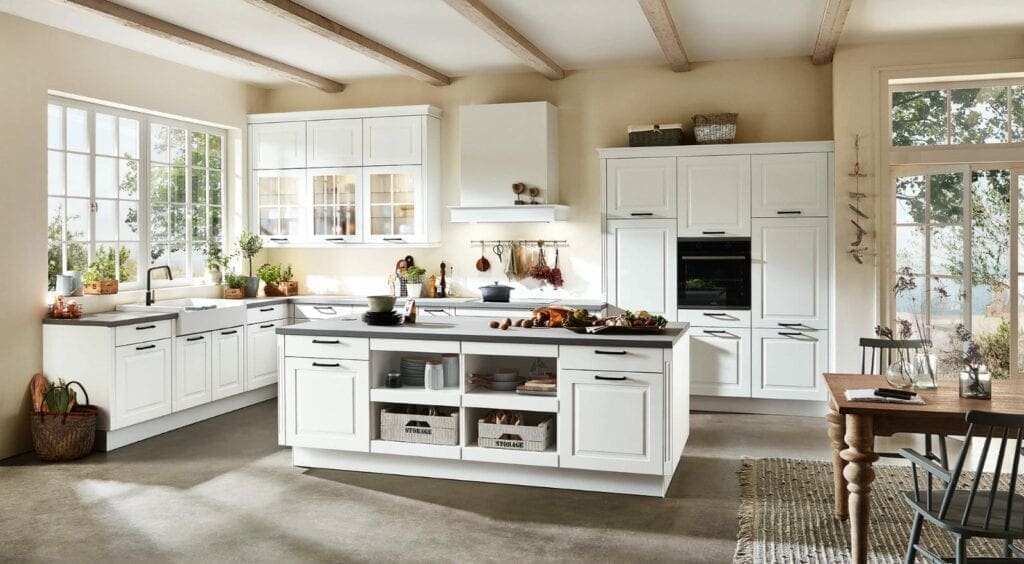
A floating kitchen island is a freestanding kitchen unit positioned independently from walls or cabinetry. It provides additional workspace, storage or seating while allowing circulation on all sides. Unlike fixed islands, it is defined by its placement within the room rather than structural attachment.
Why Choose a Floating Kitchen Island?
A floating island is less about style and more about spatial efficiency. In many kitchens, especially open-plan layouts, it helps define zones without enclosing the space.
Advantages of this feature:
- Improved flow: Allows movement on all sides
- Flexible positioning: Can be adjusted during planning to suit your kitchen’s layout
- Creates zoning: Separates cooking, prep and social areas
- Multi-functionality: Combines storage, seating and prep space for ultimate convenience
However, these benefits only apply when spacing and proportions are correct as poorly placed islands often disrupt movement rather than improve it.
Space Requirements for Your Island
Before considering floating kitchen island ideas for styles or features, space planning is critical.
Recommended clearances:
- Minimum walkway: 900 mm (tight but workable)
- Comfortable walkway: 1000–1200 mm
- Busy zones: 1200–1400 mm
- Between island and appliances: 1100–1200 mm
If your kitchen doesn’t allow for these requirements, it’s worth looking at other options for workspace.
Floating Island Layout Ideas
Different layouts require different approaches. Depending on how your kitchen is set up, here are some recommendations for your floating island.
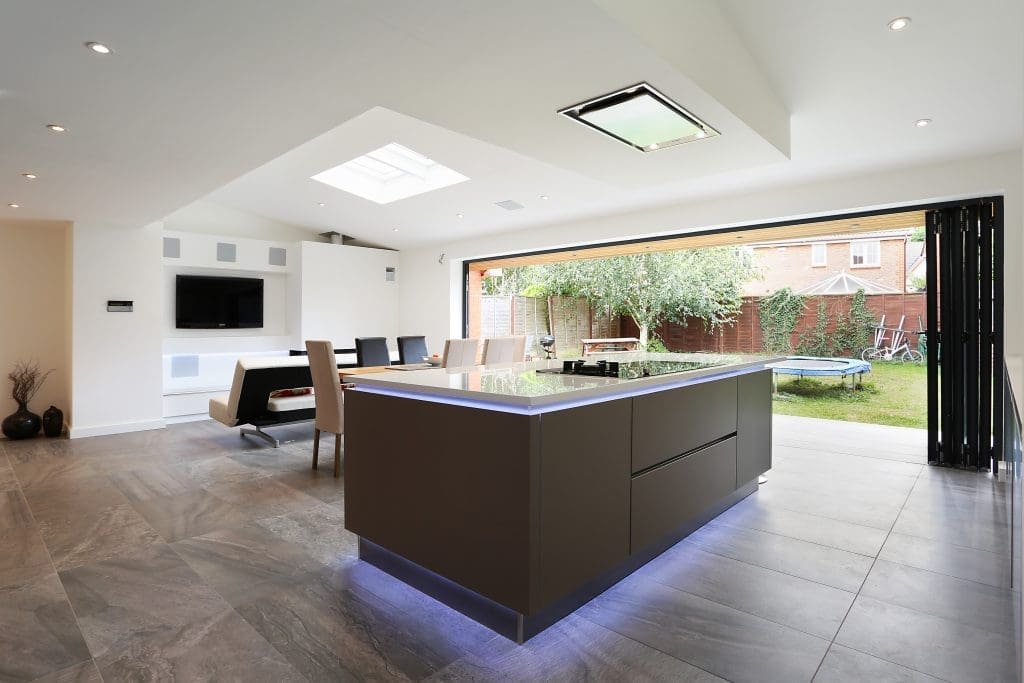
1. Open-Plan Kitchen
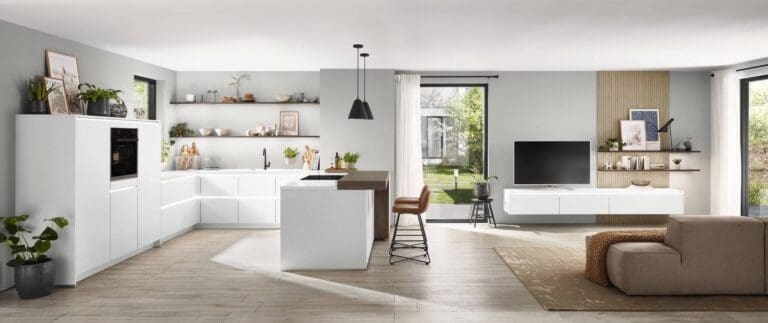
In open-plan spaces, the island often acts as a transition between kitchen and living areas.
Make the most of it with:
- Seating on one side
- Prep space on the other
- Optional storage underneath
Keep in mind that this will work best if you maintain clear sightlines across the room and avoid blocking natural light.
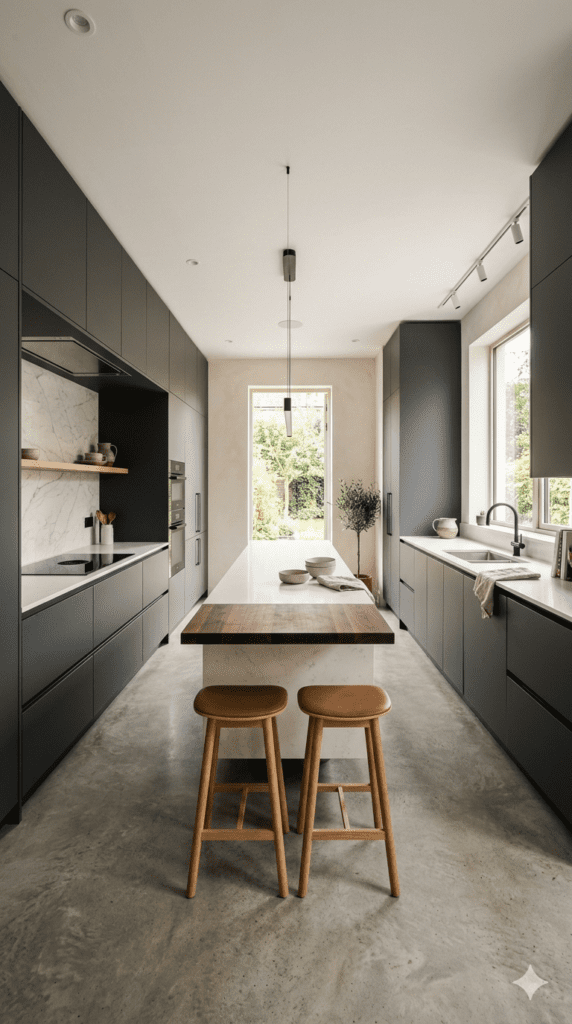
2. Galley Kitchen with Added Width
Where a galley kitchen has enough width, a slim floating island can make the space even more functional.
Advantages of this include:
- Additional prep surface
- Compact storage
Consider keeping the depth modest (600–700 mm), and ensure walkways remain functional on both sides.
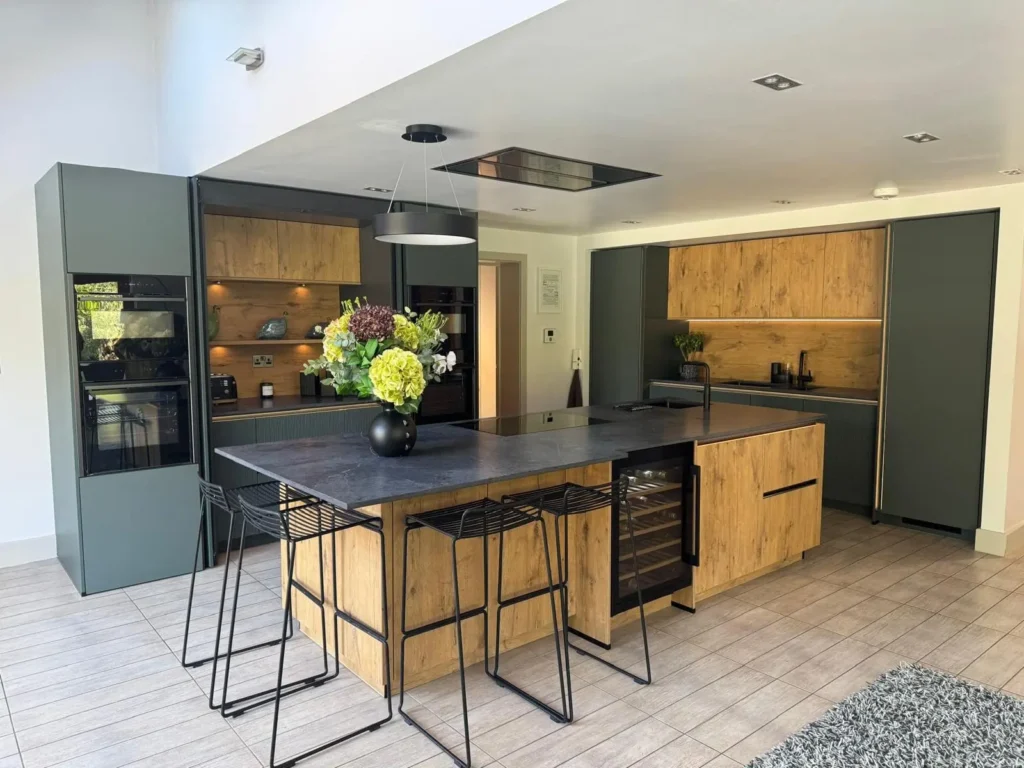
3. Large Family Kitchen
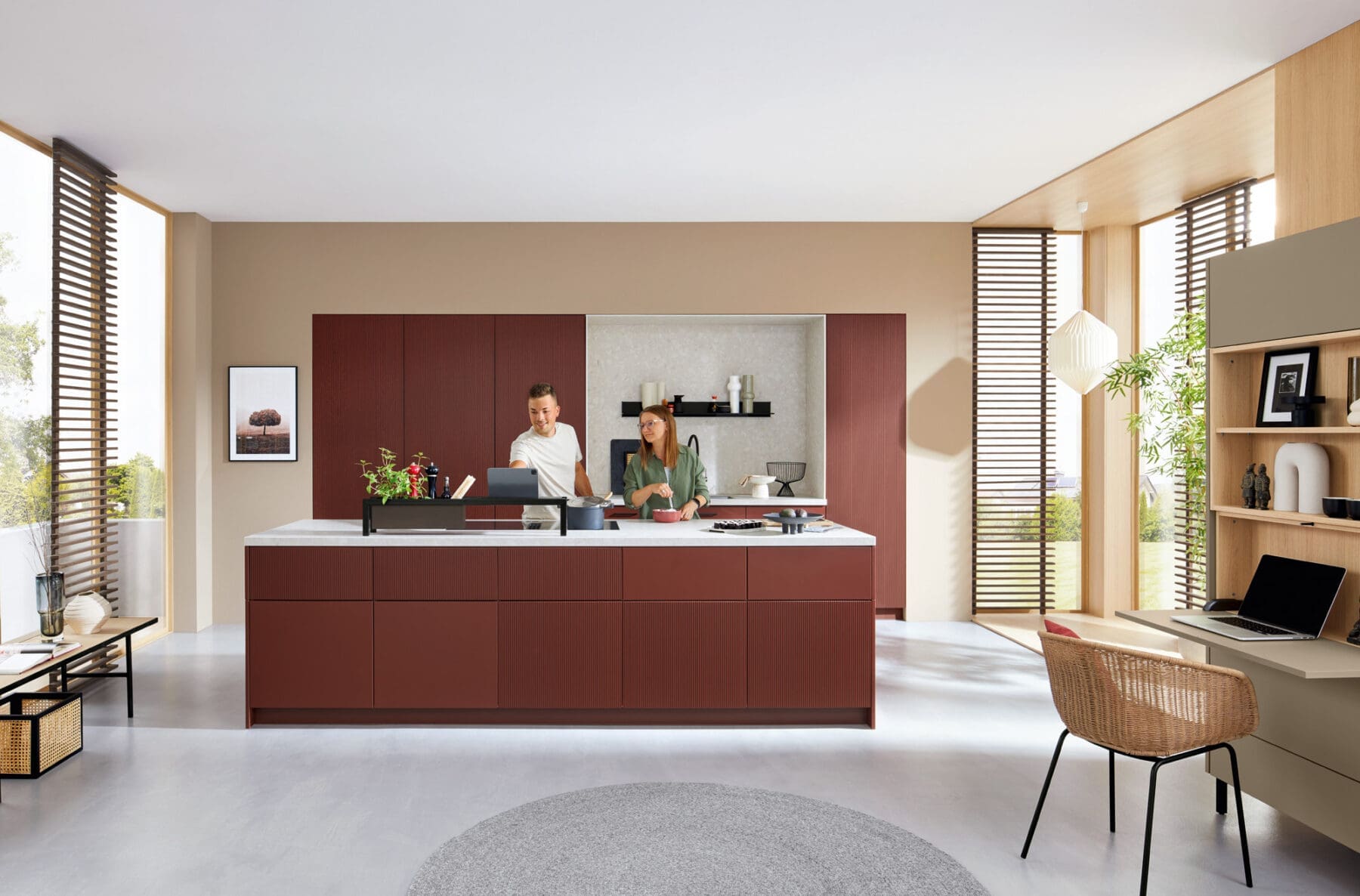
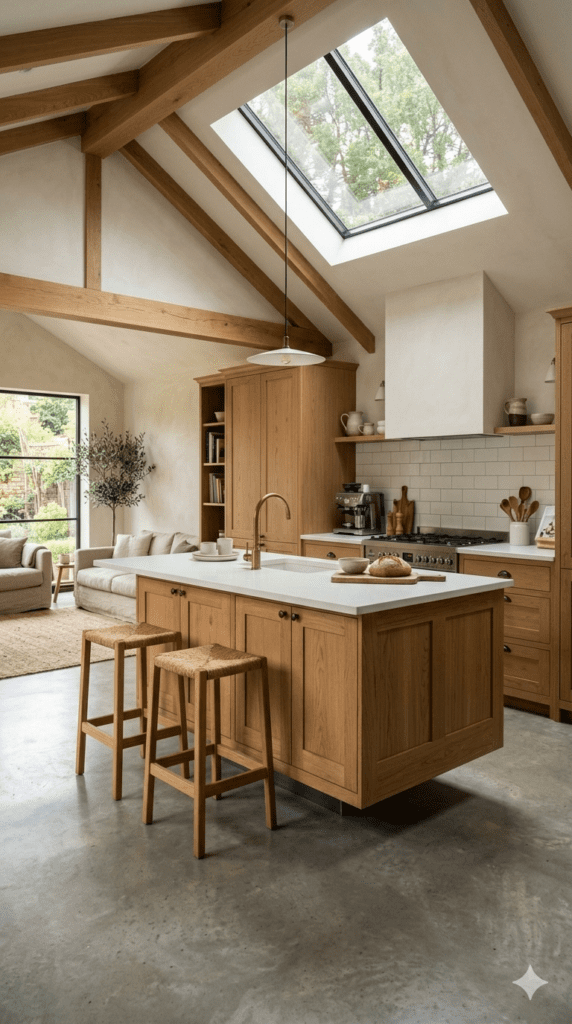
In larger kitchens, the floating island becomes a central working hub.
For full functionality, add:
- Integrated appliances (hob or sink)
- Seating for casual dining
- Storage for frequently used items
Keep in mind a balance between working and social spaces, and avoid overcrowding with multiple focal points.
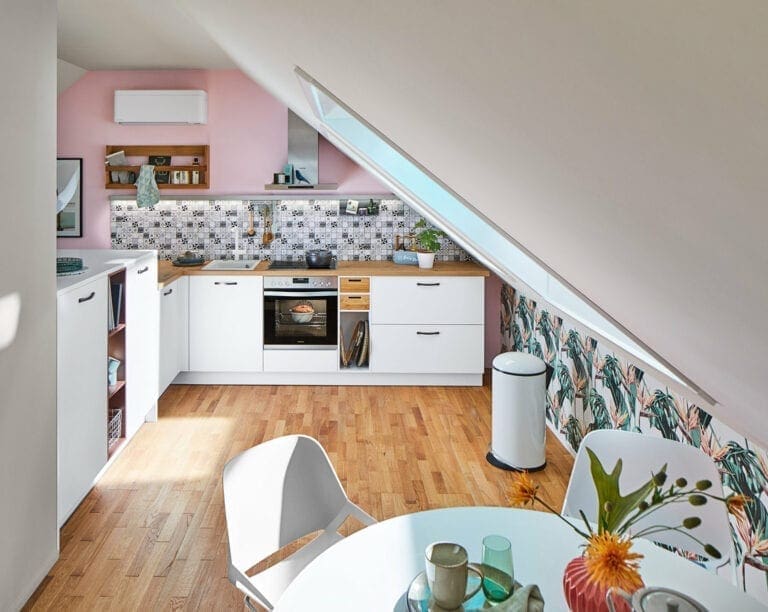
4. Small Kitchens
Floating islands in small kitchens are often misunderstood, but when used correctly they can be an asset.
To make it practical, consider:
- Mobile or lightweight islands
- Occasional use rather than permanent fixture
To prioritise space, choose an island without bulky integrated storage. If you’re looking for an island effect but don’t have the space, consider alternatives such as peninsulas or pull-out surfaces.

Choosing the Right Size and Proportions
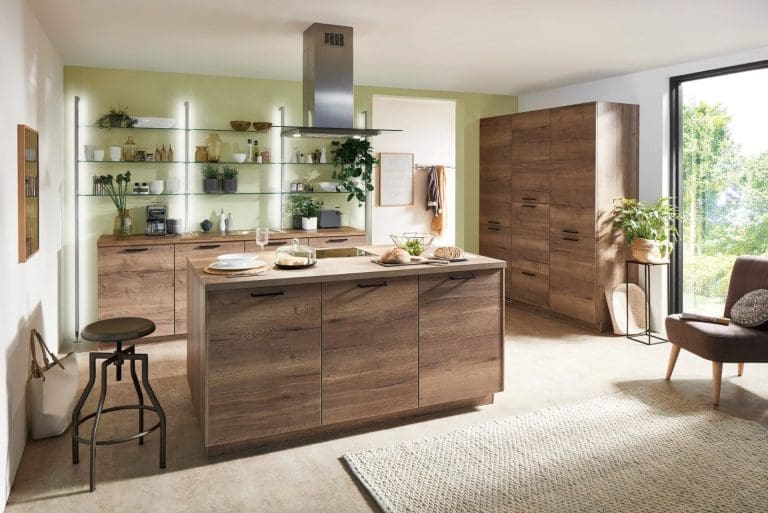
Your island should feel proportionate to the room and not overpowering it, so it’s valuable to consider these floating kitchen island dimensions.
Typical dimensions:
- Length: 1200–2400 mm
- Depth: 600–1000 mm
- Height: 900 mm (standard worktop height)
Seating allowances:
- 600 mm width per person
- 300 mm minimum for knee space overhang
Island Features Based on Function
Not all floating islands serve the same purpose. Knowing what you’ll use it for most will help with planning any additional features in advance.
1. Prep-Focused Island
- Ample clear work space
- Storage with easy access to bins and utensils
2. Cooking Island
- Integrated hob
- Requires extraction planning beforehand
3. Cleaning Island
- Built-in sink
- Requires plumbing and drainage
4. Social Island
- Space for comfortable seating
- Minimal appliances to save space
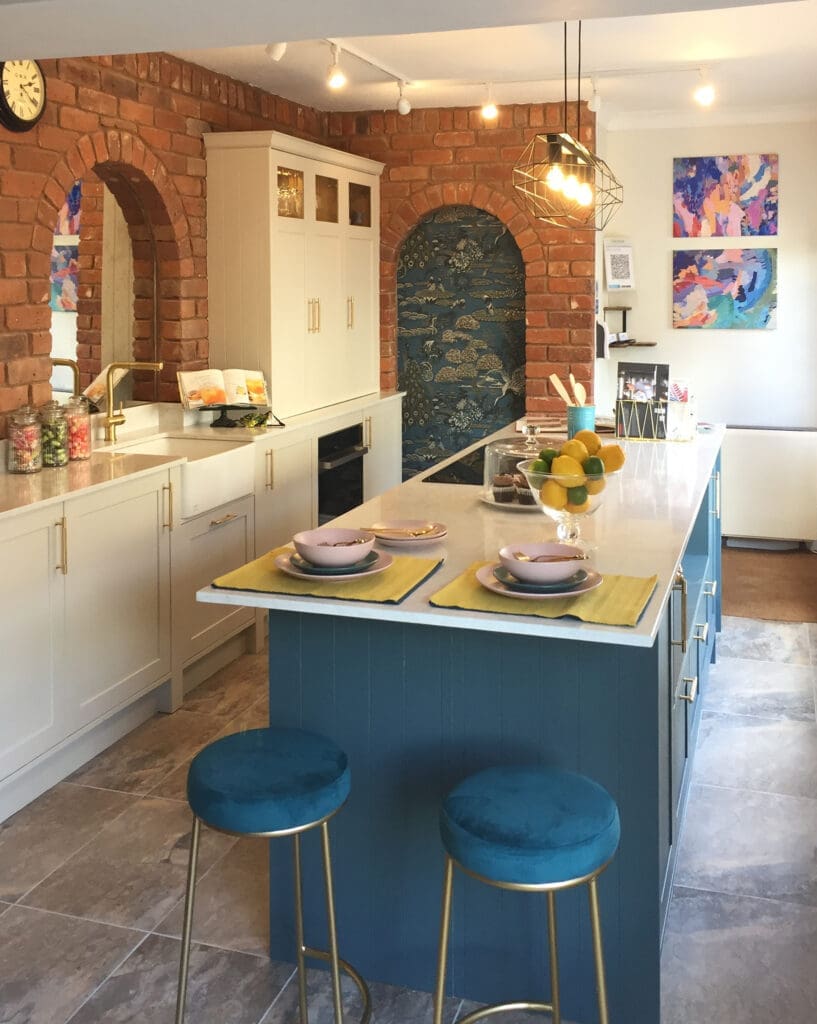
5. Hybrid Island
- Combination of prep, seating and storage
- Most common in family kitchens
Utilities and Technical Considerations
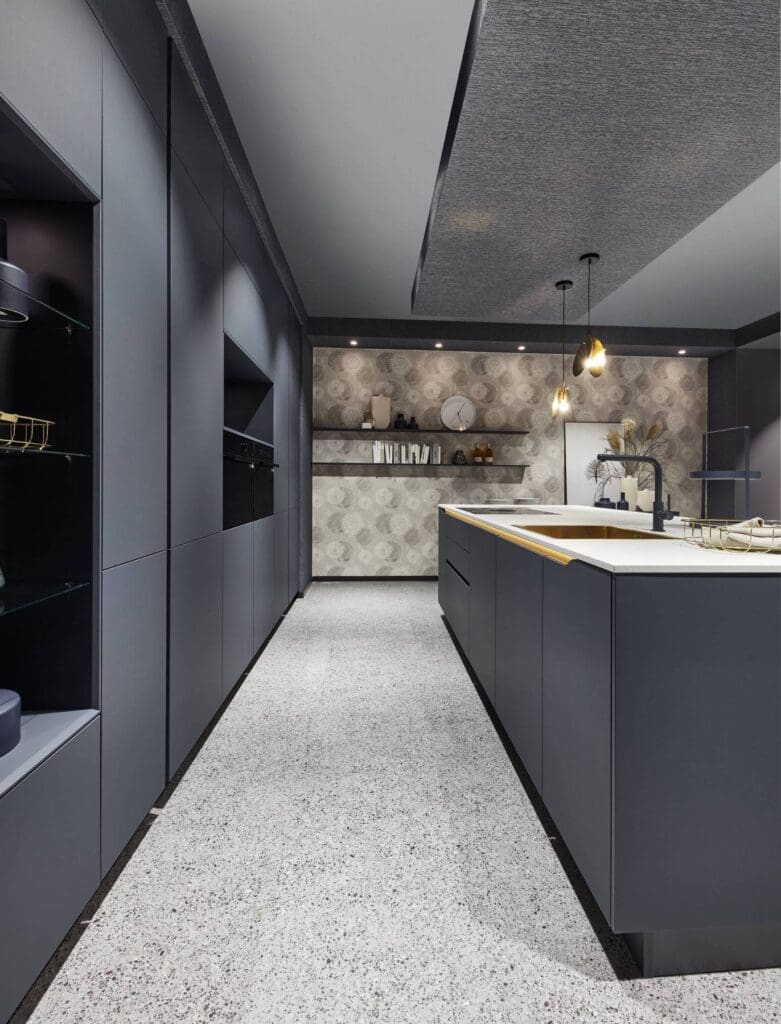
Adding services to a floating island enhances it’s functioning but also introduces complexity.
- Requires floor access
- May increase installation cost
- Power sockets for appliances
- Consider pop-up or integrated outlets
- Ceiling-mounted or downdraft extraction for hobs
These factors should be planned early on to prevent complications down the line.
Storage Strategies
Storage in a floating island should be intentional so that it benefits your workflow.
Effective storage ideas:
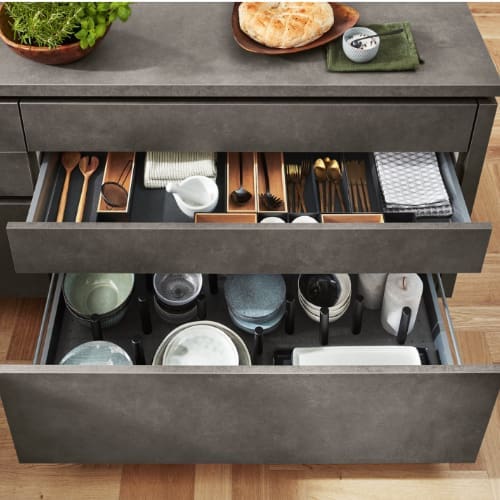
- Deep drawers for pots and pans
- Pull-out bins
- Open shelving for display
- Integrated drinks storage
However, try to avoid overloading the island with too many storage types as this can reduce usability.
Material and Finish Considerations
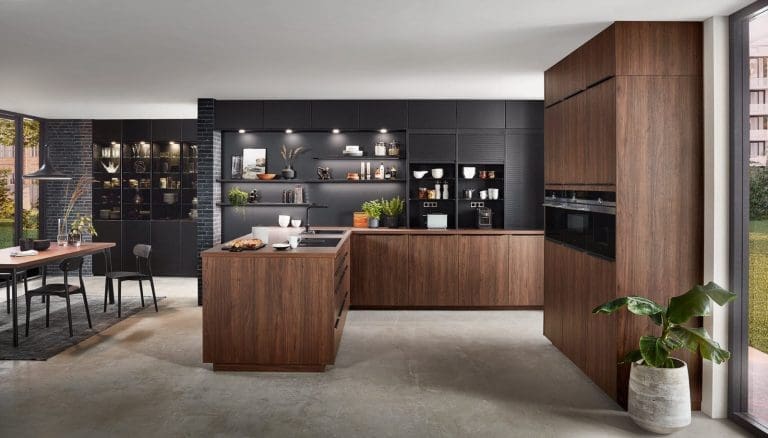
The island often acts as a visual anchor and centrepiece, so material choice matters not only for functionality, but for your overall aesthetic too.
Popular options are:
- Quartz or granite: Durable and low maintenance
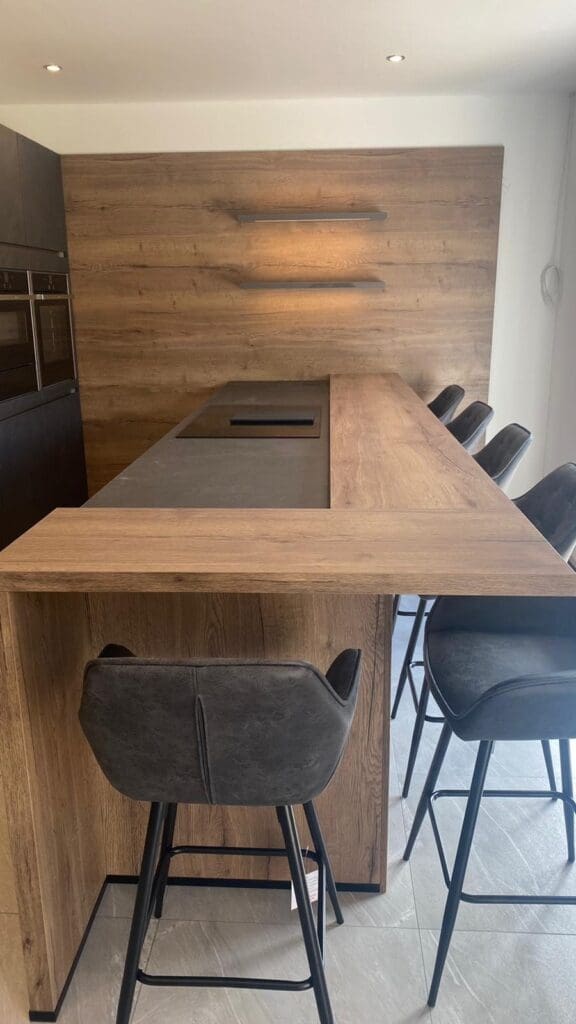
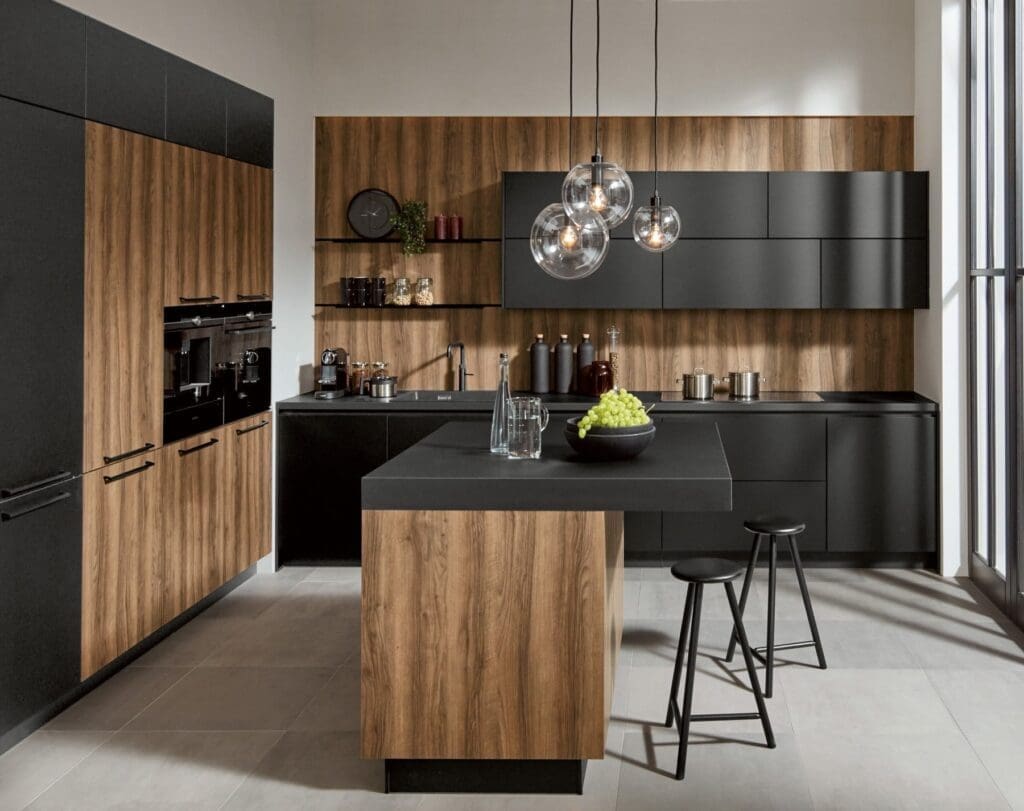
- Timber: Warmer aesthetic, requires upkeep
- Composite surfaces: Practical and consistent finish
Decide whether you want your island to make a statement or to be a seamless part of your design.
- Contrast: Island stands out as focal point
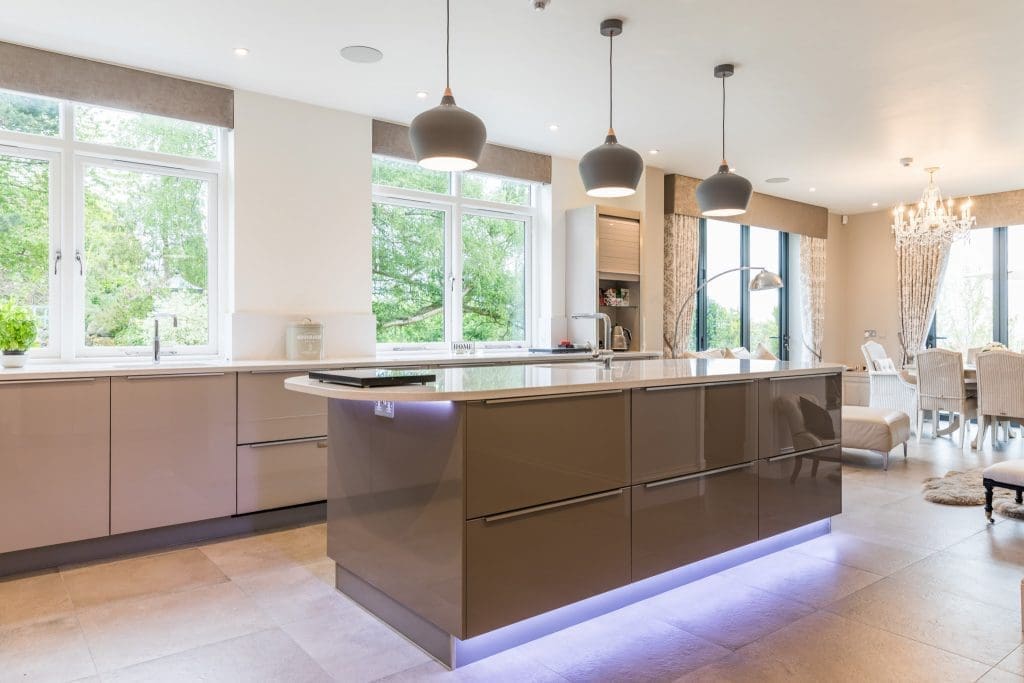
- Continuity: Blends with surrounding cabinetry
Both approaches can work depending on the overall kitchen scheme.
Common Mistakes to Avoid
- Insufficient clearance leading to a cramped space and restricted movement
- Oversized islands dominating the space
- Poor appliance positioning disrupting workflow
- Ineffective lighting above the island
- Overloading with features that reduce usability
Checklist: Is a Floating Island Right for Your Kitchen?
Before committing to an island, consider the following:
- Can you maintain at least 1000 mm clearance on all sides?
- What is the primary function: prep, seating, storage or a combination?
- Will utilities be required?
- Does it improve your workflow or obstruct it?
- Are there simpler alternatives?
If multiple answers raise concerns, it’s worth considering other options like peninsulas.
Final Thoughts
A floating kitchen island can enhance kitchen functionality and create intentional zones, but it is not a universal solution. Its success depends on careful planning, realistic spacing and a clear understanding of how the kitchen is used daily.
In many cases, the most effective designs are the simplest—prioritising movement, accessibility and proportion over visual impact. Consulting experienced kitchen retailers early in the process helps ensure that the island supports the overall layout rather than competing with it.
Author’s Note
This guide has been prepared using combined insight from independent kitchen retailers within the Kitchen Experts network. It is intended to help homeowners understand this type of kitchen island, and offer both inspiration and practical considerations for floating kitchen island ideas.
FAQs
1. What is the difference between a floating island and a fixed island?
A floating island is freestanding and not attached to walls or cabinetry, while a fixed island is integrated into the kitchen structure.
2. How much space do you need around a floating kitchen island?
Ideally 1000–1200 mm on all sides, with 900 mm as a minimum in tighter spaces.
3. Can a floating island have a sink or hob?
Yes, but it requires plumbing, electrical work and ventilation planning.
4. Are floating kitchen islands suitable for small kitchens?
Only in limited cases. Smaller kitchens may benefit more from mobile islands or alternative layouts.
5. Do floating islands need to be secured to the floor?
Not always, but larger or heavier islands may be fixed for stability.
6. What is the best shape for a floating kitchen island?
Rectangular islands are most common, but shape depends on room layout and intended use.