Light Grey Kitchens: Design Ideas, Practical Considerations and How to Choose the Right Style
Light grey kitchens have established themselves as a consistent choice across UK homes, not simply as a design trend but as a practical, adaptable solution that works across a wide range of layouts and styles. From compact galley kitchens to larger open-plan spaces, these softer grey tones offer a balance between brightness and depth, making them easier to live with over time than both stark white and darker colour schemes.
This guide is designed to help you understand how light grey kitchens function in real-world settings — not just how they appear in curated images. It brings together practical considerations such as lighting, material pairings, layout constraints, and everyday usability, so you can make informed decisions before committing to a particular finish or style.
Whether you are planning a full renovation or comparing options across different suppliers, Kitchen Experts aims to provide a clear, structured framework to help you evaluate what will work best in your space — both visually and practically.
What is a light grey kitchen?
A light grey kitchen is a kitchen design that incorporates cabinetry, walls, or surfaces in soft grey tones positioned between white and mid-grey. These kitchens are valued for their versatility, ability to reflect light, and compatibility with a wide range of materials such as wood, stone, and metal. Lighter grey kitchens sit closer to white and are often used to maximise brightness in smaller or lower-light spaces.
Key Characteristics of Light Grey Kitchens
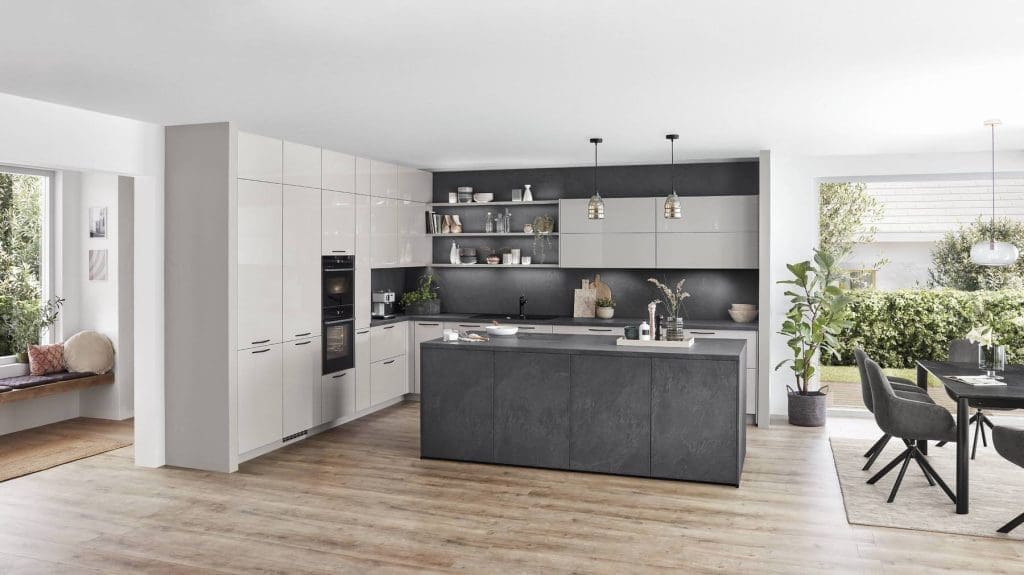
A light grey kitchen centres around soft, understated grey tones such as dove, mist, pebble, and pale stone. These shades sit between white and mid-grey, offering a balanced alternative that avoids the starkness of white while remaining bright and adaptable.
One of the key reasons light grey kitchens continue to perform well across different homes is their ability to combine a modern aesthetic with a more inviting, liveable feel. Unlike darker greys, which can feel heavy in certain layouts, light grey tones help maintain openness while still introducing subtle depth.
This makes them suitable across a wide range of kitchen styles, from contemporary handleless designs to more traditional shaker cabinetry.
Why Light Grey Kitchens Remain a Practical Choice
Light grey kitchens are visually adaptable but also practical for everyday use. Compared to white kitchen cabinetry, which can show marks quickly, or darker kitchen colours that highlight dust and fingerprints, light grey offers a more forgiving surface for daily wear.
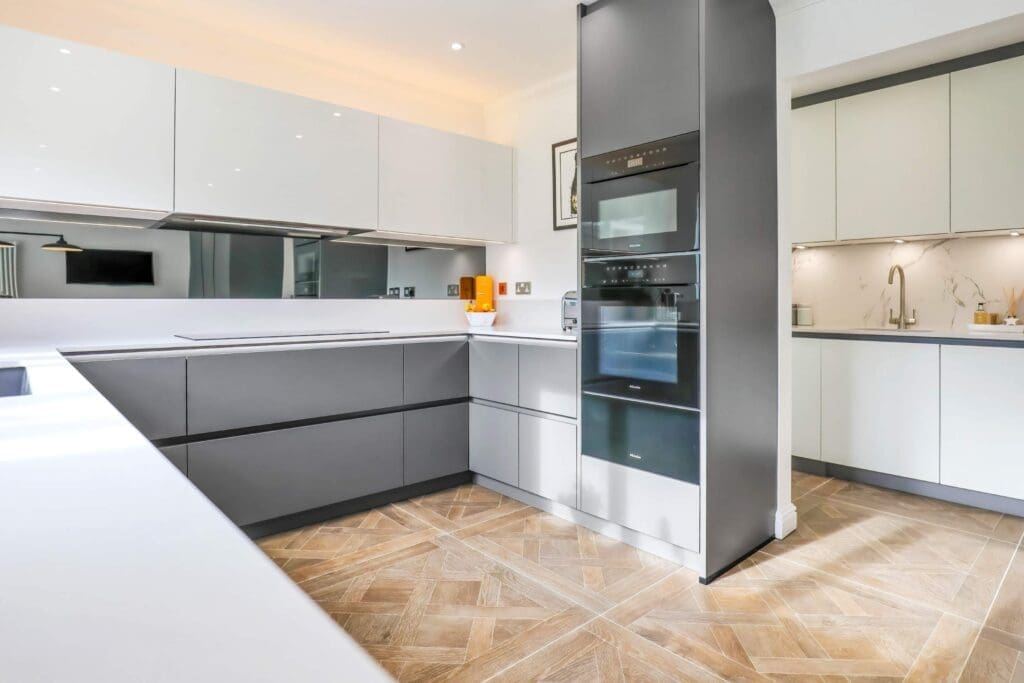
Finishes also play an important role here. Matt and satin surfaces, commonly used in light grey kitchens, can help soften reflections and reduce the visibility of smudges, making them particularly suitable for busy households.
From a long-term perspective, this balance between appearance and usability is one of the main reasons homeowners continue to choose light grey as a base colour.
How Light Grey Enhances the Overall Kitchen Environment
Light grey works as a neutral foundation, meaning it does not dominate the space but instead supports other elements within it. This allows for flexibility when combining materials, finishes, and decorative details.
Because of this, light grey kitchens can:
- Reflect natural light without appearing clinical
- Create a calm, cohesive atmosphere
- Adapt easily to both modern and traditional layouts
As a neutral kitchen tone, grey also pairs well with a wide range of colours and materials, allowing homeowners to personalise their kitchen without needing to replace core elements later.

Using Natural Materials to Add Warmth
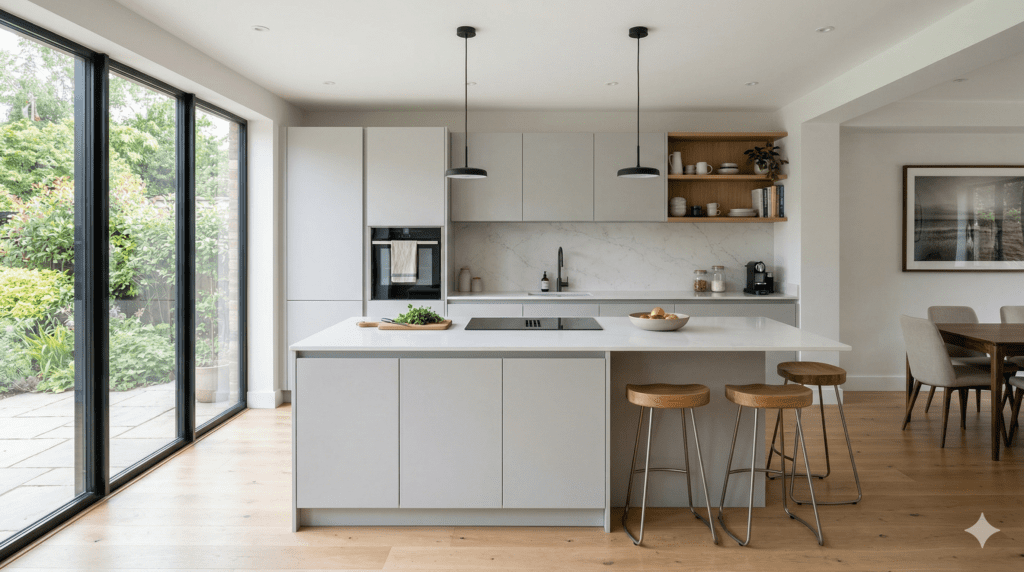
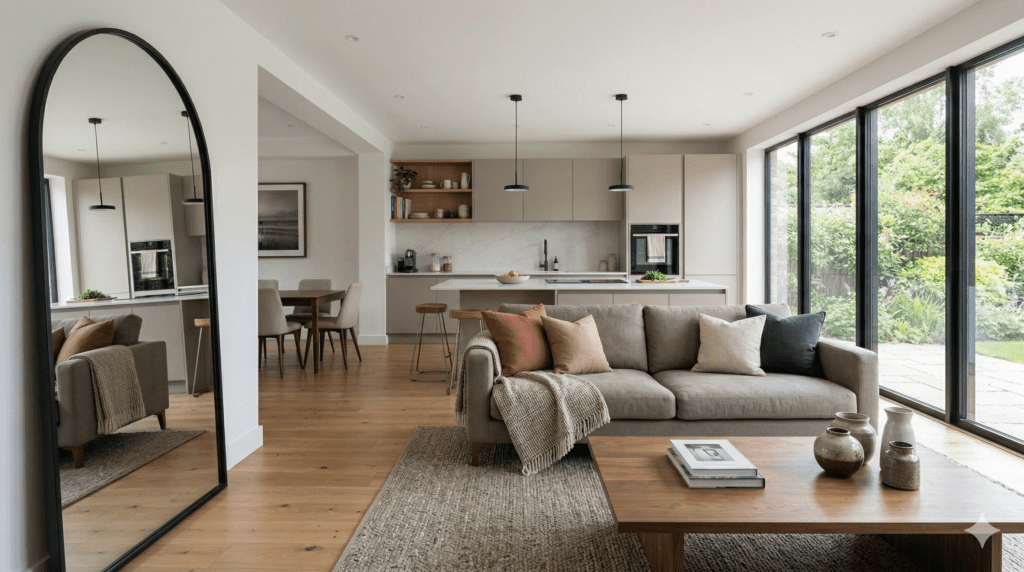
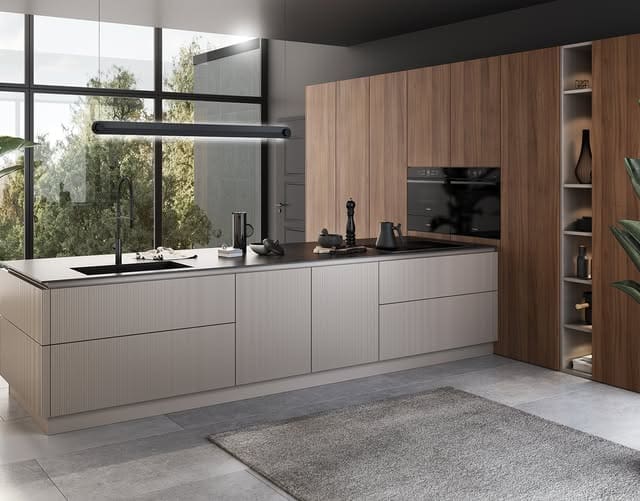
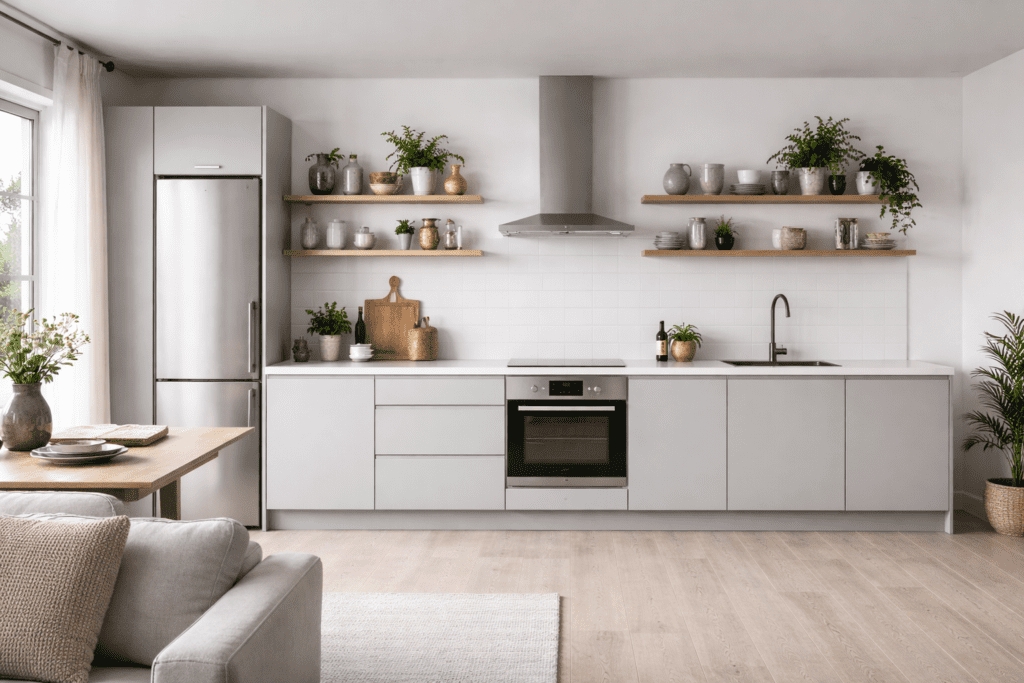
One of the most effective ways to prevent a light grey kitchen from feeling too cool or flat is by introducing natural materials in elements such as:
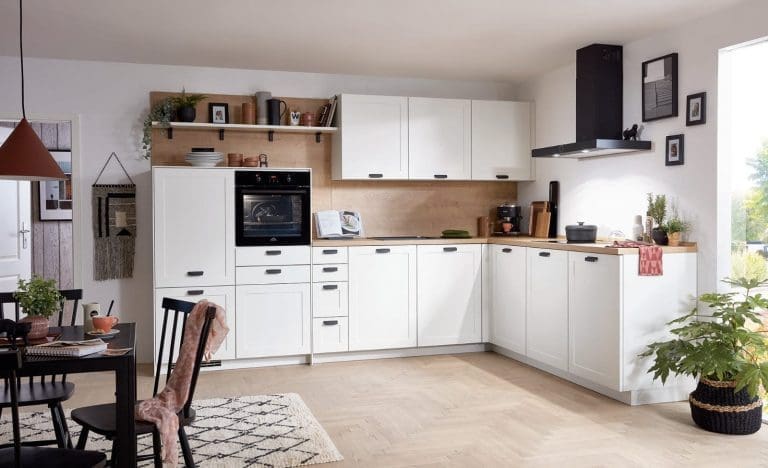
- Wooden shelving or worktops
- Rattan or woven seating
- Ceramic accessories and textured finishes
These additions soften the overall look and create a more welcoming, balanced environment.
Wood, in particular, is often used to offset the clean lines of modern kitchen cabinetry, helping the space feel less rigid and more lived-in.
The Role of Lighting in Light Grey Kitchens
Lighting has a significant impact on how light grey tones are perceived within a kitchen.
Well-considered kitchen lighting can:
- Enhance the depth of grey cabinetry
- Prevent the space from feeling dull or shadowed
- Create a more functional working environment
Typical approaches include:
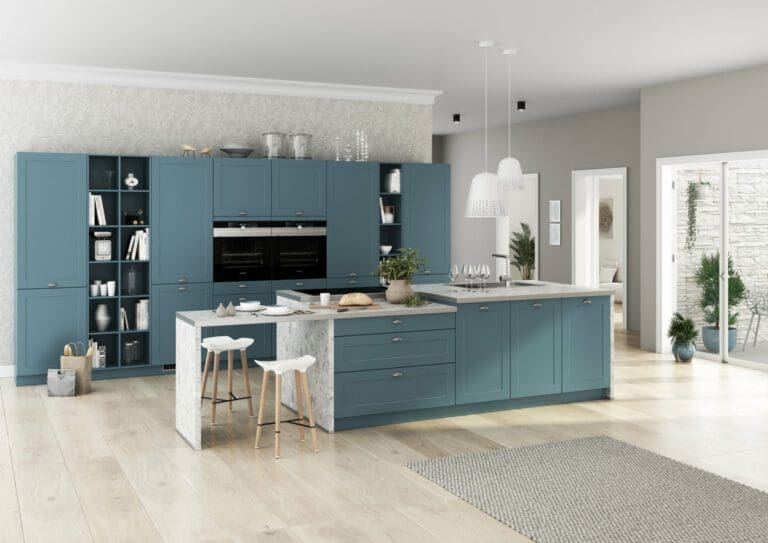
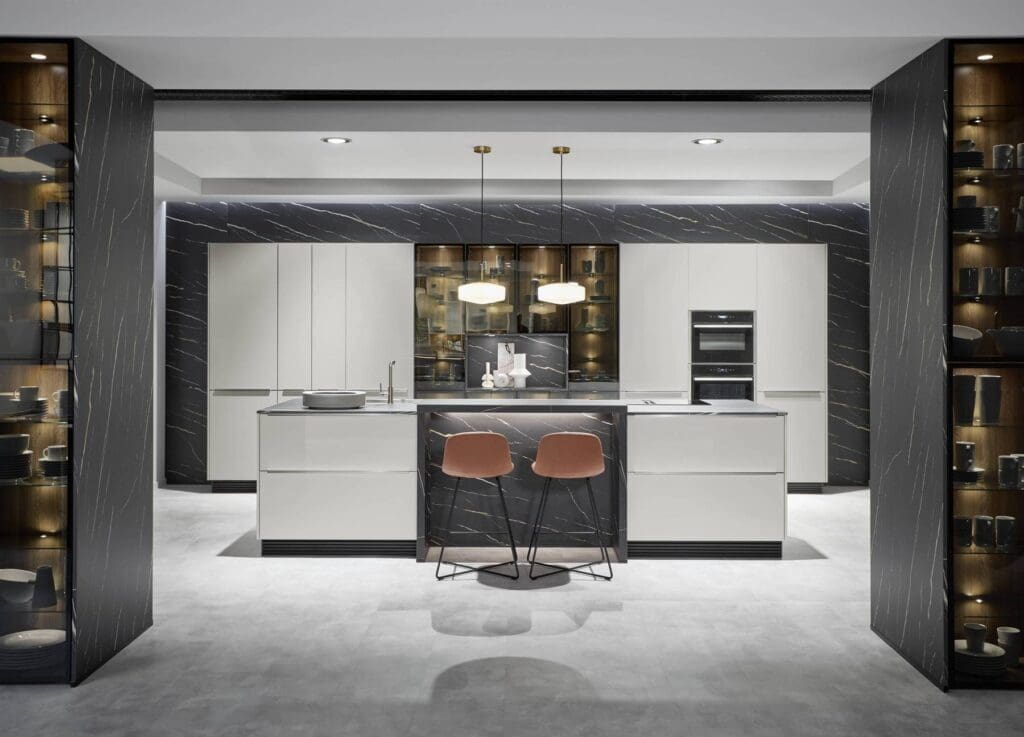
- Pendant lighting to define key areas such as islands
- Under-cabinet LED strips to improve task lighting
- Warm-toned bulbs to create a softer, more inviting atmosphere
These elements not only improve visibility but also influence how the colour itself appears throughout the day.
Introducing Contrast Without Overcomplicating the Design
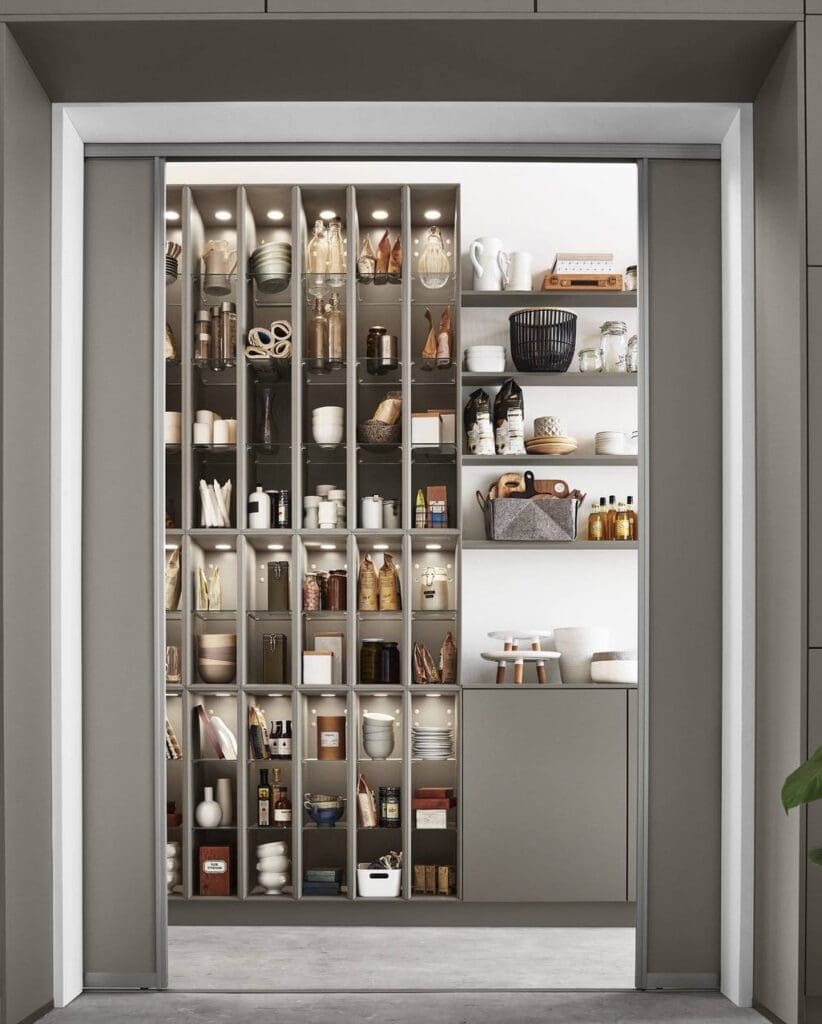
Although light grey kitchens are inherently subtle, introducing contrast is essential for creating visual interest.
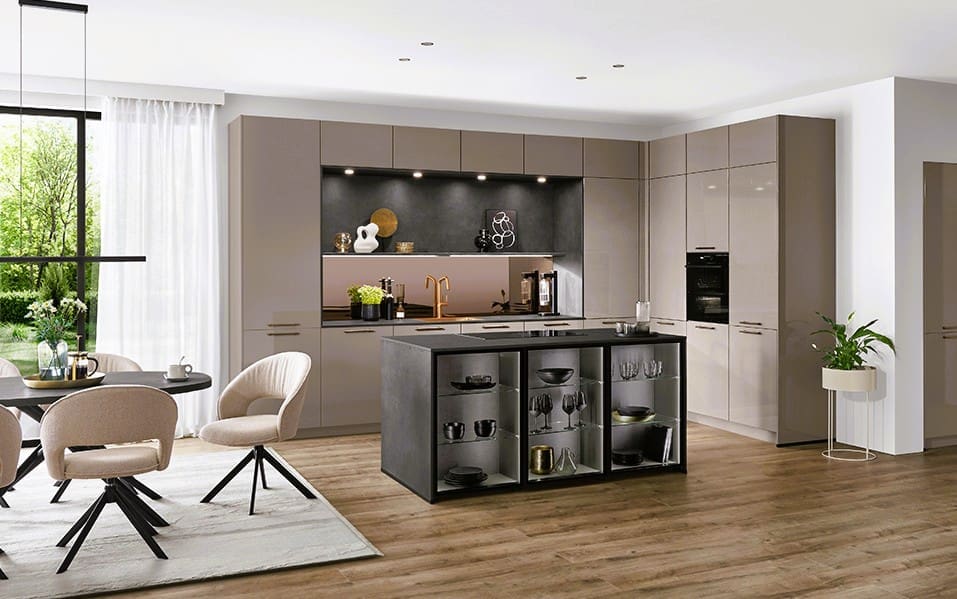
One of the most widely used approaches is incorporating a second tone or material to break up the space. This can include:
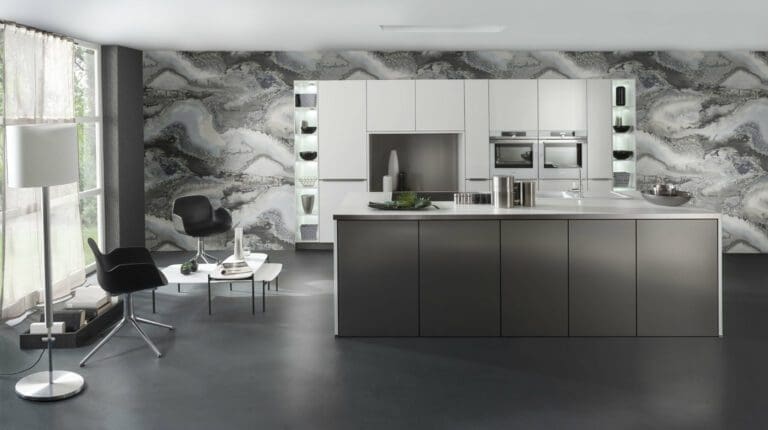
- A darker kitchen island unit
- Contrasting base and wall cabinets
- Black fixtures such as taps or handles
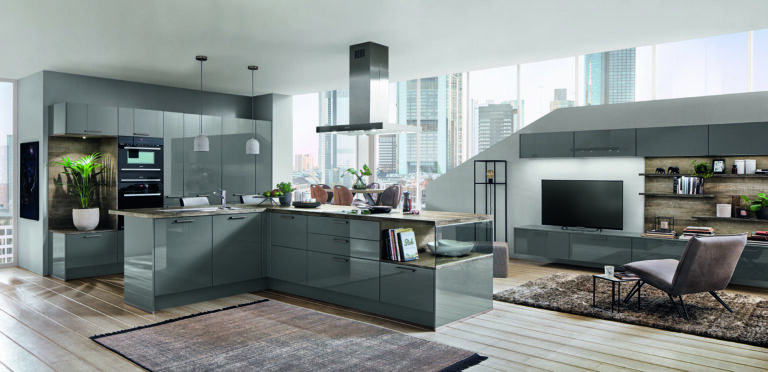
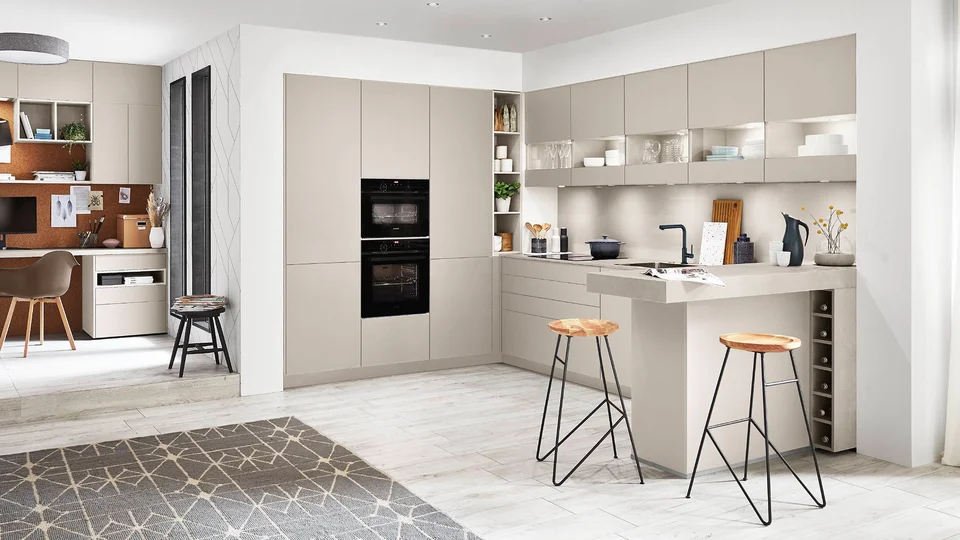
Two-tone kitchen designs are particularly effective in larger or open-plan kitchens, where they can help define different functional zones without disrupting overall cohesion.
At the same time, contrast should be used carefully. Too many competing elements can undermine the simplicity that makes light grey kitchens appealing in the first place.
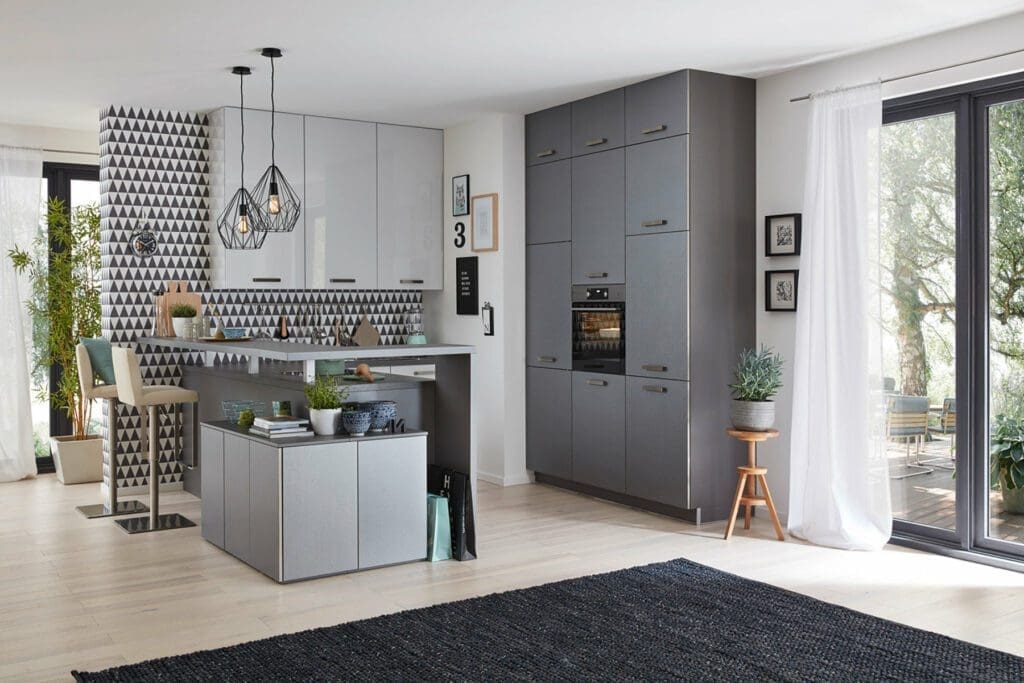
Add Personality Through Splashbacks and Finishes
A common misconception is that light grey kitchens need to remain minimal or monochrome. In practice, they provide a strong foundation for adding personality through smaller design features.
Splashbacks and tiles are one of the most effective ways to introduce variation. Options include:
- Patterned tiles for visual interest
- Coloured glass splashbacks for subtle contrast
- Textured stone for a more natural finish
These features allow you to personalise the space without committing to bold cabinetry colours, making them easier to update over time if preferences change.
Material Pairings That Work Consistently Well
Because light grey sits within a neutral palette, it works well with a variety of materials that can shift the overall tone of the kitchen.
Common pairings include:
- Light grey and wood
Creates warmth and balance, often used in both modern and traditional kitchens - Light grey and white surfaces
Maintains brightness and simplicity, particularly effective in smaller spaces - Light grey and metallic finishes
Brushed brass, copper, or matt black fixtures can introduce a more contemporary edge without overpowering the design - Light grey and stone worktops
Adds texture and depth while maintaining a cohesive look
These combinations allow the same base colour to produce very different outcomes depending on the materials used.
Layout Considerations for Light Grey Kitchens
Light grey kitchens can work across most layouts, but their effectiveness depends on how they are applied within the space.
- Benefit from lighter tones and reflective finishes
- Require careful lighting to avoid shadowed areas
Medium-sized kitchens
- Allow for more contrast through materials or cabinetry
- Can accommodate additional textures without overwhelming the space
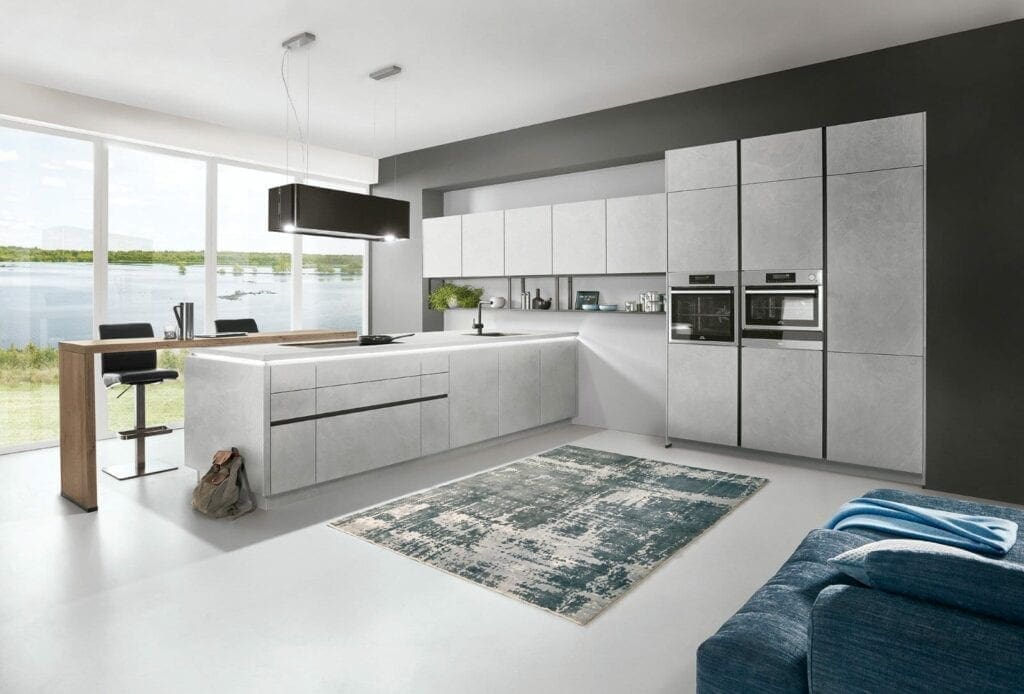
- Use light grey as a neutral anchor within a larger living area
- Often incorporate contrasting elements to define zones
Because grey does not dominate visually, it can help unify different areas within an open-plan layout while still allowing each zone to feel distinct.
Common Mistakes to Avoid
Even though light grey kitchens are versatile, there are still common issues that can affect the final result:
- Ignoring undertones: Grey can appear warmer or cooler depending on lighting and surrounding materials
- Overusing one finish: Too much uniformity can make the kitchen feel flat
- Lack of contrast: Without variation, the design may lack depth
- Skipping material balance: Failing to introduce warmth can result in a cold or sterile space
Addressing these factors early in the kitchen planning process helps ensure a more balanced and functional outcome.
Why Light Grey Kitchens Continue to Work Long-Term
The continued popularity of light grey kitchens is largely due to their ability to adapt over time. Rather than being tied to a specific kitchen trend, they provide a stable base that can evolve through smaller updates.
Elements that can be changed without replacing the kitchen include:
- Handles and hardware
- Lighting fixtures
- Splashbacks
- Decorative accessories
This flexibility makes light grey kitchens a practical choice for homeowners who want a design that can be refreshed without major renovation.
Final Thoughts
Light grey kitchens are not defined by trend cycles but by their ability to adapt to different spaces, lighting conditions, and material combinations. The key to making them work lies in understanding how tone, finish, and context interact rather than relying on appearance alone.
By assessing your kitchen layout, testing colours in real conditions, and considering how materials work together, you can create a space that feels balanced and functional over time. Whether you choose a softer, lighter grey or a more defined light grey tone, the decision should be guided by how the space is used and how it will evolve in the years ahead.
Author’s Note
This guide has been prepared using aggregated insight from independent kitchen retailers within the Kitchen Experts network. It is intended to help homeowners compare light grey kitchen styles, materials and finish choices with long-term durability and design flexibility in mind.
FAQs
Are light grey kitchens still popular?
Yes, light grey kitchens remain widely used due to their neutral appearance and adaptability across different styles and layouts.
Do light grey kitchens make a space look bigger?
They can help create a more open feel, especially when combined with good lighting and reflective surfaces.
What colours go well with light grey kitchens?
Common pairings include white, wood tones, black accents, and natural stone materials.
Are light grey kitchen cabinets hard to maintain?
Maintenance depends on the finish. Matt surfaces may show marks more easily, while gloss finishes are easier to wipe clean.
Do grey kitchens go out of style?
Neutral tones like grey tend to remain consistent over time because they are not tied to short-term trends.
How do I choose the right shade of grey?
Test samples in your kitchen under natural and artificial light to see how undertones change throughout the day.